
Neoclytus mucronatus
(Fabricius, 1775)
Species Guides
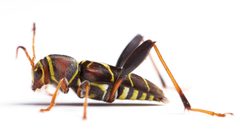
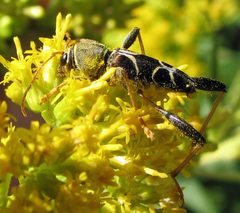
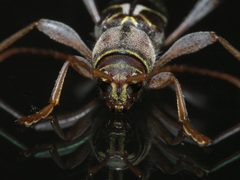
2Neoclytus mucronatus is a longhorned beetle in the Cerambycidae, first described by Fabricius in 1775. are known to produce that attract both sexes. The develops in dead and dying hardwoods, particularly Celtis (hackberry), and has been documented from fermenting traps and Lindgren funnel traps across the central United States. Adults are active during summer and early autumn months.
Pronunciation
How to pronounce Neoclytus mucronatus: /niːoʊˈklaɪtəs mjuːkrəˈneɪtəs/
These audio files are automatically generated. While they are not always 100% accurate, they are a good starting point.
Images
Habitat
Found in woodland with dead or dying hardwood trees. Documented from hackberry/soapberry canyon woodland, oak/pine/juniper woodland, and shortgrass prairie edges. Associated with Celtis occidentalis (hackberry) and other Celtis as larval . have been captured in jug traps baited with ethanol, sweet red wine, or 50:50 blends, as well as Lindgren funnel traps.
Distribution
North America. Documented in the United States from Oklahoma (Woodward, Major, Beaver, and Cimarron Counties), Missouri, and likely throughout the central and eastern regions. GBIF records indicate presence in Canada and Mexico.
Seasonality
active from mid-July through mid-October. Peak activity observed in late July and early October in Oklahoma. activity peaks in morning hours.
Diet
feed on leaves, flowers, pollen, fruit, and nectar. Larvae bore into wood of dead and dying hardwood trees.
Host Associations
- Celtis occidentalis - larval Dead branches infested with wood-boring larvae; emerged from pupal chambers in dead hackberry wood
- Celtis reticulata - larval Associated with dead saplings showing fresh -packed galleries
Life Cycle
Complete . Larvae are wood-boring, developing in galleries within dead and dying hardwood branches and trunks. occurs within pupal chambers in the wood. emerge from infested wood and have been observed in .
Behavior
males produce an consisting primarily of (R)-3-hydroxyhexan-2-one, discharged from glands located in shallow cuticular depressions on the pronotum. Both sexes are attracted to this pheromone, with peak activity in morning hours. Adults have been observed in and are attracted to fermenting baits.
Ecological Role
Decomposer of dead hardwood wood. Larvae contribute to nutrient cycling by breaking down lignan and cellulose in dead trees. Serves as prey for various in woodland .
Human Relevance
Occasionally encountered when splitting firewood from infested hackberry trees. may emerge from stored firewood inside homes during winter months. Subject of research on cerambycid and trapping efficacy.
Similar Taxa
- Neoclytus scutellarisCongeneric with similar ; both attracted to fermenting baits and found in similar ; N. scutellaris distinguished by scutellar markings
- Neoclytus acuminatus with similar male-produced and calling ; pheromone chemistry differs
More Details
Pheromone Research
First documented case of male-produced in Cerambycinae. Pheromone identified as (R)-3-hydroxyhexan-2-one with 94% enantiomeric enrichment, attracting more beetles than racemic blend. Glands discharge through pores in shallow pronotal depressions.
Trapping Efficacy
In Missouri trapping studies, 8 specimens captured in fermenting traps: 6 in molasses/beer bait and 2 in red wine bait. In Oklahoma studies, 5 individuals captured in single Lindgren funnel trap baited with 50:50 ethanol/sweet red wine blend in mid-October.
Form Variation
The 'vogti' form has been noted in Oklahoma , suggesting potential subspecific or morphological variation within the .
Sources and further reading
- BugGuide
- Wikipedia
- GBIF taxonomy match
- iNaturalist taxon
- NCBI Taxonomy
- Catalogue of Life
- Insects roasting on an open fire: Bess beetles, Passalidae, carpenter ants, Formicidae, darkling beetles, Tenebrionidae, and longhorn beetles, Cerambycidae — Bug of the Week
- Disteniidae | Beetles In The Bush
- Calopterygidae | Beetles In The Bush
- Season Finale | Beetles In The Bush
- Male‐produced aggregation pheromone of the cerambycid beetle Neoclytus mucronatus mucronatus