
Heterelmis
Sharp, 1882
riffle beetles
Species Guides
6- Heterelmis comalensis(Comal Springs riffle beetle)
- Heterelmis glabra(riffle beetle)
- Heterelmis obesa(riffle beetle)
- Heterelmis obscura
- Heterelmis simplex
- Heterelmis vulnerata(riffle beetle)
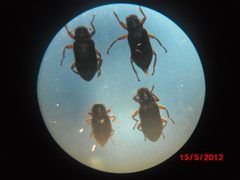
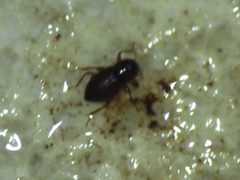
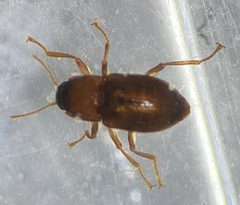
Heterelmis is a of aquatic beetles in the Elmidae, commonly known as riffle beetles. The genus includes several described , with Heterelmis comalensis being particularly notable as an to spring systems in Texas. Members of this genus are fully aquatic, inhabiting oxygen-rich flowing water environments where they feed on microbial biofilms. Some species have reduced or non-functional wings, limiting their ability and making them vulnerable to degradation.
Pronunciation
How to pronounce Heterelmis: /ˌhɛtəˈrɛlmɪs/
These audio files are automatically generated. While they are not always 100% accurate, they are a good starting point.
Identification
Difficult to distinguish from other elmid without close examination. Heterelmis comalensis can be identified by its complete wing reduction and restriction to specific spring systems in Texas. Sex determination requires lateral lighting to illuminate internal structures: males display sternite 8, while females show gonocoxites and a faintly sclerotized sternite 8. External measurements unreliable for sex identification.
Images
Habitat
Aquatic environments with well-oxygenated flowing water, including riffles in streams and spring systems. Specifically associated with spring orifices, upwellings, and seeps. Requires substrates with biofilm development on leaf litter and wood. Heterelmis comalensis is restricted to the headwaters of spring systems fed by the Edwards Aquifer.
Distribution
occurs in the Americas. Heterelmis comalensis is to Comal Springs and San Marcos Springs in Comal and Hays Counties, Texas, USA. Other have broader distributions; Heterelmis cf. glabra occurs in the Devils River watershed of south-central Texas. GBIF records indicate presence in Colombia, though these require verification.
Seasonality
Year-round activity in stable spring environments. tied to constant water temperature and flow conditions of aquifer-fed systems.
Diet
Microbial biofilm growing on conditioned leaf material and submerged wood. In captivity, Heterelmis comalensis has been reared on biofilm developed on Platanus occidentalis leaves and poplar dowels.
Life Cycle
Holometabolous development with , larval, pupal, and stages. Larvae aquatic with gills; occurs underwater. Females , producing multiple batches of larvae over their lifetime. Captive Heterelmis comalensis females produced 0–121 larvae with a mean of 29.3; positively correlated with longevity rather than body size. Survival from larva to adult approximately 12% in captive conditions.
Behavior
Fully aquatic lifestyle; respire underwater using . Reduced-wing such as Heterelmis comalensis cannot fly and are restricted to their natal spring systems. Captive females require continuous access to males for ongoing larval production; ceases when males die and resumes upon replacement.
Ecological Role
Member of unique groundwater-dependent aquatic in karst spring . Heterelmis comalensis serves as a flagship for Edwards Aquifer conservation and as a surrogate for monitoring aquifer health. Part of the in spring ecosystems, consuming biofilm and serving as prey for larger aquatic organisms.
Human Relevance
Heterelmis comalensis listed as endangered under the U.S. Act (1997). Subject of intensive conservation efforts including captive breeding programs and critical protection (139 acres of subterranean aquifer). Used as an for Edwards Aquifer water quality and health. Conservation conflicts with water extraction for municipal and agricultural use in Texas.
Similar Taxa
- StygoparnusCo-occurs with Heterelmis comalensis in Edwards Aquifer springs; both are small, endangered, cave-dwelling beetles with reduced external . Distinguished by -level characters (Dryopidae vs. Elmidae) and internal abdominal structures visible under lateral lighting.
- MicrocylloepusCoexists with Heterelmis comalensis at Comal Springs; both are elmids requiring similar oxygen-rich aquatic . Distinguished by morphological characters and microhabitat preferences within spring systems.
- HexanchorusRelated elmid occurring in similar Neotropical and Nearctic aquatic ; taxonomic notes indicate historical confusion with Heterelmis in some regions. Distinguished by specific morphological characters detailed in taxonomic literature.
More Details
Captive Microbiome Alterations
Captive Heterelmis comalensis exhibit more diverse gut microbiomes than wild , with 24 amplicon sequence variants significantly different between groups. ASVs overrepresented in captivity are linked to nitrogen-rich environments, suggesting dietary or environmental divergence from natural conditions.
Conservation Breeding Challenges
Captive rearing requires careful attention to flow conditions, resource packing, and handling stress. Early captive efforts showed high mortality; survival improved as techniques were refined. Genetic diversity concerns exist for long-term captive maintenance of this .
Sources and further reading
- BugGuide
- Wikipedia
- GBIF taxonomy match
- iNaturalist taxon
- NCBI Taxonomy
- Catalogue of Life
- Heterelmis comalensis - Entomology Today
- Study Shines Light on ID'ing Males, Females of Endangered Beetles
- New Study Advances Lab Rearing of Endangered Beetle
- Heterelmis comalensis Archives - Entomology Today
- Fecundity of First-Generation Captively Reared Heterelmis comalensis (Coleoptera: Elmidae)
- Spring association and microhabitat preferences of the Comal Springs riffle beetle (Heterelmis comalensis)
- A comparison of wild and captive Comal Springs riffle beetle ( Heterelmis comalensis ) microbiomes
- The effects of captivity on the microbiome of the endangered Comal Springs riffle beetle ( Heterelmis comalensis )
- Habitat and phenology of the endangered riffle beetle Heterelmis comalensis and a coexisting species, Microcylloepus pusillus, (Coleoptera: Elmidae) at Comal Springs, Texas, USA
- Abundance and Distribution of Heterelmis cf. glabra (Coleoptera: Elmidae) within Dolan Falls Preserve and the Devils River State Natural Area, Texas, USA
- Taxonomic notes on the genus Hexanchorus Sharp, 1882 and Heterelmis Sharp, 1882 from Bolivia (Coleoptera, Elmidae).