
Elmidae
Curtis, 1830
Riffle beetles
Subfamily Guides
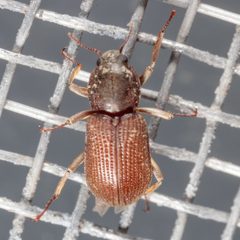
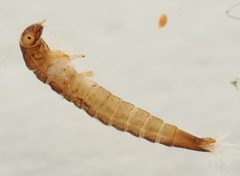
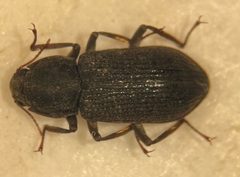
2Elmidae, commonly known as , is a of aquatic beetles in the superfamily Byrrhoidea containing over 150 and 1,500 described . Both and larvae are primarily aquatic, inhabiting fast-flowing shallow areas of streams and rivers such as riffles. Adults breathe underwater using a —a microfilm of air held by microscopic hairs on their body surface that enables oxygen diffusion from the water. The family has significant value in freshwater biomonitoring due to their sensitivity to water pollution.
Pronunciation
How to pronounce Elmidae: /ˈɛl.mɪ.diː/
These audio files are automatically generated. While they are not always 100% accurate, they are a good starting point.
Identification
Distinguished from other aquatic by the combination of: fully aquatic with respiration (not coming to surface for air), larvae with visible gills and living fully submerged, and preference for fast-flowing lotic . The family Dryopidae (long-toed water beetles) is similar but adults typically surface for air and have different tarsal . Hydraenidae (minute moss beetles) are generally smaller and associated with different microhabitats.
Images
Habitat
Aquatic; primarily lotic (flowing water) environments including streams, rivers, and springs. Specifically associated with riffles—shallow, fast-flowing areas with rocky or gravel substrates where water is highly oxygenated. Some inhabit spring systems with constant flow. and larvae typically live under rocks or within crevices in these environments.
Distribution
Worldwide distribution with highest diversity in tropical regions. Documented from North America (including in Texas spring systems), Central and South America (Brazil, Ecuador, Argentina, Amazon region), Europe, Asia (China, Philippines, Indonesia), and Africa. The Philippine archipelago represents a center of diversity for certain such as Ancyronyx.
Seasonality
Activity patterns vary by and climate; in temperate regions, may be more active during warmer months. Some species show continuous in stable spring environments. Specific seasonal data limited for most species.
Diet
and larvae feed on and microbial biofilms growing on submerged rocks and wood. Some may consume detritus. The endangered Heterelmis comalensis has been successfully reared on biofilm developed on sycamore leaves and wood in captivity.
Life Cycle
Holometabolous development with , larval, pupal, and stages. Eggs are laid in aquatic environments. Larvae are fully aquatic with gills, passing through multiple instars. occurs in or near the water; some may pupate in moist substrates at the water margin. Adults emerge and remain aquatic, using respiration to stay submerged. In Heterelmis comalensis, females can produce 0–121 offspring with a mean of 29.3, and longevity is a key factor in .
Behavior
are generally sedentary, clinging to substrates in flowing water. Some possess reduced or non-functional wings (e.g., Heterelmis comalensis), limiting and making them vulnerable to fragmentation. When disturbed, individuals may release their grip and drift downstream before resettling. Larvae are active grazers on submerged surfaces.
Ecological Role
Primary consumers in freshwater , grazing on and biofilms and contributing to nutrient cycling. Serve as important bioindicators of water quality due to their sensitivity to pollution, degradation, and changes in flow regime. Their presence indicates well-oxygenated, relatively unpolluted flowing water systems. Some function as flagship or surrogate species for conservation of aquatic ecosystems and groundwater resources.
Human Relevance
Used extensively in biological monitoring and assessment of freshwater health and water quality, particularly in Europe and increasingly in tropical regions. The endangered Comal Springs riffle beetle (Heterelmis comalensis) has become a surrogate for monitoring the health of the Edwards Aquifer in Texas, which supplies drinking water to San Antonio. Conservation efforts for this species involve significant stakeholder coordination to balance water extraction with species protection. Some species have been successfully reared in captivity for potential restoration.
Similar Taxa
- DryopidaeSimilar elongated aquatic beetles, but typically surface for air rather than using respiration, and have different tarsal with long claws.
- HydraenidaeSmall aquatic beetles, but generally associated with moist substrates and marginal rather than fast-flowing riffles, and lack the respiration system of Elmidae.
More Details
Conservation Status
Several are of conservation concern, including Heterelmis comalensis (endangered, USA) which has highly reduced wings preventing and is restricted to two spring systems in Texas. The is increasingly recognized for biomonitoring value in tropical regions where taxonomic knowledge is being developed through programs like AQUA Palawana in the Philippines.
Taxonomic Diversity
The contains over 150 with many undescribed species, particularly in tropical regions. Recent taxonomic work has described numerous new from Ecuador, Argentina, China, and Borneo, with citizen scientists contributing to discoveries through initiatives like Expeditions.
Sources and further reading
- BugGuide
- Wikipedia
- GBIF taxonomy match
- iNaturalist taxon
- NCBI Taxonomy
- Catalogue of Life
- New Study Advances Lab Rearing of Endangered Beetle
- Uncategorized | Blog - Part 53
- Pensoft blog - Part 158
- Taxon Expeditions | Blog
- Coleoptera | Blog - Part 2
- Biodiversity Data Journal | Blog - Part 13
- Insecta, Coleoptera, Elmidae, Amazon region
- Review of the Elmidae of Ecuador with the description of ten new species (Coleoptera: Elmidae)
- Austrelmis Brown (Coleoptera: Byrrhoidea: Elmidae) from Argentina: five new species
- Two new species of Elmidae (Coleoptera) from Argentina
- Check list of the Dryopidae, Elmidae and Hydraenidae (Coleoptera) of Greece
- Checklist of the Elmidae (Coleoptera: Byrrhoidea) of Brazil
- Habitat and phenology of the endangered riffle beetle Heterelmis comalensis and a coexisting species, Microcylloepus pusillus, (Coleoptera: Elmidae) at Comal Springs, Texas, USA
- Two new species of the genus Zaitzevia Champion, 1923 from China (Coleoptera: Elmidae: Macronychini)
- Taxonomic notes on the genus Hexanchorus Sharp, 1882 and Heterelmis Sharp, 1882 from Bolivia (Coleoptera, Elmidae).
- The species of the genus Zaitzevia Champion, 1923 (Coleoptera, Elmidae) from Shaanxi Province, China.
- Additional new species of the genus Zaitzevia (Coleoptera, Elmidae) from China with an updated key to species from mainland China.