
Dryopidae
Billberg, 1820
long-toed water beetles
Genus Guides
5- Dryops(long-toed water beetles)
- Helichus
- Pelonomus(long-toed water beetles)
- Postelichus(long-toed water beetles)
- Stygoparnus(Comal Springs dryopid beetle (for sole species S. comalensis))
is a of aquatic beetles in the superfamily Byrrhoidea, commonly known as . possess dense hydrofuge hairs that enable underwater respiration and extended claws that give the family its . Despite being aquatic, adults cannot swim and instead cling to floating detritus. The family is distinguished from similar riffle beetles (Elmidae) by that are not clubbed. Most have terrestrial larvae, though the Stygoparnus has fully aquatic larvae and adults.
Pronunciation
How to pronounce Dryopidae: /draɪˈɒpɪdiː/
These audio files are automatically generated. While they are not always 100% accurate, they are a good starting point.
Identification
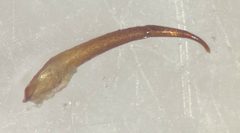
Distinguished from the similar-looking Elmidae (riffle beetles) by that are not distinctly clubbed— have thread-like or slightly serrate antennae versus the clubbed antennae of elmids. The elongated claws are also diagnostic for the . are found in aquatic but do not swim, instead clinging to substrates and floating material. Larvae of most are terrestrial, so the presence of aquatic larvae suggests the genus Stygoparnus. Identification to genus or requires examination of genitalic structures and other fine morphological details.
Images
Appearance
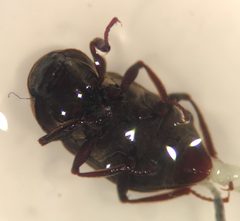
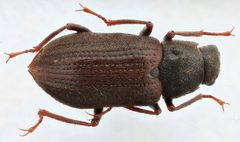
are small beetles with dense body hairs that trap air for underwater breathing. The most distinctive feature is the elongated tarsal claws, which are longer than those of most aquatic beetles. are thread-like or slightly serrate, not clubbed. Body form is generally compact and somewhat cylindrical. is subtle or absent in external features; in some , males possess small tufts on the metasternum that females lack, though these are difficult to observe.
Habitat
Primarily associated with freshwater environments including streams, rivers, and springs. inhabit water but cling to submerged vegetation, rocks, or floating detritus rather than swimming. Larvae of most are terrestrial, living in moist riparian soils or leaf litter near water bodies. The genus Stygoparnus is exceptional in having fully aquatic larvae and adults, including subterranean aquifer such as the Edwards Aquifer in Texas.
Distribution
distribution on every continent except Antarctica and Australia. More diverse and abundant in tropical regions. Documented from North America (including Nearctic ), Europe, North Africa, the Middle East (Iran, Egypt), Central Asia (Tajikistan, North Ossetia/Russia), and the Pacific (New Caledonia, Loyalty Islands).
Diet
feed on aquatic vegetation and plant matter in water. Larvae of most feed on plant matter in terrestrial environments; at least some have herbivorous larvae. Specific dietary details for most species are not documented.
Life Cycle
Holometabolous with , larva, pupa, and stages. Upon completing ( stage), adults move toward running water. Larvae of most are terrestrial, developing in moist environments near water before emerging as adults that return to aquatic . The genus Stygoparnus has fully aquatic larvae and adults.
Behavior
are slow-moving and inconspicuous, requiring deliberate searching to collect. They cannot swim; instead they cling to floating detritus and submerged substrates while underwater. Adults may be attracted to lights. When disturbed, they typically remain attached to substrate rather than attempting to escape by swimming.
Ecological Role
serve as indicators of freshwater quality due to their specific requirements. Their presence and abundance can reflect the condition of aquatic . As herbivores, adults contribute to processing of aquatic vegetation. Terrestrial larvae may contribute to nutrient cycling in riparian zones.
Human Relevance
Used as bioindicators for freshwater quality assessment. Two , Stygoparnus comalensis and Heterelmis comalensis (the latter now placed in Elmidae), are federally endangered in the United States due to aquifer depletion and degradation in the Edwards Aquifer of Texas. These species have been subjects of conservation efforts including captive propagation attempts, for which accurate sex determination methods have been developed. The has received increased attention from limnologists and aquatic biologists, with many new species described in recent decades.
Similar Taxa
- ElmidaeRiffle beetles closely resemble in body form and aquatic , but possess distinctly clubbed versus the thread-like or serrate antennae of Dryopidae. Both are often collected together in running water habitats.
More Details
Sex determination
Accurate sex determination in such as Stygoparnus comalensis requires lateral illumination to visualize internal abdominal structures—sternite 8 in males versus gonocoxites in females—rather than relying on subtle external features or size measurements.
Collecting notes
are small, slow-moving, and inconspicuous, making them easy to overlook. Specialized searching techniques and careful examination of substrates are necessary for collection. Many Nearctic remain undescribed.
Sources and further reading
- BugGuide
- Wikipedia
- GBIF taxonomy match
- iNaturalist taxon
- NCBI Taxonomy
- Catalogue of Life
- Study Shines Light on ID'ing Males, Females of Endangered Beetles
- NOTES ON COLLECTING DRYOPIDAE (COLEOPTERA)
- NEW DATA ON DYTISCIDAE, HYDROPHILIDAE, HYDRAENIDAE, DRYOPIDAE AND HETEROCERIDAE (COLEOPTERA) OF NORTH OSSETIA
- Review of the genus Drylichus Heller (Insecta: Coleoptera: Dryopidae)
- Check list of the Dryopidae, Elmidae and Hydraenidae (Coleoptera) of Greece
- Aquatic Coleoptera (Dryopidae, Dytiscidae, Elmidae, Gyrinidae, Haliplidae, Helophoridae, Hydrochidae, Hydrophilidae, Noteridae, Psephenidae) of Iowa: Distributional Records and Notes
- Dryops renateae Greń & Przewoźny sp. n. from Tajikistan (Coleoptera: Dryopidae)
- Annotated checklist of Dryopidae and Heteroceridae (Coleoptera: Byrrhoidea) of Iran
- An annotated checklist of the aquatic Polyphaga (Coleoptera) of Egypt III. Families: Helophoridae, Georissidae, Hydrochidae, Spercheidae, Scirtidae, Elmidae, Dryopidae, Limnichidae and Heteroceridae
- Water beetles of northeastern Algeria: new records for the country and faunistic updates (Coleoptera, aquatic Adephaga, Dryopidae, Hydrophiloidea, Hydraenidae).