
Elaphrus olivaceus
LeConte, 1863
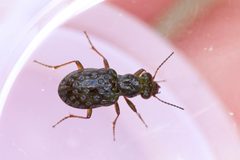
Elaphrus olivaceus is a of ground beetle in the Elaphrinae, first described by John Lawrence LeConte in 1863. It belongs to a commonly mistaken for tiger beetles due to similar body shape and habits. The species is distributed across northern North America, with records from Canada and the United States.
Pronunciation
How to pronounce Elaphrus olivaceus: /ɛˈlæfrəs ˌɒlɪˈvæsiəs/
These audio files are automatically generated. While they are not always 100% accurate, they are a good starting point.
Identification
Members of Elaphrus are frequently confused with tiger beetles (Cicindelinae) due to their streamlined body form, large , and active ground-dwelling . Elaphrus olivaceus can be distinguished from tiger beetles by its : Elaphrus has (thread-like) antennae, whereas tiger beetles have antennae with segments 4-10 dilated and flattened. Additionally, Elaphrus lack the characteristic white maculations (spots) on the typical of many tiger beetles, and their elytral surface is more uniformly textured. The Elaphrus also possesses distinctive pitted or elytral sculpturing that differs from the smooth or punctate surface of most tiger beetles.
Images
Distribution
Canada; United States (northern North America).
Similar Taxa
- Cicindela (tiger beetles)Streamlined body, large , and ground-dwelling habits cause frequent misidentification; distinguished by structure and elytral pattern
- ColliurisSimilar body shape leads to collector confusion; distinguished by different antennal and elytral characteristics
- AsaphidionRecent introduction to some regions that can be mistaken for Elaphrus; distinguished by subtle morphological differences in body proportions and surface sculpturing