
Elaphrus
Fabricius, 1775
Marsh Ground Beetles
Species Guides
14- Elaphrus americanus
- Elaphrus californicus(California Marsh and Bog Beetle)
- Elaphrus cicatricosus
- Elaphrus clairvillei
- Elaphrus finitimus
- Elaphrus lapponicus(Northern Peacock Beetle)
- Elaphrus lecontei
- Elaphrus lindrothi
- Elaphrus olivaceus
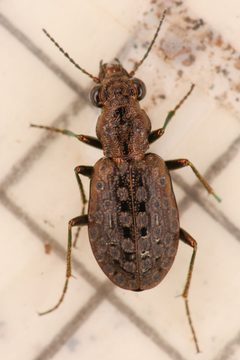
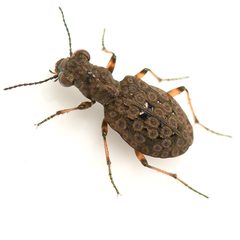
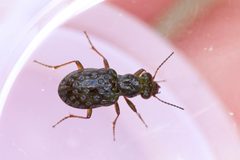
Elaphrus is a of ground beetles (Carabidae: Elaphrinae) commonly known as marsh ground beetles. The genus contains at least 40 described distributed across the Palearctic, Nearctic, Near East, and Northern Africa. Many species are strongly associated with wetland , including vernal pools and marshes. Several species exhibit strong morphological resemblance to tiger beetles (Cicindelinae), frequently leading to misidentification by collectors. At least two species, E. viridis and E. sugai, are considered threatened or endangered due to habitat loss and degradation.
Pronunciation
How to pronounce Elaphrus: /ɛˈlæfrəs/
These audio files are automatically generated. While they are not always 100% accurate, they are a good starting point.
Identification
Elaphrus are frequently mistaken for tiger beetles (Cicindelinae) due to their similar overall body shape, large , and long legs adapted for rapid movement. Key distinguishing features from tiger beetles include: with fewer segments and different proportions; lack of the distinctive white or pale maculations on typical of many tiger beetles; and different structure with less prominent . The is further distinguished from similar ground beetle genera such as Opisthius by subtle morphological characters requiring detailed examination. Species-level identification typically requires examination of male genitalia and subtle differences in elytral and coloration.
Images
Habitat
Wetland environments including marshes, vernal pools, flooded soils, and areas with moistened moss. Specific documented include: reed-burning wetlands (E. sugai in Japan); vernal pool complexes in Mediterranean climate regions (E. viridis in California); and riparian areas with heavy clay soils. Habitat specificity varies by , with some showing narrow to particular wetland types.
Distribution
Palearctic, Nearctic, Near East, and Northern Africa. Specific documented ranges include: Japan (E. sugai, to Watarase wetland, Tochigi Prefecture); California, USA (E. viridis, restricted to Jepson Prairie region of Solano County); North America broadly (E. americanus , including and western ); and Scandinavia (Denmark, Norway, Sweden).
Seasonality
activity appears concentrated in spring months. E. sugai adults collected in early April and early May with reproductive period in spring. E. viridis activity corresponds to vernal pool hydrology, typically active when pools contain water.
Diet
Predatory on insect larvae. Larvae of E. sugai successfully reared on (Tenebrio molitor) but cannot tolerate earthworms (Pheretima spp.), which are lethal even when consumed under no-choice conditions. Diet breadth varies among ; E. punctatus reportedly thrives on earthworms, which are toxic to E. sugai.
Life Cycle
Complete : , three larval instars, pupa, . E. sugai development at 22°C: egg stage 3–4 days; first instar 4–6 days; second instar 5–10 days; third instar 12 days (single observation); pupal stage 4 days (single observation); total hatching to adult 23–42 days. Females oviposit directly in mud without constructing egg chambers. Pupal distinctive in some : E. sugai has long setae on abdominal tergites twice as long as abdominal segments with somewhat coiled apices.
Behavior
are fast-running, . Adults of E. sugai exhibit cannibalistic tendencies, preying on and newly hatched larvae in laboratory conditions. Larvae are predatory and will accept prey even when nutritionally inappropriate, leading to mortality in some cases.
Ecological Role
Predatory ground beetles contributing to regulation of insect larval in wetland . Part of specialized wetland carabid vulnerable to degradation. E. sugai considered part of threatened wetland fauna in Japan; E. viridis identified as of conservation concern in California vernal pool ecosystems.
Human Relevance
Subject of conservation concern due to loss. E. viridis listed as threatened under U.S. Act. E. sugai likely the most endangered Elaphrus worldwide with no confirmed collections since 2011 despite intensive government surveys 2012–2014. Frequently misidentified by collectors as tiger beetles. Taxonomic interest due to complex species boundaries and morphological variation.
Similar Taxa
- Cicindelinae (tiger beetles)Strong morphological convergence in body shape, large , long legs for rapid running, and overall appearance. Distinguished by structure, elytral maculation patterns, and / proportions.
- OpisthiusAnother ground beetle frequently confused with Elaphrus; distinguished by detailed morphological examination.
- AsaphidionSmall ground beetles with similar general form; recent introduction to some regions may cause confusion.
Misconceptions
Frequently mistaken for tiger beetles by collectors due to convergent ; this misidentification is bidirectional, with some tiger beetles also initially confused as Elaphrus.
More Details
Conservation status
At least two severe conservation challenges: Elaphrus viridis (Delta green ground beetle) is restricted to vernal pool in Solano County, California and is federally threatened; Elaphrus sugai is to a single wetland in Japan with no confirmed records since 2011 despite intensive surveys.
Taxonomic complexity
The E. americanus complex comprises multiple cryptic and ( and western subspecies) distinguished through numerical taxonomic analysis, indicating substantial morphological variation within the .
Laboratory rearing challenges
Successful captive rearing requires -specific dietary knowledge; E. sugai larvae cannot be reared on diets suitable for , and require isolation to prevent .
Sources and further reading
- BugGuide
- Wikipedia
- GBIF taxonomy match
- iNaturalist taxon
- NCBI Taxonomy
- Catalogue of Life
- A First Class Box of Beetles | Beetles In The Bush
- Notes on the Reproductive Ecology and Description of the Preimaginal Morphology of Elaphrus sugai Nakane, the Most Endangered Species of Elaphrus Fabricius (Coleoptera: Carabidae) Ground Beetle Worldwide
- Geographic Distribution and Habitat Characterization of the Threatened Delta Green Ground Beetle, Elaphrus viridis Horn, 1878 (Coleoptera: Carabidae), in the Jepson Prairie Region of Solano County, California, USA
- Analysis of variation in the Elaphrus americanus complex of North America (Coleoptera: Carabidae)