
Elaphrinae
Latreille, 1802
Genus Guides
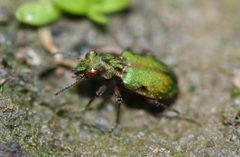
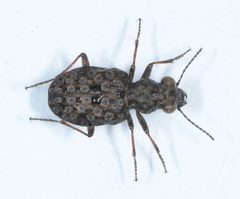
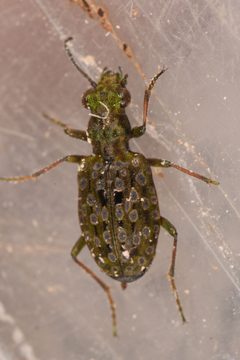
3Elaphrinae is a of ground beetles (Carabidae) established by Latreille in 1802. The subfamily comprises at least four extant —Blethisa, Diacheila, Elaphrus, and the fossil genus †Elaphrotites—with more than 50 described . Elaphrinae is one of several Carabidae subfamilies documented in meadow-steppe of western Ukraine, where six species have been recorded.
Pronunciation
How to pronounce Elaphrinae: //ɛˈlæfɹɪniː//
These audio files are automatically generated. While they are not always 100% accurate, they are a good starting point.
Identification
Images
Habitat
Meadow-steppe have been documented to support Elaphrinae in the Pivnichne Podillia region of western Ukraine. These habitats in that region have experienced degradation due to agricultural expansion, afforestation, and fragmentation.
Distribution
Documented from the Pivnichne Podillia National Nature Park and adjacent areas in north-western Podolian Upland, western Ukraine. The broader distribution of the includes regions where constituent occur, though specific range boundaries for the subfamily as a whole are not comprehensively documented.
Similar Taxa
- CicindelinaeBoth are Carabidae ; distinguished by tribal and generic composition, with Cicindelinae containing tiger beetles in tribes Cicindelini and Collyridini
- NebriinaeBoth are Carabidae recorded in the same Ukrainian survey; distinguished by different tribal affiliations and composition
More Details
Genera composition
The contains four : Blethisa (Bonelli, 1810), Diacheila (Motschulsky, 1844), Elaphrus (Fabricius, 1775), and the fossil genus †Elaphrotites (Haupt, 1856). Elaphrus is the type genus and contains the majority of .
Research history in Ukraine
The western Podillia region attracted naturalists from Austria-Hungary and Poland from the mid-19th century onward, with contributions from M. Nowicki, M. Lomnicki, M. Rybinski, R. Kuntze, and V. Lazorko. However, the Pivnichne Podillia National Nature Park itself was investigated fragmentarily until field studies began in 1995.