Brachinus fumans
(Fabricius, 1781)
American bombardier beetle
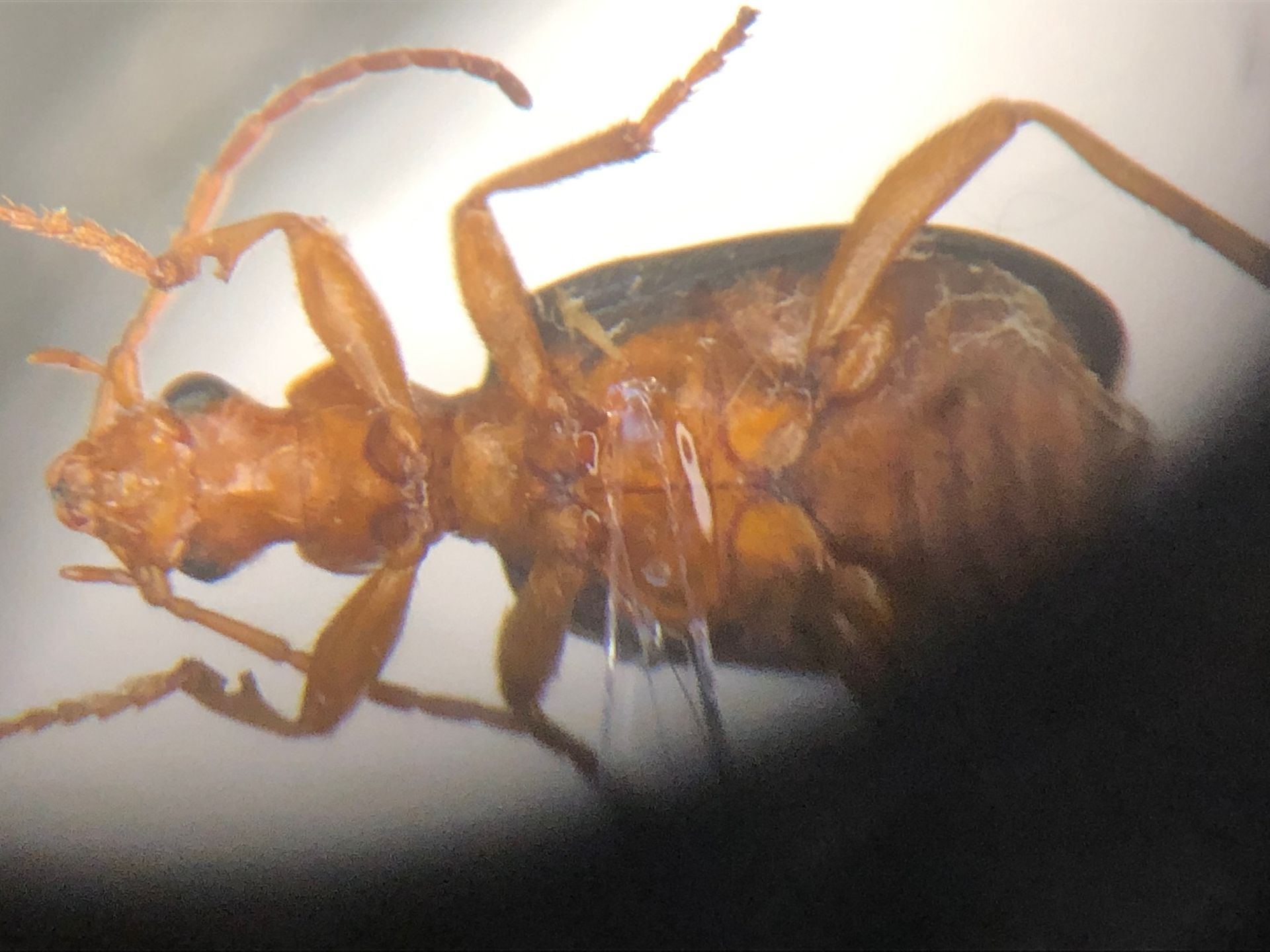
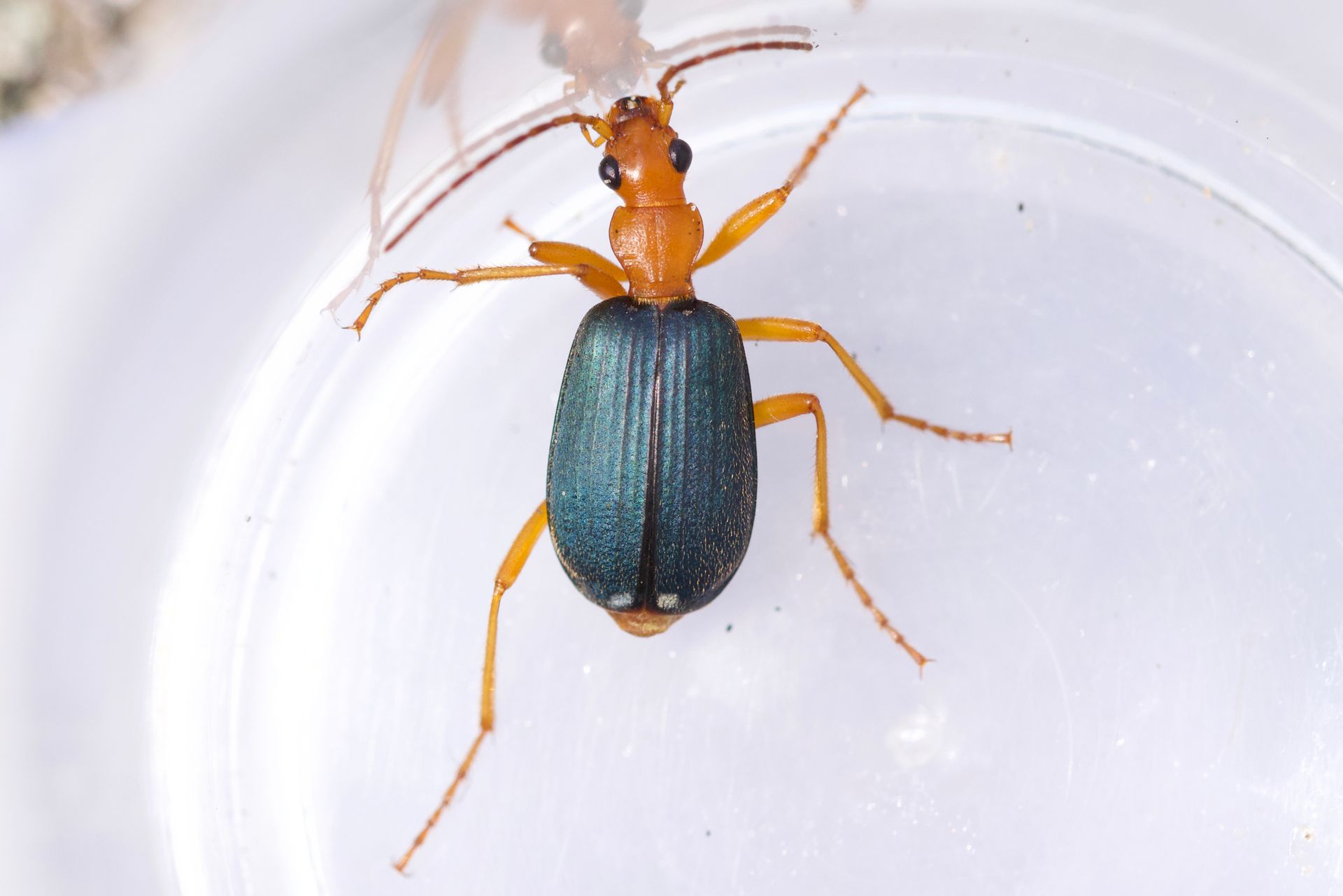
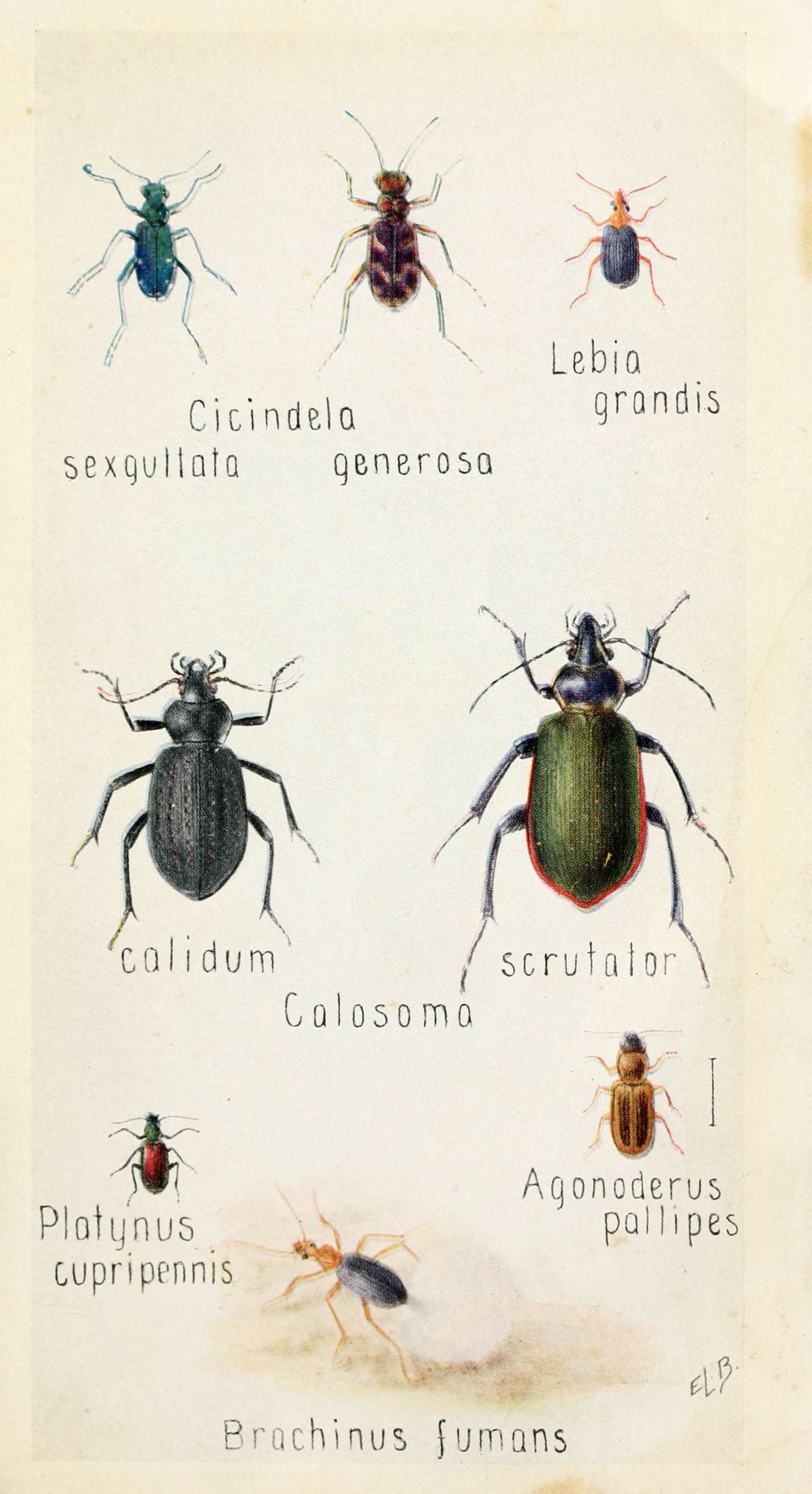
Brachinus fumans, commonly known as the American bombardier , is a ground beetle in the Carabidae and Brachininae. This belongs to the subgenus Neobrachinus and was originally placed in Erwin's fumans species group based on morphological characters, though molecular phylogenetic studies have redefined this group. The species is to the Nearctic region and is found across North America. Like other bombardier beetles, it possesses remarkable explosive defensive chemistry.
Pronunciation
How to pronounce Brachinus fumans: /bræˈkɪnəs ˈfjuːmənz/
These audio files are automatically generated. While they are not always 100% accurate, they are a good starting point.
Identification
Distinguishable from other Brachinus by morphological characters of the virga (sides curved over ventrally forming a central trough). Molecular phylogenetic analysis places this species within a re-defined fumans species group in the subgenus Neobrachinus. Accurate identification to species level typically requires examination of genitalic structures.
Images
Appearance
are small ground beetles with the characteristic body form of Brachinus . The virga (aedeagal structure) has sides curved over ventrally forming a central trough, which was the original morphological basis for placement in the fumans species group. Adult size shows significant intraspecific variation, positively correlated with the size of the pupal during larval development.
Habitat
Associated with riparian , particularly in the southwestern United States. Specific microhabitat preferences are not well documented for this .
Distribution
Nearctic region; to North America. Documented from Canada, Mexico, and the United States.
Life Cycle
Idiobiont ectoparasitoid larval lifestyle: the first instar triungulin locates and enters the pupa of an aquatic , consuming it during development. size is positively correlated with the size of the pupal , resulting in significant intraspecific size variation.
Behavior
When provoked, generates an explosive defensive chemical reaction producing a 100°C cloud of benzoquinones aimed at enemies. participate in multispecies with other carabid beetles.
Ecological Role
Human Relevance
The explosive defensive chemistry of bombardier beetles has been extensively studied for its biomechanical and biochemical mechanisms. The may have potential for applications in agroecosystems.
Similar Taxa
- Other Brachinus speciesShare the same and explosive defensive chemistry; require examination of genitalic structures for accurate identification
- Other Neobrachinus speciesBelong to the same subgenus and share similar traits including the idiobiont ectoparasitoid larval lifestyle
More Details
Molecular phylogenetics
Molecular phylogenetic analysis using COI, CAD, and 28S gene sequences found that Erwin's original fumans group was polyphyletic. B. fumans is retained in a re-defined fumans species group, though the broader group was split into eight new species groups (cinctipennis, cyanipennis, galactoderus, gebhardis, mexicanus, phaeocerus, quadripennis, tenuicollis) to reflect molecular clades.
Defensive chemistry mechanism
The explosive defensive reaction involves the catalytic decomposition of hydroquinones and hydrogen peroxide in a reaction chamber, producing benzoquinones and water vapor at temperatures reaching 100°C. This is directed through a turret-like abdominal structure at .
Sources and further reading
- BugGuide
- Wikipedia
- GBIF taxonomy match
- iNaturalist taxon
- NCBI Taxonomy
- Bug Eric: Red-shouldered Bug
- My, what busy palps you have! | Beetles In The Bush
- Kentucky | Beetles In The Bush
- Orthoptera | Beetles In The Bush | Page 3
- predator avoidance | Beetles In The Bush | Page 2
- Molecular phylogeny and revision of species groups of Nearctic bombardier beetles (Carabidae, Brachininae, Brachinus ( Neobrachinus))