
Platynus
Bonelli, 1810
Species Guides
19Platynus is a of ground beetles in the Carabidae containing over 180 described . Species in this genus are primarily with well-developed olfactory capabilities. The genus has been extensively studied in ecotoxicological research due to its role as a beneficial predatory insect in agricultural . Several species have been used as model organisms to assess sublethal effects of on non-target beneficial arthropods.
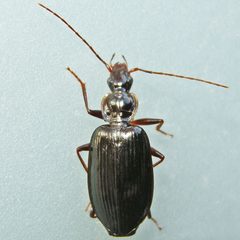
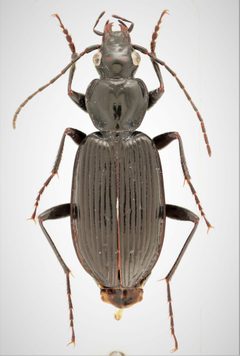
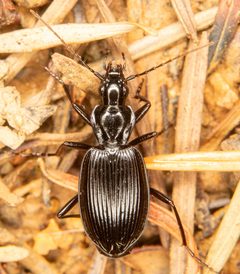
Pronunciation
How to pronounce Platynus: /ˈplætɪnəs/
These audio files are automatically generated. While they are not always 100% accurate, they are a good starting point.
Identification
-level identification within Platynus requires examination of both external and internal morphological characters. Geometric morphometric analysis of male genitalia has proven effective for distinguishing cryptic species. Traditional characters including shape, pronotum proportions, and elytral are used in combination with dissection of genitalia and mouthparts for accurate determination.
Images
Habitat
In the Italian Western Alps, Platynus have been documented in humid and cold environments, with distributions sometimes associated with altitude. The realized by the in this region encompasses preference for mesic, cool conditions.
Distribution
Documented from the Italian Western Alps, Denmark, Norway, Sweden, and Vermont (United States). The has a broad distribution with records across Europe and North America.
Behavior
Platynus assimilis exhibits dose-dependent behavioral responses to exposure. Sublethal doses of alpha-cypermethrin cause initial short-term locomotor hyperactivity followed by long-term hypoactivity. Recovery from behavioral takes several days. The is primarily and relies heavily on olfactory cues for foraging, with antennal counts 5–7 times higher than in ground beetles.
Ecological Role
Predatory insects performing important roles in functioning and . Used as biocontrol agents in programs.
Human Relevance
Frequently used as a model organism in ecotoxicological studies assessing sublethal effects of on non-target beneficial arthropods. Behavioral endpoints including locomotor activity and feeding rate are proposed as sensitive biomarkers for carabids in risk assessment.
Similar Taxa
- BembidionBoth are ground beetles in Carabidae, but Platynus possess 5–7 times more olfactory antennal than Bembidion lampros, reflecting versus activity patterns and greater reliance on chemical versus visual cues.
More Details
Insecticide Sensitivity
Platynus assimilis shows behavioral effects from alpha-cypermethrin concentrations up to 75,000-fold lower than maximum field recommended concentrations, indicating high sensitivity to that may negatively affect in agro-.
Sources and further reading
- BugGuide
- Wikipedia
- GBIF taxonomy match
- iNaturalist taxon
- NCBI Taxonomy
- Catalogue of Life
- Behavioural effects of the neonicotinoid insecticide thiamethoxam on the predatory insect Platynus assimilis
- Antennal sensilla of the ground beetle Platynus dorsalis (Pontoppidan, 1763) (Coleoptera, carabidae)
- Combination of Morphometric and Morphological Analyses: An Effective Approach for the Study of Platynus from the Italian W Alps (Coleoptera, Carabidae, Platynini)
- Sub‐lethal effects of the neurotoxic pyrethroid insecticide Fastac® 50EC on the general motor and locomotor activities of the non‐targeted beneficial carabid beetle Platynus assimilis (Coleoptera: Carabidae)
- Low doses of the common alpha-cypermethrin insecticide affect behavioural thermoregulation of the non-targeted beneficial carabid beetle Platynus assimilis (Coleoptera: Carabidae)