
Amphizoa
J.L. LeConte, 1853
troutstream beetles
Species Guides
3- Amphizoa insolens
- Amphizoa lecontei(Trout-stream beetle)
- Amphizoa striata(trout-stream beetle)
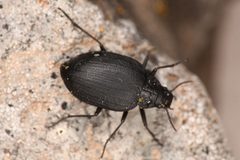
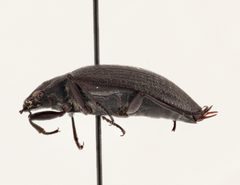
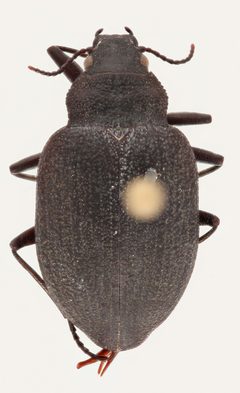
Amphizoa is a monogeneric of aquatic beetles, the sole representative of the Amphizoidae. These beetles are commonly called troutstream beetles due to their association with cold, flowing mountain waters. The genus contains five known , with three distributed in western North America and two in the eastern Palearctic region (China and North Korea). and larvae are predatory, feeding primarily on larvae. When disturbed, adults release a yellowish, cantaloupe-scented fluid from the as a chemical defense.
Pronunciation
How to pronounce Amphizoa: /ˌæmfɪˈzoʊə/
These audio files are automatically generated. While they are not always 100% accurate, they are a good starting point.
Identification
Distinguished from other aquatic beetles by the combination of: large oval convex body (11–16 mm); dull black coloration; pronotum distinctly narrower than with crenulated margins; short non-swimming legs lacking setae; and presence of short spines on elytra. Unlike Dytiscidae (diving beetles), legs lack swimming adaptations. Unlike Carabidae, has broader body form and aquatic . The 5-5-5 tarsal formula and extended hind are diagnostic technical characters.
Images
Habitat
Cold, medium to fast-flowing streams and rivers in mountain regions. Found clinging to rocks, woody debris, or at stream margins. Requires well-oxygenated, flowing water conditions.
Distribution
Western North America (three : A. lecontei, A. insolens, A. davidis) and eastern Palearctic—China and North Korea (two species: A. sinica, A. striata).
Diet
Predatory, especially on larvae; occasionally other aquatic insects. Larvae may scavenge dead insects.
Life Cycle
Both and larvae are aquatic and predatory. Specific details of , pupal, and developmental stages are not well documented in available sources.
Behavior
When disturbed, exude a yellowish fluid from the with an odor described as cantaloupe-like or resembling decaying wood, functioning as a chemical defense against such as frogs and toads. Adults and larvae cling to substrates in flowing water rather than swimming actively.
Ecological Role
in cold, fast-flowing stream , primarily controlling . May also function as scavengers during larval stage.
Human Relevance
No significant direct economic importance. Of interest to entomologists as a phylogenetically significant group representing a distinct with mixed characteristics of ground beetles and diving beetles.
Similar Taxa
- DytiscidaeDiving beetles share aquatic but have long swimming setae on hind legs for active swimming; Amphizoa lacks these adaptations and has a more robust, less streamlined body.
- CarabidaeGround beetles share some plesiomorphic leg features and are often terrestrial; Amphizoa is obligately aquatic with broader body form and distinct pronotum- proportions.
- AspidytidaeRecently described that shares prosternal process and mesocoxal cavity structure; distinguished by different preferences and geographic distribution.
More Details
Phylogenetic significance
Amphizoidae represents a phylogenetically important lineage exhibiting a mix of plesiomorphic features shared with Carabidae (slender ambulatory legs) and characteristics shared with Dytiscidae (large sensorial lobes on ). Molecular studies place it as sister to or to a clade containing Aspidytidae, (=Hygrobiidae), and Dytiscidae.
Species relationships
Phylogenetic analyses based on suggest A. davidis is sister to all other , with the remaining four species forming a clade: (A. insolens, (A. striata, (A. sinica & A. lecontei))).