
Parcoblatta bolliana
(Saussure & Zehntner, 1893)
Boll's Wood Cockroach, Boll's Wood Roach
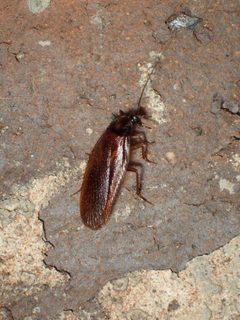
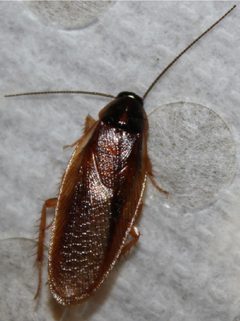
Parcoblatta bolliana is a small wood native to the United States, measuring approximately 11 mm in length. Males are slender with long, functional wings, while females are stouter with reduced tegmina and no functional hindwings. First-instar nymphs have been documented living in nests of Cremastogaster lineolata in Kansas, though are not found in these associations. The species occupies diverse including pine woods, grasslands, and decaying wood debris.
Pronunciation
How to pronounce Parcoblatta bolliana: //ˌpɑːrkoʊˈblætə ˌbɒliˈænə//
These audio files are automatically generated. While they are not always 100% accurate, they are a good starting point.
Identification
Distinguished from other Parcoblatta by combination of small size (~11 mm), male's shining dark brown pronotum with two oblique basal impressions connected by transverse impression, and female's widely separated tegmina pads. Male ocelli are dull yellow and well-defined versus small spots in female. Western show pronounced color paleness compared to eastern counterparts. Separation from P. americana and P. pennsylvanica requires examination of male genitalia and female subgenital plate .
Images
Habitat
Occupies diverse environments: under pine straw in pine woods (North Carolina), beneath dry cow in pine woods (Texas), under piles of old boards (Nebraska), and extensively in grassland areas of Kansas including both tall prairie grass and shorter grass. Associated with decaying wood debris and forest floor litter. First-instar nymphs found in soil beneath large rocks in nest associations.
Distribution
to the United States. Documented from Alabama, Georgia, Illinois, Iowa, Kansas, Louisiana, Missouri, Nebraska, North Carolina, Oklahoma, South Carolina, and Texas.
Host Associations
- Cremastogaster lineolata - nymphs found in nestsFirst-instar nymphs consistently found living in nests in Kansas; not found in nests; nymphs raised among ant without apparent harm; ant typically lives in soil beneath large rocks
Life Cycle
First-instar nymphs documented; complete details unknown. present in collections but seasonal timing of and development not established.
Behavior
Nymphs exhibit myrmecophilous , living within nests of Cremastogaster lineolata. likely given typical habits, though specific activity patterns unrecorded. Adults found under cover objects (boards, cow , pine straw) suggesting thigmotactic shelter-seeking behavior.
Ecological Role
Decomposer in forest floor and grassland ; prey item for cockroach wasps including Ampulex canaliculata; first-instar nymphs occupy unique microhabitat in nests, potentially serving as food source or .
Human Relevance
No documented pest status; not associated with human structures. Occasionally encountered during field work or turning cover objects in natural .
Similar Taxa
- Parcoblatta americanaOverlaps in range and ; requires genitalic examination for definitive separation
- Parcoblatta pennsylvanicaSimilar woodland use; distinguished by structural features of male pronotum and wing
- Other Parcoblatta species members share wood ; -level identification relies on subtle morphological characters
More Details
Ant Association Significance
The consistent finding of first-instar nymphs in Cremastogaster lineolata nests represents a notable myrmecophilous relationship. The mechanism of nymph entry into nests and ecological function of this association remain unexplained.
Predator Relationships
Documented as favored prey of the cockroach wasp Ampulex canaliculata, which uses wood cockroaches in the Parcoblatta as for its larvae.