
Trichoniscus pygmaeus
G. O. Sars, 1898
Least Pygmy Woodlouse
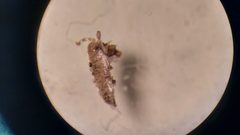
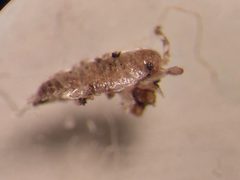
Trichoniscus pygmaeus is a minute terrestrial isopod commonly known as the Least Pygmy . It is native to Britain and Ireland, with a limited introduced distribution in the United States. The is among the smallest woodlice in its native range, measuring approximately 2.5 mm in length. Its translucent, pinkish-yellow coloration and diminutive size distinguish it from other European woodlice.
Pronunciation
How to pronounce Trichoniscus pygmaeus: /ˌtrɪkoʊˈnɪskəs pɪɡˈmiːəs/
These audio files are automatically generated. While they are not always 100% accurate, they are a good starting point.
Identification
Distinguished from other British and Irish woodlice primarily by its minute size (~2.5 mm) combined with semi-transparent, pinkish-yellow coloration and the distinctive mid- line. Trichoniscus pusillus, a congeneric , is slightly larger and lacks the pronounced translucent quality. Larger pygmy woodlice in the Haplophthalmus and other Trichoniscidae typically exceed 3 mm and show more robust pigmentation. The translucent shell and delicate build separate it from the opaque, heavily calcified of common woodlice such as Porcellio scaber or Armadillidium vulgare.
Images
Appearance
Extremely small , approximately 2.5 mm in length. Body is pinkish to yellowish in color with a semi-transparent . A distinct yellow to pinkish line runs longitudinally down the middle of the surface. The overall appearance is delicate and somewhat translucent compared to larger, more heavily pigmented woodlouse .
Distribution
Native to Britain and Ireland. Introduced to the United States with limited distribution; specific US localities are not well documented in available sources. GBIF records indicate presence on several Azorean islands (Faial, Pico, São Miguel, Santa Maria, Terceira), though these may represent additional introduced or native Atlantic range extensions.
Similar Taxa
- Trichoniscus pusillusSimilar size range and preferences, but slightly larger on average and lacks the pronounced semi-transparency and distinct mid- line of T. pygmaeus
- Haplophthalmus spp.Other pygmy woodlice that overlap in size, but typically more robust with less translucent
- Porcellio scaberCommon woodlouse that may occur sympatrically, but dramatically larger (to 18 mm) with opaque, heavily sculptured
More Details
Taxonomic History
First described by G. O. Sars in 1898. The epithet 'pygmaeus' directly references its exceptionally small stature among terrestrial isopods.
Conservation Status
Not evaluated by IUCN; given its wide distribution in Britain and Ireland and presence in disturbed , it is presumed to be of least concern.