
Trichoniscus
Brandt, 1833
pygmy woodlice
Species Guides
1- Trichoniscus pygmaeus(Least Pygmy Woodlouse)
Trichoniscus is a of small terrestrial isopods (woodlice) containing over 100 . The genus is notable for including species with both sexual and parthenogenetic reproductive modes, most prominently exemplified by Trichoniscus pusillus, which exists as sexual and triploid forms. These isopods are among the smallest woodlice, typically only a few millimeters in length, and are significant study organisms for research on the evolutionary maintenance of .
Pronunciation
How to pronounce Trichoniscus: /ˌtrɪ.kəˈnɪs.kəs/
These audio files are automatically generated. While they are not always 100% accurate, they are a good starting point.
Identification
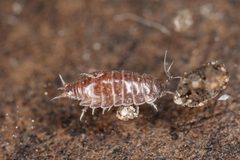
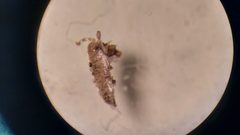
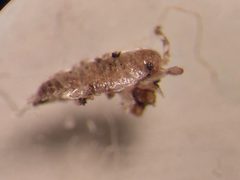
Members of Trichoniscus are distinguished from other woodlice by their extremely small body size, with typically measuring only 2–4 mm in length. The genus can be differentiated from similar small isopods such as Hyloniscus by subtle morphological characters including body proportions and structure, though definitive identification often requires microscopic examination. The small size and rapid movement of individuals make handling difficult without anesthesia.
Images
Habitat
Terrestrial; found in moist microhabitats including leaf litter, soil, decaying wood, and bases of trees and fallen logs. Requires high humidity for survival. occur in favorable microhabitats.
Distribution
Native to Europe; introduced to North America within the last several centuries. Present in northeastern United States. In Europe, both sexual and parthenogenetic triploid forms occur; introduced North American are typically entirely and triploid. Distribution records from GBIF include Denmark, Norway, and Sweden.
Seasonality
Breeding season extends from April to October with peak activity in June–July. produce spring cohorts.
Diet
; feeds on decaying organic matter in leaf litter and soil.
Life Cycle
Direct development without free-living larval stages. and developing young (mancae) carried in female marsupium ( pouch); mancae released as miniature . Sexual maturity reached in approximately one year; maximum lifespan approximately two years. Six and five adult stadia have been documented in T. pusillus pusillus. Slow with several months to one year required to reach maturity; rearing individuals in isolation is difficult due to low survival rates.
Behavior
Occurs in in nature. Exhibits negative . Activity patterns influenced by humidity and temperature. Rapid movement makes individuals difficult to handle without anesthesia.
Ecological Role
Decomposer; contributes to nutrient cycling and soil formation through consumption and processing of decaying organic matter in leaf litter systems.
Similar Taxa
- HyloniscusSimilar small terrestrial isopod ; Hyloniscus riparius has been used as a comparative sexual relative in studies of Trichoniscus pusillus. Distinguished by reproductive mode (Hyloniscus is obligately sexual) and subtle morphological differences.
More Details
Reproductive polymorphism
Trichoniscus pusillus exhibits geographic , with sexual in parts of Europe and triploid parthenogenetic populations in other European regions and introduced North American populations. The parthenogenetic lineage may have arisen via mating between two divergent diploid lineages, as evidenced by elevated heterozygosity and SNP .
Evolutionary significance
The serves as an important model system for studying the evolutionary maintenance of . Research on T. pusillus has provided evidence that purifying selection is less effective against new mutations in lineages over long time , though this effect is not immediately apparent in measures of dN/dS ratios.
Sources and further reading
- BugGuide
- Wikipedia
- GBIF taxonomy match
- iNaturalist taxon
- NCBI Taxonomy
- Catalogue of Life
- The life history of Trichoniscus pusillus pusillus (Crustacea: Isopoda)
- Differential reproduction of coexisting clones of triploid parthenogenetic Trichoniscus pusillus (Isopoda, Crustacea)
- Patterns of molecular evolution in a parthenogenic terrestrial isopod (Trichoniscus pusillus)
- The life cycle and annual production of Trichoniscus pusillus pusillus (Crustacea:Isopoda) in a Cheshire Wood
- Reduced effectiveness of purifying selection on new mutations in a parthenogenic terrestrial isopod ( Trichoniscus pusillus )
- Differential distribution of genetic variants in triploid parthenogenetic Trichoniscus pusillus (Isopoda, Crustacea) in a heterogeneous environment
- Life cycle, numbers, biomass and respiratory metabolism of Trichoniscus pusillus (Crustacea, Isopoda) in a beech woodland ? Wytham Woods, Oxford
- The distribution of the two forms of the woodlouse Trichoniscus pusillus Brandt (Isopoda: Oniscoidea) in the British Isles: a reassessment of geographic parthenogenesis