
Haplophthalmus
Schöbl, 1860
Species Guides
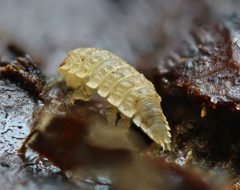
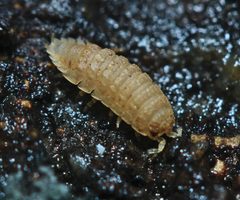
1- Haplophthalmus danicus(Spurred Ridgeback)
Haplophthalmus is a of small terrestrial isopods (woodlice) in the Trichoniscidae. The genus contains 47 described , with several showing restricted geographic ranges that have led to conservation concerns. Two species, H. abbreviatus and H. rhinoceros, are listed as vulnerable on the IUCN Red List due to their limited distributions in the Balkans.
Pronunciation
How to pronounce Haplophthalmus: /hæploʊfˈθælməs/
These audio files are automatically generated. While they are not always 100% accurate, they are a good starting point.
Identification
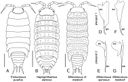
Members of Haplophthalmus are distinguished from other trichoniscid woodlice by their small body size and reduced , giving them a relatively eyeless appearance compared to many other isopod . The genus is characterized by a narrow, elongate body form typical of the Haplophthalminae. -level identification requires examination of male pleopod and other subtle structural characters.
Images
Habitat
in this inhabit moist terrestrial microhabitats, including leaf litter, soil crevices, and decaying wood in forested environments. They are generally restricted to humid, shaded conditions that prevent desiccation.
Distribution
The has a primarily European distribution, with records from Denmark, Norway, and Sweden (GBIF), and notable diversity in the Balkan region including Slovenia and Croatia. Several exhibit narrow ranges.
Ecological Role
As , in this contribute to decomposition processes in forest floor , fragmenting organic matter and facilitating nutrient cycling.
Human Relevance
Two (H. abbreviatus and H. rhinoceros) have been assessed by the IUCN and listed as vulnerable due to restricted ranges and sensitivity, making the relevant to regional conservation efforts in Slovenia and Croatia.
Similar Taxa
- TrichoniscusAlso in Trichoniscidae and shares small size and reduced , but Trichoniscus generally have more developed ocelli and different male pleopod structures.
- AndroniscusAnother trichoniscid with superficially similar body form, but distinguished by differences in antennal structure and uropod .
More Details
Conservation status
The shows a pattern of narrow in the Dinaric region, with H. abbreviatus to Slovenia and H. rhinoceros restricted to Croatia and Slovenia. This geographic concentration of threatened highlights the conservation importance of karst and forest in the western Balkans.