Haplophthalmus danicus
Budde-Lund, 1880
Spurred Ridgeback, terrestrial cave isopod
Haplophthalmus danicus is a small in the Trichoniscidae, commonly known as the spurred ridgeback or terrestrial cave isopod. Native to Europe and parts of Asia, it has been introduced to North America, where it has become well established in terrestrial since European settlement. The species comprises seven recognized across its native range. It is frequently observed in cave and subterranean , reflecting its .
Pronunciation
How to pronounce Haplophthalmus danicus: /ˌhæploʊfˈθælməs ˈdænɪkəs/
These audio files are automatically generated. While they are not always 100% accurate, they are a good starting point.
Identification
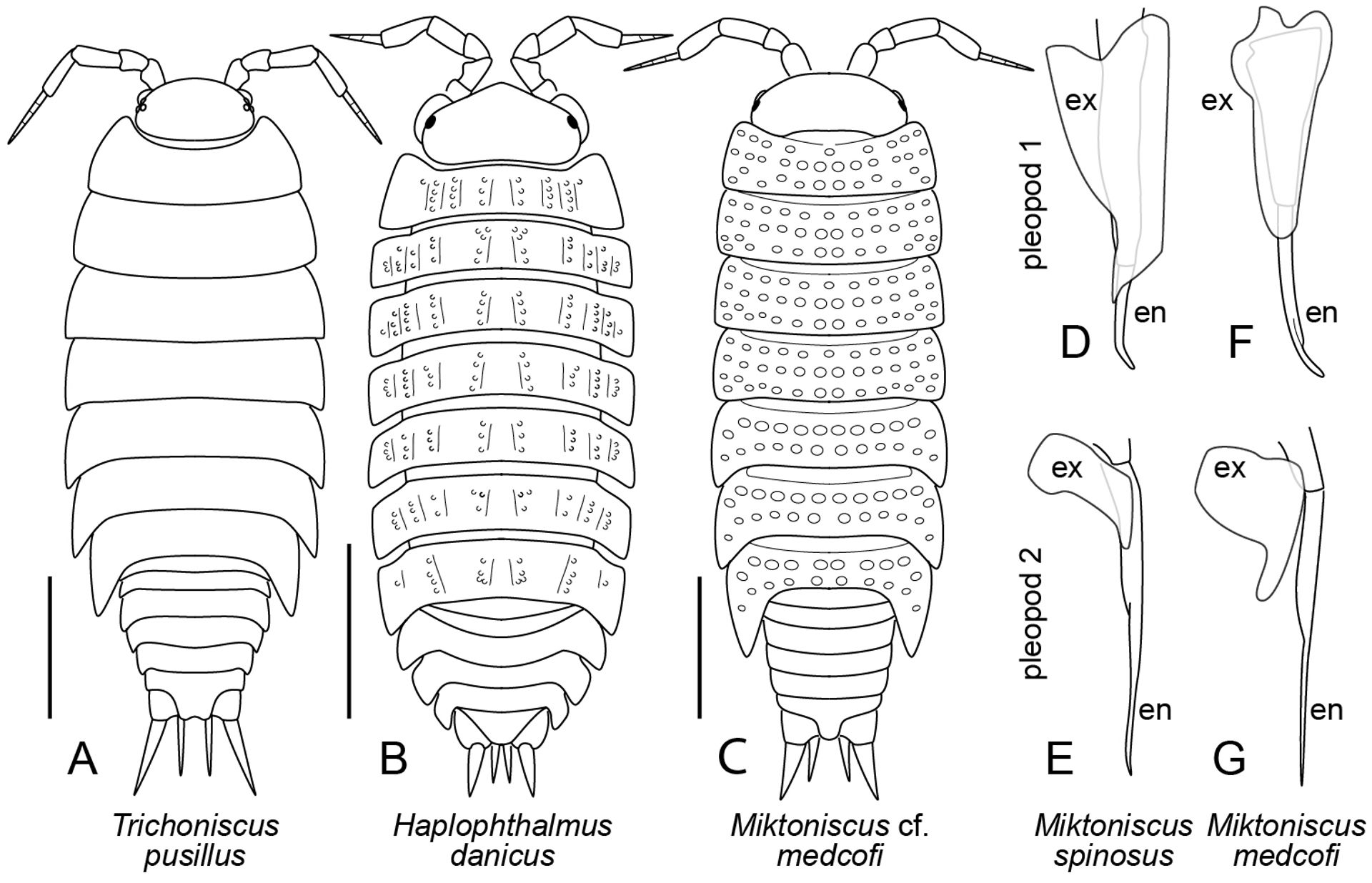
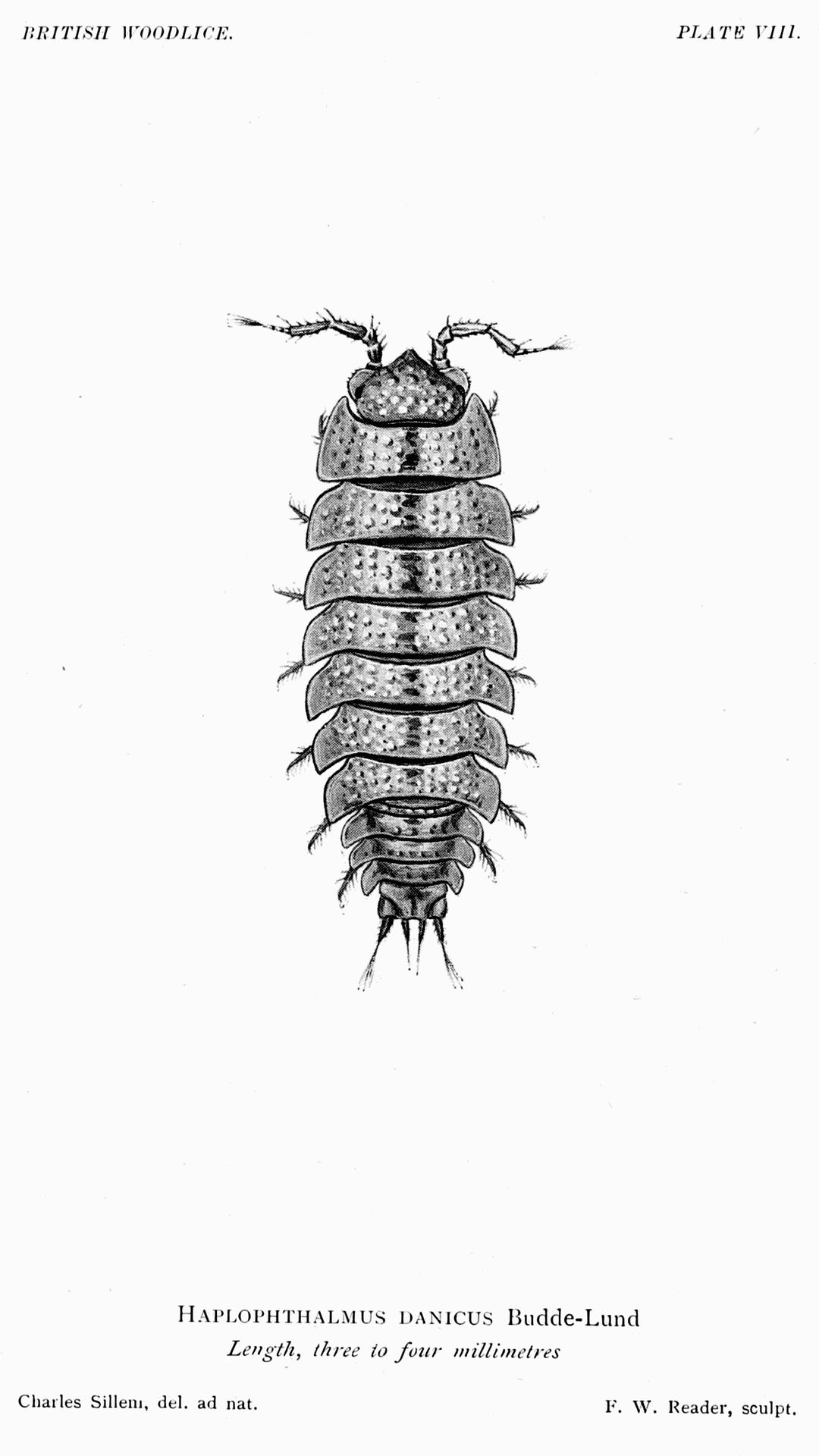
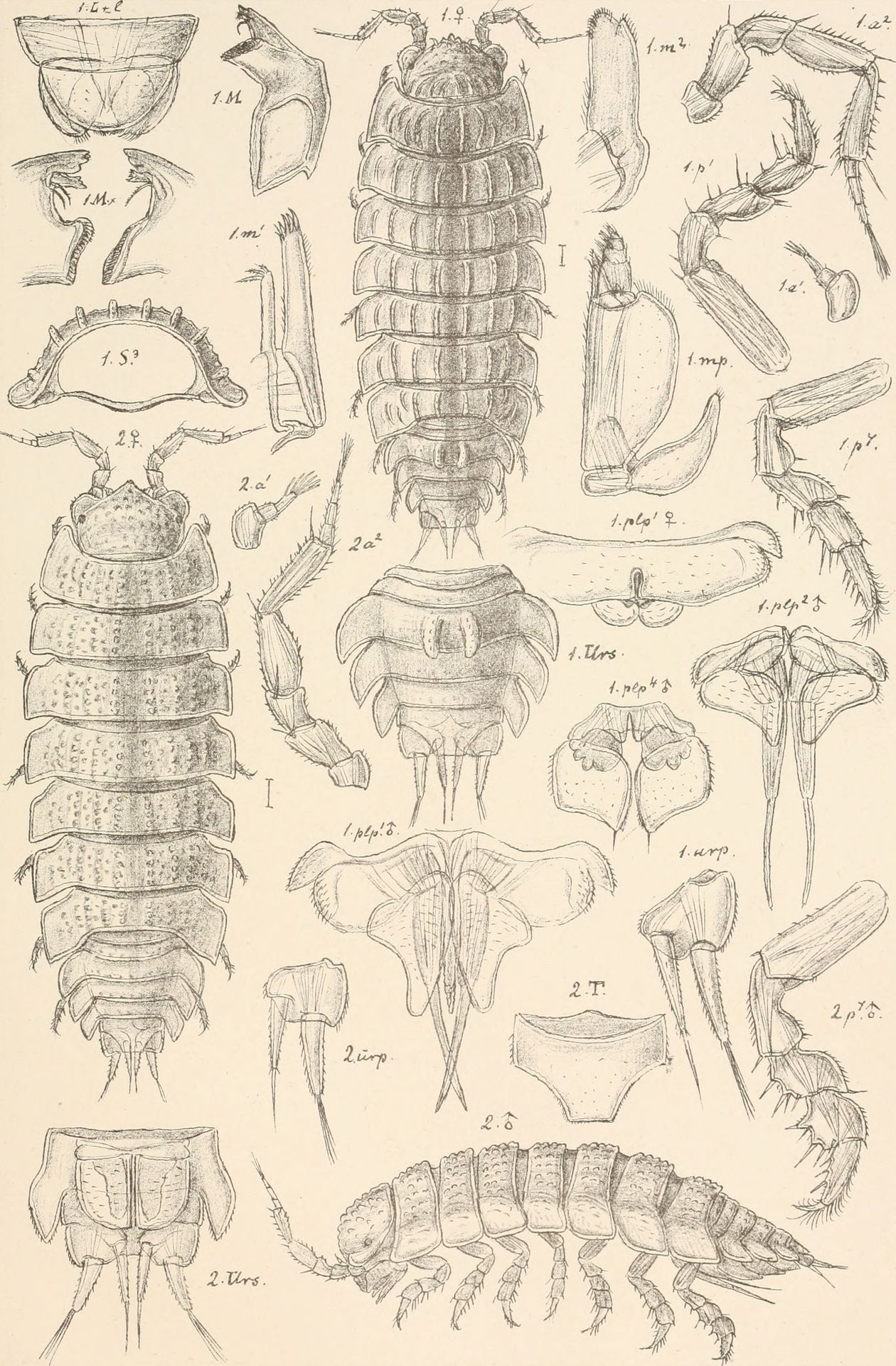
Distinguished from other small woodlice by the presence of characteristic spurs or projections on the surface (ridgeback ), a trait referenced in its 'spurred ridgeback.' As a member of Trichoniscidae, it is typically smaller and more slender than common pill bugs (Armadillidiidae). Specific identification requires examination of pleopodal lungs and other microscopic features; differentiation relies on subtle morphological variations and geographic origin.
Images
Habitat
Primarily associated with moist, dark microhabitats including caves, subterranean spaces, and deep leaf litter. Occupies terrestrial environments with high humidity and limited light exposure. In introduced North American , has been observed in similar sheltered, damp microhabitats within forest floor .
Distribution
Native range includes Europe, Southern Asia, and temperate Asia (Northern Asia excluding China). Introduced and established in North America, with records from the Azores (Faial, São Miguel). The introduction likely occurred during early European settlement.
Ecological Role
Contributes to decomposition processes in forest floor and cave through detritivory. As an established introduced in North America, has been integrated into terrestrial for an extended period.
Human Relevance
No direct economic or medical significance. Serves as an for subterranean quality and has been used in studies of cave biodiversity. Historical introduction to North America provides a case study in long-term establishment of soil fauna.
Similar Taxa
- Haplophthalmus mengiiCongeneric with overlapping European distribution; distinguished by subtle differences in pleopodal lung and body proportions requiring microscopic examination.
- Trichoniscus spp.Members of the same (Trichoniscidae) with similar small size and cave-dwelling habits; H. danicus separated by the distinctive spurred ridgeback and specific antennal segment proportions.
- Armadillidium vulgareCommon pill frequently confused with smaller woodlice; H. danicus is smaller, lacks the ability to conglobate (roll into a ball), and has a more elongate body form with different sculpturing.
More Details
Taxonomic Status
Catalogue of Life lists this as 'ambiguous synonym,' though GBIF and NCBI recognize it as accepted. The authorship year varies between sources (1879 vs. 1880), reflecting historical taxonomic documentation practices.
Subspecies Diversity
Seven are recognized, primarily distinguished by geographic distribution and subtle coloration or size differences: H. d. armenius (Armenia region), H. d. bagnalli, H. d. danicus (nominate, Europe), H. d. rufus (reddish morph), H. d. tauricus (Crimea), H. d. transsilvanicus (Transylvania), and H. d. virescens (greenish morph).
Introduction History
Unlike many recent , H. danicus introduction to North America is considered historical, likely coinciding with 17th-18th century European . This extended residence time has allowed full integration into local decomposer without documented negative impacts.