
Androniscus
Verhoeff, 1908
Species Guides
1- Androniscus dentiger(rosy woodlouse)
Androniscus is a of small woodlice in the Trichoniscidae, established by Verhoeff in 1908. The genus includes the well-known Androniscus dentiger, commonly called the rosy or pink . Members of this genus are characterized by their small size, distinctive coloration, and association with calcareous environments. Some show cave-adapted , particularly in the southern part of their range.
Pronunciation
How to pronounce Androniscus: //ˌændroʊˈnɪskəs//
These audio files are automatically generated. While they are not always 100% accurate, they are a good starting point.
Identification
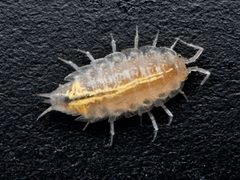
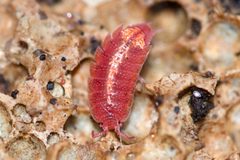
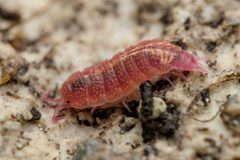
Small body size (around 6 mm), pink to orange coloration with a yellow midline stripe that bifurcates toward the . Large relative to body size and texture. Distinguished from other small trichoniscid woodlice by the combination of bright coloration and distinct stripe pattern.
Images
Habitat
Calcareous environments with significant lime availability. In northern parts of the range: coastal areas, gardens, old quarries, caves, and churchyards. In southern parts: primarily cave-dwelling (troglobitic), with some considered troglophilic. In North America, restricted to greenhouse environments.
Distribution
British Isles through southern Europe to North Africa. Records from Denmark, Norway, and Sweden. Introduced to North America (greenhouses only).
Behavior
Shows partitioning in cave systems, with genetically isolated between caves due to lack of . In the British Isles, has been observed to prefer Anglican churchyards over Catholic ones, reportedly due to older Protestant churches using ox-blood mortar.
Ecological Role
Decomposer in calcareous . Serves as an for lime-rich environments.
Human Relevance
Used as an indicator of calcareous substrates and historical building materials. Subject of biogeographic and genetic studies due to cave-isolated . Occasional greenhouse pest in North America.
Similar Taxa
- TrichoniscusSimilar small size and (Trichoniscidae), but Androniscus distinguished by pink/orange coloration with yellow stripe and larger relative size
- HaplophthalmusAnother small trichoniscid ; Androniscus differs in coloration pattern and texture
More Details
Subspecies and Species Complex
A. dentiger may represent a complex of sibling or cryptic . Six are recognized: africanus, caecus, calcivagus, croaticus, dentiger, and ligulifer.
Cave Ecology
Southern show troglobitic with genetic isolation between cave systems. Some populations are troglophilic rather than strictly troglobitic.