
Agroeca
Westring, 1861
Species Guides
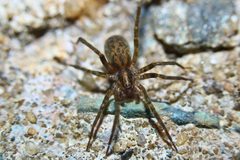
4Agroeca is a of liocranid sac spiders first described by Niklas Westring in 1861. The genus contains 35 recognized distributed across Africa, Asia, Europe, North America, and South America. Species in this genus are ground-dwelling hunters with activity patterns. The genus shows a notably broad geographic distribution, with multiple species to East Asia.
Pronunciation
How to pronounce Agroeca: /əˈɡroʊ.ɛkə/
These audio files are automatically generated. While they are not always 100% accurate, they are a good starting point.
Identification
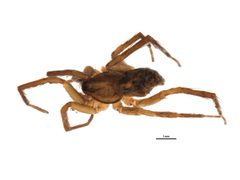
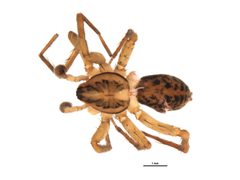
Members of Agroeca can be distinguished from other liocranid by the presence of a distinctively flattened row and the characteristic arrangement of spines on the legs. The genus is further characterized by an elongated with a pattern of light markings against a darker background, though specific patterns vary among . Examination of genitalia is required for definitive species-level identification.
Images
Habitat
in this inhabit terrestrial environments including grasslands, forest floors, and agricultural fields. They are ground-dwelling spiders that construct silk retreats under stones, logs, or within leaf litter. Some species have been documented in montane regions up to subalpine elevations.
Distribution
The occurs on six continents: Africa (Morocco, Algeria, Tunisia, South Africa), Asia (China, Japan, Korea, Russia, Kazakhstan, Iran, India, Central Asia), Europe (widespread including Scandinavia, Mediterranean, and east to Russia), North America (USA, Canada), and South America (Colombia, Peru).
Behavior
Agroeca are ground hunters that do not build capture webs for prey. They construct small silk retreats for shelter during daylight hours. When disturbed, individuals may adopt a defensive posture with legs raised.
Ecological Role
As , Agroeca contribute to regulation of ground-dwelling in their . Their presence in agricultural fields suggests potential role in biocontrol of pest insects, though this has not been formally studied.
Human Relevance
Agroeca pose no known medical or economic significance to humans. They are occasionally encountered by arachnologists and naturalists in field surveys but are not commonly observed due to their cryptic habits.
Similar Taxa
- LiocranumBoth belong to Liocranidae and share ground-dwelling habits, but Liocranum typically have more robust and lack the flattened row characteristic of Agroeca.
- PhrurolithusAnother liocranid with similar body form, but Phrurolithus are generally smaller with different arrangement and are more commonly associated with moss and bark rather than open ground.
More Details
Taxonomic History
The was established by Swedish arachnologist Niklas Westring in 1861. The type , Agroeca proxima, was originally described by O. Pickard-Cambridge in 1871 as Clubiona proxima before being transferred to Agroeca.
Species Diversity
As of October 2022, the contains 35 . China harbors the greatest with at least 10 described species, followed by the United States with 6 species. Several species have been described since 2019, indicating ongoing taxonomic work.