
Herpyllus
Hentz, 1832
Parson spider
Species Guides
4- Herpyllus cockerelli
- Herpyllus ecclesiasticus(Eastern Parson Spider)
- Herpyllus hesperolus(Western Parson Spider)
- Herpyllus propinquus(Western Parson Spider)
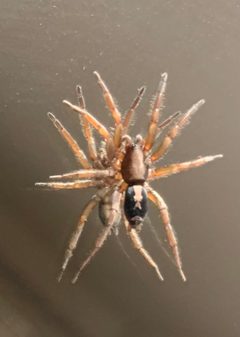
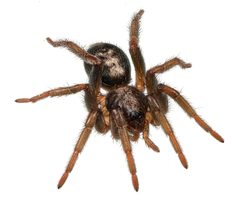
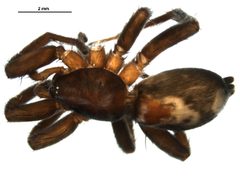
Herpyllus is a of ground spiders in the Gnaphosidae, first described by Nicholas Marcellus Hentz in 1832. The genus contains 33 distributed across North America, Central America, and parts of Asia. Members are commonly known as 'parson spiders' due to their distinctive black-and-white coloration resembling clerical vestments. The most well-known species, Herpyllus ecclesiasticus (Eastern Parson Spider), is widespread in eastern North America and frequently enters human dwellings.
Pronunciation
How to pronounce Herpyllus: //hɛrˈpɪləs//
These audio files are automatically generated. While they are not always 100% accurate, they are a good starting point.
Identification
Parson spiders in this are recognized by their distinctive color pattern: a black body with a white marking shaped like an inverted 'V' or clerical collar on the , giving them their . They possess prominent with multiple orifices, a characteristic feature of Gnaphosidae. Females range 6.5–13 mm in body length, males 4.5–6.5 mm. The genus can be distinguished from other Gnaphosidae by this specific color pattern combined with ground-dwelling habits.
Images
Habitat
Found in deciduous woodlands, dry mixed conifer forests with oaks, and around human structures. By day, individuals hide under loose bark, stones, boards, and ground debris. At night, they climb vertical surfaces including building walls and doorways, and are frequently attracted to outdoor lights where they prey on insects.
Distribution
North America (USA, Mexico, southern Canada), Central America, and parts of Asia including India, Korea, Afghanistan, and Turkmenistan. In North America, Herpyllus ecclesiasticus occurs east of the Rocky Mountains from southern Alberta to Nova Scotia and south to Texas and Florida, while Herpyllus propinquus replaces it west of the Rockies.
Seasonality
Mature specimens can be found year-round, suggesting relatively long-lived individuals. Mated females produce sacs in autumn.
Life Cycle
Mated females spin flat sacs in autumn, depositing them in silken retreats under loose bark or similar cover. The female guards the egg sac. One observed egg sac contained 130 spiderlings. Spiderlings emerge from the egg sac but further developmental details are not documented.
Behavior
Primarily , actively prowling for prey at night. Highly adept climbers capable of negotiating slick vertical surfaces. Fast-moving and agile; can vault out of smooth-walled containers. When threatened or trapped, may bite defensively. Specimens entering homes at night may seek in clothing, shoes, and other objects.
Ecological Role
of small insects, particularly those attracted to artificial lights at night. Contributes to structure in forest and woodland .
Human Relevance
Frequently enters human dwellings, which can cause alarm. Bites may occur if the spider is trapped against skin, but effects depend on individual immune response; rarely exceed mild inflammation and are not considered dangerous to healthy humans. The spider's distinctive appearance makes it one of the more readily identified household spiders in its range.
Similar Taxa
- CesoniaAlso in Gnaphosidae and shares ground-dwelling habits, but lacks the distinctive parson spider color pattern of black with white inverted 'V' marking.
- SyspiraAnother gnaphosid with similar prowling , but differs in body proportions and lacks the characteristic clerical collar marking.
- AnyphaenaGhost spiders in Anyphaenidae share habits and climbing ability but have different arrangement and lack the parson spider's bold black-and-white pattern.
More Details
Species diversity
The contains 33 recognized as of 2019, with particularly high diversity in Mexico (13 species) and the southwestern United States. Several species were described by Platnick & Shadab in 1977.
Etymology
The 'parson spider' derives from the resemblance of the spider's black body with white marking to the clerical collar and vestments worn by clergy, particularly in the type Herpyllus ecclesiasticus (from Latin 'ecclesiasticus', meaning 'of the church').