
Herpyllus ecclesiasticus
Hentz, 1832
Eastern Parson Spider
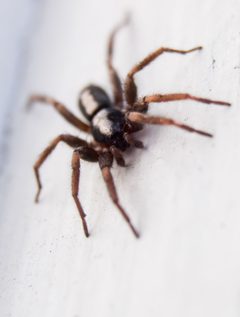
Herpyllus ecclesiasticus, commonly known as the Eastern Parson Spider, is a ground spider in the Gnaphosidae named for its distinctive abdominal pattern resembling an 18th-century clerical cravat. It is a hunter found throughout eastern North America, frequently encountered in and around human dwellings. The is active year-round and is recognized by its striking black-and-white coloration and rapid, agile movements.
Pronunciation
How to pronounce Herpyllus ecclesiasticus: //hɛrˈpɪləs ɛkˌklɛsɪˈæstɪkəs//
These audio files are automatically generated. While they are not always 100% accurate, they are a good starting point.
Identification
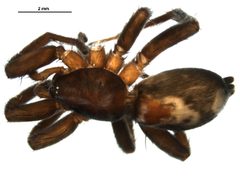
Distinguished from similar ground spiders by the unique white cravat-shaped marking on the . The combination of black , gray abdomen, and this specific white pattern separates it from other Herpyllus and most Gnaphosidae. The Western Parson Spider (Herpyllus propinquus) replaces it west of the Rocky Mountains and is morphologically similar but geographically separated. Prominent visible from above help confirm -level identification.
Images
Appearance
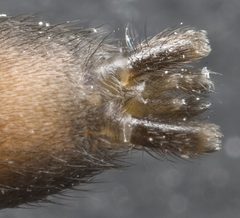
Medium-sized spider with females 6.5–13 mm and males 4.5–6.5 mm in body length. covered in black hairs; covered in gray hairs. abdomen bears a distinctive white marking shaped like an old-style clerical cravat or neckband, with a small white spot above the . Spinnerets prominent and cylindrical, resembling a showerhead with multiple orifices—a characteristic feature of Gnaphosidae. Legs relatively long and adapted for rapid running and climbing.
Habitat
Deciduous forests, particularly in areas with loose bark, stones, boards, and ground debris. Frequently found in and around human structures including homes, where it seeks shelter in clothing, shoes, and other objects. Also occurs under rocks and logs in woodland settings. Observed at elevations up to at least 7,000 feet in mixed conifer-oak forest.
Distribution
Eastern North America east of the Rocky Mountains. Range extends from southern Alberta and Nova Scotia in Canada, south through the United States to Texas, Florida, and Tamaulipas, Mexico. Replaced by Herpyllus propinquus west of the Rocky Mountains.
Seasonality
Active year-round. Mature specimens found throughout all seasons. Mated females produce sacs in autumn.
Diet
Small insects and other arthropods. Specifically observed preying on insects attracted to outdoor lights.
Life Cycle
Mated females spin flat sacs in autumn, depositing them in silken retreats. Females guard egg sacs. One documented egg sac in Connecticut contained 130 spiderlings. Mature individuals present year-round suggests relatively long lifespan for a spider of this size.
Behavior
Strictly hunter that emerges from retreats at night to actively pursue prey. Constructs silken retreats under loose bark, stones, or debris for daytime shelter. Highly agile and fast-moving; capable of climbing virtually any surface including slick vertical surfaces. Frequently enters homes at night, where it may hide in clothing, shoes, and household objects. Bites when trapped or provoked.
Ecological Role
of small insects and arthropods. Contributes to control of insect around buildings and in forest .
Human Relevance
Frequently enters homes, causing concern for homeowners. Bites are painful and may trigger allergic reactions in sensitive individuals, though rarely exceed mild inflammation for most people. Not considered medically significant for healthy humans. Often found in showers, bedrooms, and other indoor locations. Rapid speed and climbing ability make it difficult to capture.
Similar Taxa
- Herpyllus propinquusWestern Parson Spider; morphologically similar but occurs west of the Rocky Mountains, replacing H. ecclesiasticus in that region.
- Other GnaphosidaeLack the distinctive cravat-shaped white abdominal marking; many have less contrasting color patterns and different abdominal markings.
More Details
Venom and Medical Significance
Bites are painful but not medically significant for most healthy humans. Effects depend primarily on individual immune response; allergic reactions possible but rare.
Speed and Agility
Described as exceptionally fast, comparable to a jumping spider in rapidity. Can escape from smooth-walled containers and climb slick surfaces with ease.