
Herpyllus hesperolus
Chamberlin, 1928
Western Parson Spider
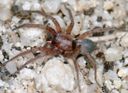
Herpyllus hesperolus is a ground spider in the Gnaphosidae, commonly known as the Western Parson Spider. It is closely related to the Eastern Parson Spider (Herpyllus ecclesiasticus) and shares the distinctive black-and-white color pattern reminiscent of clerical garb. This occurs in western North America, replacing its eastern counterpart west of the Rocky Mountains. Like other members of its , it is primarily and often found near human structures.
Pronunciation
How to pronounce Herpyllus hesperolus: /hɛrˈpɪləs hɛˈspɛroʊləs/
These audio files are automatically generated. While they are not always 100% accurate, they are a good starting point.
Identification
Distinguished from Herpyllus ecclesiasticus (Eastern Parson Spider) by geographic range—H. hesperolus occurs west of the Rocky Mountains while H. ecclesiasticus occurs to the east. The two are morphologically similar and may require examination of genitalic characters for definitive identification. Distinguished from other ground spiders by the combination of prominent and the black-and-white parson pattern.
Images
Habitat
Found in dry mixed conifer forest with oaks at moderate elevations (around 7,000 feet based on observation records). Occurs in wooded areas, often near human structures. By day, seeks shelter under loose bark, stones, boards, and ground debris.
Distribution
Western North America: recorded from Alberta and British Columbia in Canada, and presumably occurring through western United States west of the Rocky Mountains. Replaces Herpyllus ecclesiasticus in this region.
Seasonality
Mature specimens may be found year-round. Mated females produce sacs in autumn.
Diet
Preys on small insects, particularly those attracted to outdoor lights at night.
Life Cycle
Mated females spin a flat sac in autumn, deposited in a silken retreat. One recorded egg sac contained 130 spiderlings. Spiderlings emerge from the egg sac and disperse.
Behavior
Primarily , prowling at night for prey. Climbs well and can be found well off the ground. Frequently enters buildings at night, where it may seek in clothing, shoes, and other objects. Fast-moving and agile; capable of climbing slick surfaces. May bite if trapped, though effects are typically mild.
Ecological Role
of small insects; contributes to control of insect near human structures and in forest .
Human Relevance
Often enters homes, which can cause concern for residents. Bites may occur if the spider is trapped against skin, but rarely exceed mild inflammation and depend on individual immune response. Not considered dangerous to healthy humans. Valued by arachnologists for its distinctive appearance and .
Similar Taxa
- Herpyllus ecclesiasticusEastern Parson Spider; nearly identical in appearance and , but occurs east of the Rocky Mountains. Geographic separation is the primary distinguishing factor.
- Herpyllus propinquusAnother western in the same ; may overlap in range and require careful examination for separation.
More Details
Taxonomic note
This was described by Chamberlin in 1928. It is part of a complex of closely related parson spiders in the Herpyllus that are differentiated primarily by geographic distribution and subtle morphological differences.
Observation context
Documented from blacklighting surveys in mixed conifer-oak forest in southwest New Mexico at 7,000 feet elevation, indicating attraction to lights and presence in insect .