
Otobius
N. Banks, 1912
spinose ear tick
Species Guides
1- Otobius megnini(spinose ear tick)
Otobius is a of soft-bodied ticks in the Argasidae. possess a (feeding mouthpart) despite nymphs having a fully developed hypostome, and lack both and a hood. The genus contains two : O. lagophilus, associated with lagomorph , and O. megnini, the , which infests the ear canals of domestic and wild mammals. O. megnini is of veterinary significance due to its propensity to cause otitis, ear canal obstruction, and associated neurological in heavily infested hosts.
Pronunciation
How to pronounce Otobius: /ˌoʊˈtoʊbi.əs/
These audio files are automatically generated. While they are not always 100% accurate, they are a good starting point.
Identification
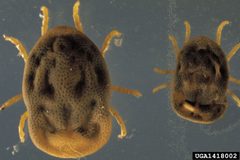
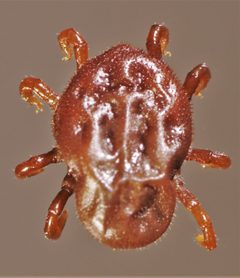
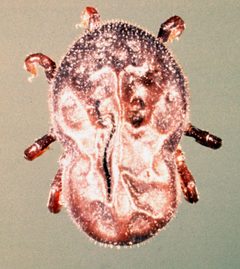
Distinguished from the similar Ornithodoros by the in and absence of and hood. O. megnini nymphs have conspicuous spines on the body surface, earning the ''. O. lagophilus is associated with rabbit and hare rather than large domestic mammals.
Images
Habitat
O. megnini occurs in animal shelters, stables, barns, and wildlife facilities where congregate. Found within the ear canals of hosts rather than free-living in vegetation. O. lagophilus is associated with lagomorph burrows and nesting sites.
Distribution
O. megnini: widely distributed in North and South America, including Texas, Mexico, and Argentina; established in Sri Lanka. O. lagophilus: distribution associated with lagomorph in North America. GBIF records indicate presence in Denmark and Sweden.
Seasonality
O. megnini peak during late spring to early fall in temperate regions; year-round presence in tropical and subtropical areas where are stabled continuously. Seasonal dynamics correlate with horse otoacariasis cases in Sri Lanka.
Diet
Larvae and nymphs are obligate blood-feeders. of O. megnini do not feed; the adult is and non-functional.
Host Associations
- Bos primigenius taurus - domestic cattle; nymphs collected from auditory pavilion
- Equus caballus - horses; causes otoacariasis, muscle spasms, myotonia, and colic
- Ovis aries - sheep
- Capra hircus - goats
- South American camelids - llamas, alpacas
- Canis lupus familiaris - dogs
- Homo sapiens - incidental reported
- Lagomorpha - rabbits and hares; primary of O. lagophilus
Life Cycle
Multi- with larvae, nymphs, and . O. megnini: larvae and nymphs feed within host ear canals; nymphs may undergo multiple instars. Adults are non-parasitic, do not feed, and are found in the environment rather than on hosts. Females lay in sheltered locations such as cracks in barn walls or bedding material.
Behavior
Nymphs attach deep within the ear canal of , causing intense irritation, wax accumulation, and purulent . Heavy lead to ear canal obstruction and secondary bacterial . are non-feeding and do not remain on hosts. Ants (Tapinoma melanocephalum, Monomorium spp., Pheidole sp., Crematogaster sp.) have been observed preying on , larvae, and adults in laboratory conditions, with T. melanocephalum showing preference for non-parasitic stages.
Ecological Role
of domestic and wild mammals; contributes to otoacariasis in livestock and equines. Potential bio-suppression by has been suggested but not quantified in natural settings.
Human Relevance
Veterinary pest causing significant economic losses through ear canal damage, reduced animal productivity, and treatment costs. O. megnini in horses have been associated with muscle spasms, myotonia, and colic. Control relies on acaricides, manual removal, and environmental management of stabling facilities. Ants may provide in managed settings.
Similar Taxa
- OrnithodorosSimilar soft-bodied in Argasidae; distinguished by Otobius having and lacking and hood
- ArgasOther ; Otobius differs in development and association (ear canal specialization in O. megnini)
More Details
Taxonomic uncertainty
Subfamilial placement within Ornithodorinae has been questioned in Mans et al. 2024; phylogenetic relationships among remain under investigation.
Clinical significance
O. megnini is sometimes overlooked in differential of equine neurological ; ear examination is recommended for horses presenting with unexplained muscle spasms or myotonia.
Sources and further reading
- BugGuide
- Wikipedia
- GBIF taxonomy match
- iNaturalist taxon
- NCBI Taxonomy
- Catalogue of Life
- Managing External Parasites of Texas Cattle - AgriLife Extension Entomology
- The Life History of Otobius lagophilus
- Muscle spasms associated with ear tick (Otobius megnini) infestations in five horses
- First Record of Otobius Megnini (Dugés, 1883) (Ixodida: Argasidae) Found on Bos Primigenius Taurus in San Juan Province, Argentina
- Ants as predators of the Spinose Ear Tick, Otobius megnini (Dugès) in Sri Lanka
- Seasonal dynamics of spinose ear tick Otobius megnini associated with horse otoacariasis in Sri Lanka
- Life cycle of Spinose ear tick, Otobius megnini (Acari: Argasidae) infesting the race horses in Nuwara Eliya, Sri Lanka
- Myotonia and Colic Associated with the Spinose Ear Tick, Otobius megnini, in a Horse in Northern Mexico
- Spatial and temporal distributions of the Spinose Ear Tick,Otobius megnini, within animal shelters at Fossil Rim Wildlife Center