Spirostreptida
Family Guides
3- Cambalidae
- Choctellidae
- Spirostreptidae(Flatplate Millipedes)
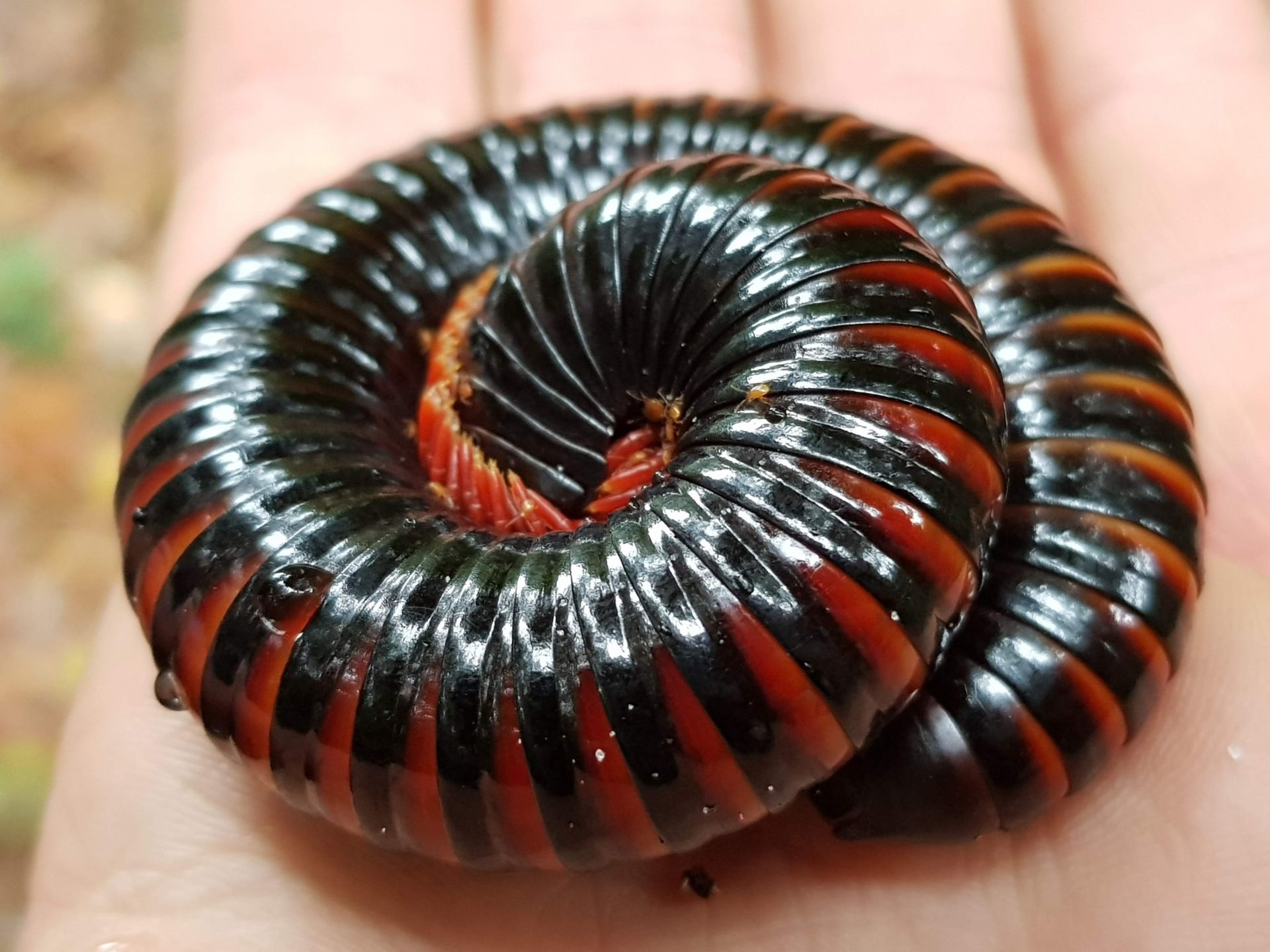
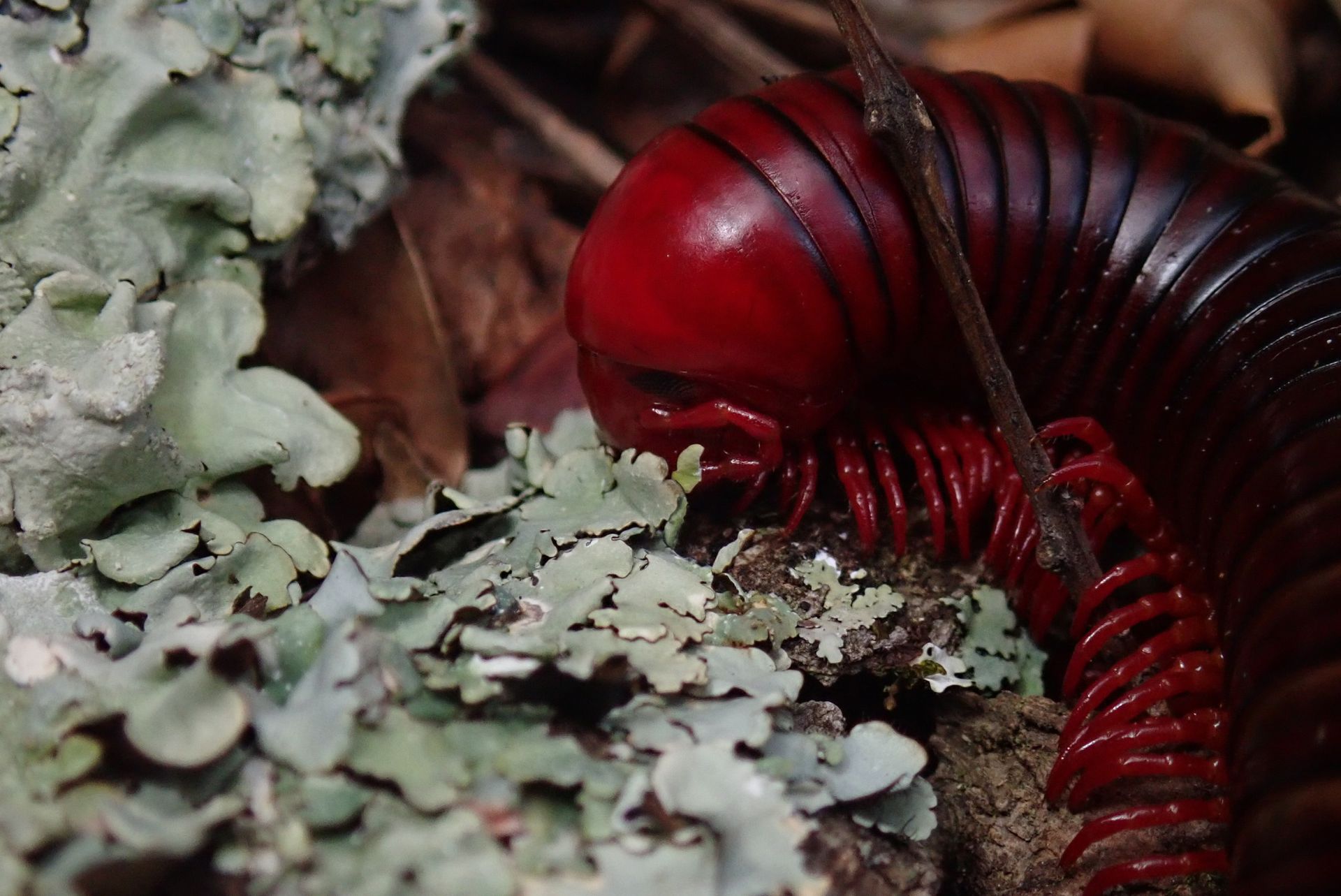
Spirostreptida is an order of large, cylindrical millipedes containing approximately 1000 described , making it the third largest order of millipedes. Members are characterized by their elongated bodies with 30 to 90 body rings and generally large size, including the longest known millipedes such as the giant African millipedes of Archispirostreptus, which may exceed 30 cm. The order is divided into two suborders, Cambalidea and Spirostreptidea, with most species occurring in tropical and subtropical regions. Spirostreptida are primarily soil-dwelling , though some species inhabit caves.

Pronunciation
How to pronounce Spirostreptida: //ˌspaɪroʊˈstrɛptɪdə//
These audio files are automatically generated. While they are not always 100% accurate, they are a good starting point.
Identification
Spirostreptida can be distinguished from other orders by their cylindrical (non-flattened) body shape, high number of body rings (30-90), and generally large size. They differ from the similar order Spirobolida primarily in and details of leg structure. The presence of in most distinguishes them from many cave-dwelling millipede groups. Identification to level requires examination of male gonopods, which are the primary diagnostic characters used in of the group.
Images
Appearance
Large, long, cylindrical millipedes with 30 to 90 body rings. Most have present. Body form is distinctly round in cross-section rather than flattened. The order includes the longest millipedes known, with some species exceeding 30 cm in length. Coloration varies, including polymorphic species such as Bicoxidens flavicollis.
Habitat
Primarily tropical and subtropical terrestrial including forests, grasslands, and scrublands. Many are associated with soil and leaf litter. Some lineages have adapted to cave environments, particularly in the Pseudonannolenidae. Species in the Atelomastix occur in discontinuous habitats of southern Australia's high rainfall zone, including mountain ranges, islands, granite outcrops, and wet forest fragments. Cave-dwelling species favor dark, humid zones with rocky or soil substrates.
Distribution
Tropical and subtropical regions worldwide: Africa, southern Asia to Japan, Australia, and the Western Hemisphere from the United States to Argentina. The order shows highest diversity in tropical regions, with some temperate representatives in southern Australia and the southern United States. The Eastern Arc Mountains of Tanzania harbor significant diversity of the Odontopygidae. Australian members of family Iulomorphidae are restricted to the high rainfall zone of southern Western Australia and Victoria.
Seasonality
Activity patterns vary by . Cave-dwelling such as Pseudonannolene show seasonal variation in , with higher numbers observed at the beginning of the rainy season compared to the dry season. Surface-dwelling species likely follow local moisture and temperature patterns, though specific seasonal data are sparse for most .
Diet
, feeding on decaying plant matter. Cave-dwelling in the Pseudonannolene have been observed to utilize guano as a primary trophic resource in subterranean environments.
Behavior
When disturbed, some such as Orthoporus ornatus (desert millipede) coil into a defensive spiral posture. Cave-dwelling species show preference for twilight zones and specific substrates (soil and rock). densities are generally low, which appears to be an intrinsic characteristic of the group. Some species have become agricultural pests, such as Spinotarsus caboverdus in Cape Verde.
Ecological Role
Soil-dwelling contributing to decomposition and nutrient cycling. Cave-dwelling participate in subterranean based on guano resources. Low densities suggest limited contribution relative to other soil arthropods in many .
Human Relevance
Some are kept as pets, particularly the giant African millipedes (Archispirostreptus). Spinotarsus caboverdus has become an agricultural pest in Cape Verde. The order has been subject to extensive taxonomic study due to its diversity and complex .
Similar Taxa
- SpirobolidaSimilar cylindrical body form, but distinguished by and leg structure details
- PolydesmidaLarger order of millipedes, but with flattened (rather than cylindrical) body form
- ChordeumatidaSecond largest order, but with shorter bodies and different structure
More Details
Taxonomic complexity
Male are the primary diagnostic characters for identification, but show significant intraspecific variation. Geometric morphometric analysis of Bicoxidens flavicollis revealed 75% classification based on gonopod shape, suggesting cryptic diversity may be underestimated in the order.
Conservation significance
Many are short-range endemics with extremely small distributions. Australian Atelomastix species and isolated African represent evolutionary lineages of conservation concern. Divergent populations may represent evolutionary insurance against climate change regardless of formal taxonomic status.
Fossil record
The oldest confirmed record is the extinct Electrocambalidae from Burmese amber (Late Cretaceous, ~99 million years ago). Other fossils include Protosilvestria from the Oligocene of France and an undescribed Epinannolene from Miocene Dominican amber.
Sources and further reading
- BugGuide
- Wikipedia
- GBIF taxonomy match
- iNaturalist taxon
- NCBI Taxonomy
- Spirostreptida | Beetles In The Bush
- A review of the Australian millipede genus Atelomastix (Diplopoda: Spirostreptida: Iulomorphidae)
- Mountains of millipedes. The family Odontopygidae in the Eastern Arc Mountains of Tanzania (Diplopoda, Spirostreptida)
- Geometric morphometric analysis of gonopods in Bicoxidens flavicollis populations (Diplopoda, Spirostreptida, Spirostreptidae)
- Spatial distribution and population data of cave millipedes, genus Pseudonannolene Silvestri, 1895 (Diplopoda, Spirostreptida) from Brazil
- A new millipede species of the genus Gnomognathus Attems, 1942 (Diplopoda, Spirostreptida, Harpagophoridae) from South India
- Chromosome-level genome assembly of Agaricogonopus acrotrifoliolatus (Diplopoda: Spirostreptida).
- Mitochondrial Genomes of Four Millipedes (Diplopoda: Spirostreptida and Spirobolida) Unveil Phylogenetic Novelty and Gene Rearrangement Patterns.