
Striaria
Bollman, 1888
Striaria is a of millipedes in the Striariidae, order Chordeumatida. The genus was established by Bollman in 1888. These small, eyeless millipedes are part of the diverse soil-dwelling fauna of temperate forests. The name Striaria is also used for a genus of brown (Phaeophyceae), but this represents a separate taxonomic entity in a different kingdom.
Pronunciation
How to pronounce Striaria: /straɪˈɛəriə/
These audio files are automatically generated. While they are not always 100% accurate, they are a good starting point.
Identification
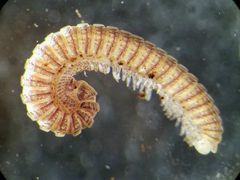
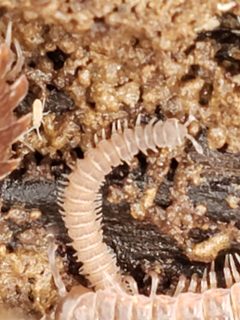
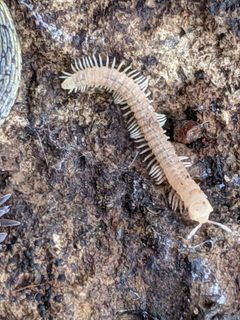
Millipedes in this are small, typically 5–15 mm in length, with a cylindrical body and 28–30 body segments in . They lack (ocelli) and possess a characteristic striated or grooved appearance to the , which gives the genus its name. The (male reproductive appendages) show the distinctive of the Striariidae , with complex, often coiled structures. Distinguished from other chordeumatidan genera by the combination of small size, complete absence of eyes, and specific arrangements of ozopores and setae.
Images
Habitat
Found in moist forest litter and soil, particularly in deciduous and mixed hardwood forests of eastern North America. Occupies the upper soil layers and decaying organic matter, requiring high humidity to prevent desiccation.
Distribution
Eastern North America, with records from the Appalachian region and surrounding areas. The has been introduced to some European localities through human activity.
Seasonality
Active year-round in suitable microhabitats, with surface activity reduced during dry summer periods and cold winter months. Peak surface activity occurs during spring and autumn when soil moisture is high.
Life Cycle
Females deposit in soil or decaying wood. Juvenes hatch with fewer segments than and add segments through anamorphic development until reaching the adult complement of 28–30 segments. Development to adulthood requires several years.
Behavior
Slow-moving, burrowing millipedes that remain within soil and leaf litter. When disturbed, they curl into a loose spiral or remain motionless. No defensive secretions have been documented for this .
Ecological Role
Contributes to decomposition of leaf litter and organic matter in forest soils. Serves as prey for small including , spiders, and ground beetles.
Human Relevance
No direct economic importance. Occasionally encountered by biologists conducting soil fauna surveys. Some may be affected by forest fragmentation.
Similar Taxa
- BrachycybeAlso small, eyeless chordeumatid millipedes, but Brachycybe has a more flattened body and different structure; feeds primarily on fungi rather than decaying plant matter
- NannariaSmall striariid millipedes with similar preferences, but Nannaria typically show more pronounced color banding and different
- Striaria (algal genus)Homonym in kingdom Chromista (brown , Phaeophyceae); completely unrelated organism with filamentous marine growth form, no relation to the
Misconceptions
The name Striaria is used for both a (Animalia) and a brown genus (Chromista). These are entirely separate that share only a name. The algal Striaria (e.g., Striaria attenuata) is a marine brown alga in the Chordariaceae, while the millipede Striaria is a terrestrial . Literature searches must specify kingdom to avoid confusion.