
Dicosmoecus atripes
(Hagen, 1875)
northern caddisfly
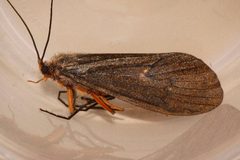
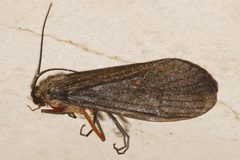
Dicosmoecus atripes is a limnephilid caddisfly native to North America. The has been documented in Rocky Mountain streams of Alberta, Canada, where it exhibits a two-year with distinct seasonal and larval . Larval microhabitat and dietary preferences shift between early and late instars.
Pronunciation
How to pronounce Dicosmoecus atripes: //daɪˈkɒsmoʊiˌkəs ˈætrɪˌpɛz//
These audio files are automatically generated. While they are not always 100% accurate, they are a good starting point.
Identification
Larvae construct portable cases; specific diagnostic characters for distinguishing D. atripes from and other Limnephilidae are not provided in available sources. are medium-sized typical of the Limnephilidae.
Images
Habitat
Cold, flowing lotic waters of second-order foothill streams in montane regions. Larvae occupy stream margins in early instars and shift to midstream reaches in later instars; pools are preferred over riffles across all instars.
Distribution
North America; documented from the eastern Canadian Rockies (Alberta, Canada) and inferred present across the Nearctic region based on taxonomic records.
Seasonality
and oviposition occur from August to mid-October. Larvae overwinter in two distinct stages: as first instars and as inactive fifth (final) instars in .
Diet
Larvae consume periphyton; diatoms constitute a significantly greater proportion of the diet in early instars compared to third and later instars.
Life Cycle
Two-year . First winter spent as first instar larvae without observed growth. Second winter spent as inactive fifth instar larvae in , with documented weight loss during this period. Temperature is the primary factor governing this extended developmental schedule.
Behavior
Larvae exhibit instar-specific microhabitat selection, shifting from stream margins to midstream reaches as they develop. All instars preferentially occupy pools over riffles. Fifth instar larvae enter a state during winter inactivity.
Ecological Role
production estimated at 91.4 mg·m⁻²·year⁻¹ with a production/ turnover ratio of 4.97 in studied . Functions as a primary consumer grazer in stream , with ontogenetic shifts in feeding microhabitat that may influence periphyton structure.
Similar Taxa
- Dicosmoecus gilvipes with overlapping North American distribution; specific distinguishing characters not documented in available sources
- Other Limnephilidae-level similarity in case-building larval habit and general ; -level identification requires examination of genitalia or other specialized characters not described here