
Dicosmoecinae
Schmid, 1955
northern caddisflies
Genus Guides
3- Dicosmoecus(October Caddisflies)
- Ironoquia
- Onocosmoecus
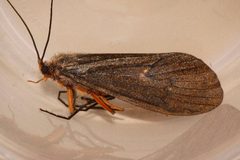
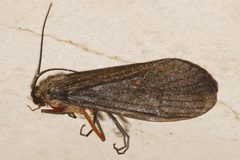
Dicosmoecinae is a of within the Limnephilidae, comprising approximately 19 and at least 80 described . The group is commonly referred to as "northern caddisflies," reflecting its predominantly Holarctic distribution. The subfamily was established by Schmid in 1955, with Dicosmoecus as its type genus. Members are case-making caddisflies, with larvae constructing portable shelters from plant materials.
Pronunciation
How to pronounce Dicosmoecinae: //daɪkɒzmɒ.iːsɪniː//
These audio files are automatically generated. While they are not always 100% accurate, they are a good starting point.
Identification
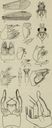
of Dicosmoecinae can be distinguished from other Limnephilidae by genitalic characters, particularly the structure of the male claspers and . Larval identification relies on case construction materials and capsule patterns, though specific characters vary by . The subfamily lacks the reduced wing venation seen in some other Limnephilidae groups.
Images
Habitat
Larvae inhabit cool, flowing freshwater systems including streams and rivers. Many are associated with well-oxygenated, often mountainous or northern latitude waters. Case materials reflect local availability, incorporating twigs, leaves, or sand particles.
Distribution
Predominantly distributed across the Holarctic region, including northern North America, Europe, and Asia. The "northern caddisfly" reflects this temperate to concentration.
Life Cycle
Holometabolous development with aquatic larval and pupal stages. Larvae construct portable cases throughout development. occurs within cases or in pupal chambers constructed from case materials.
Behavior
Larvae are case-bearers, dragging their constructed shelters while grazing on periphyton and detritus. Case construction is a defining trait of the .
Ecological Role
Larvae function as and grazers in lotic , processing plant detritus and periphyton. They contribute to nutrient cycling in headwater streams and serve as prey for fish and other aquatic .
Human Relevance
Larvae are used as bioindicators of water quality in freshwater biomonitoring programs. occasionally attract angler interest as they emerge and become available to fish.
Similar Taxa
- LimnephilinaeOverlaps in Limnephilidae; distinguished by genitalic and larval case construction details
- NeothremmatinaeAnother Limnephilidae ; Dicosmoecinae generally larger with different wing venation patterns
More Details
Taxonomic history
The was established by Schmid in 1955 based primarily on genitalic characters. The type Dicosmoecus was described by McLachlan in 1875.
Research needs
Larval remains incompletely resolved for many , and phylogenetic relationships within the require further study.