Amphigerontia bifasciata
(Latreille, 1799)
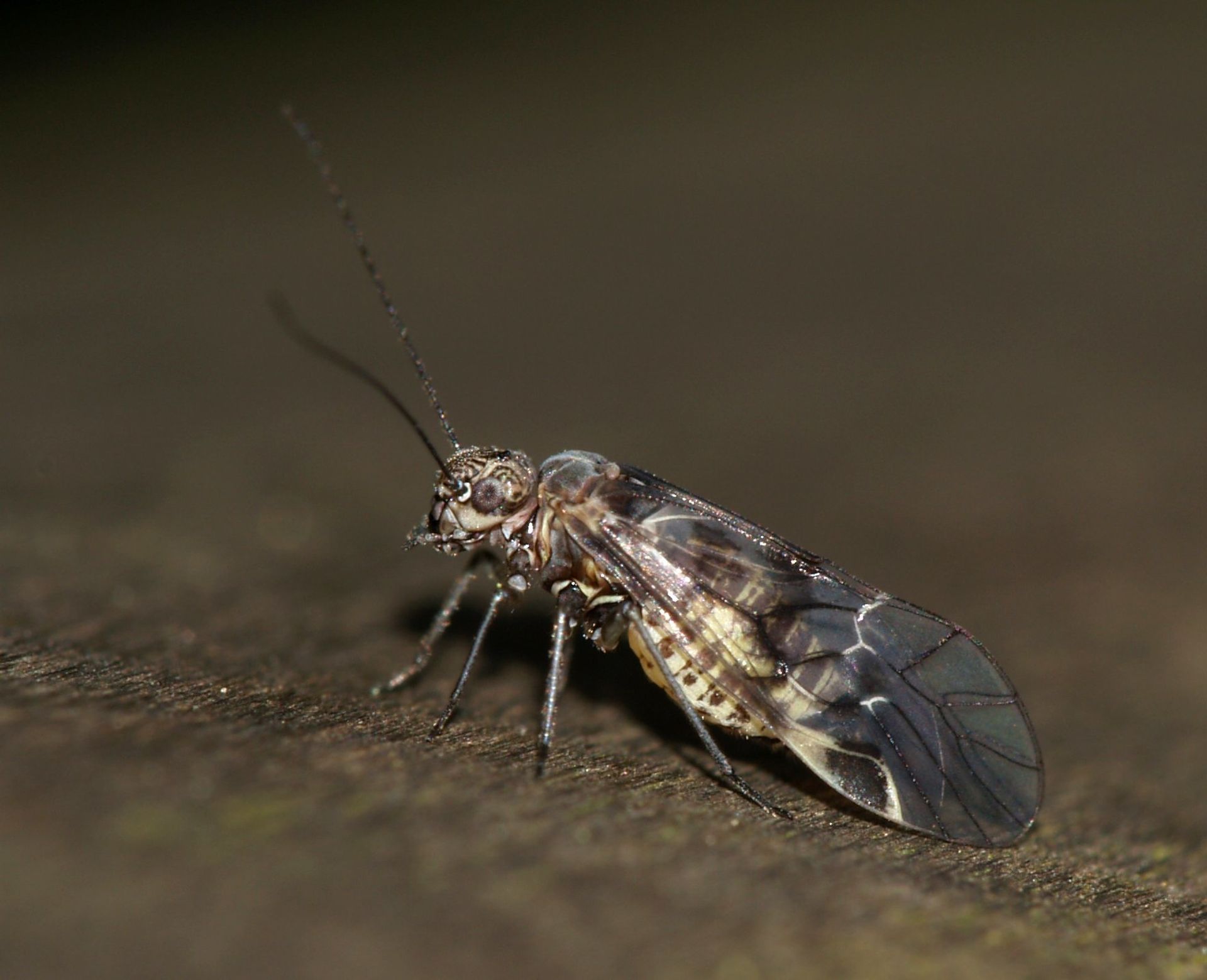
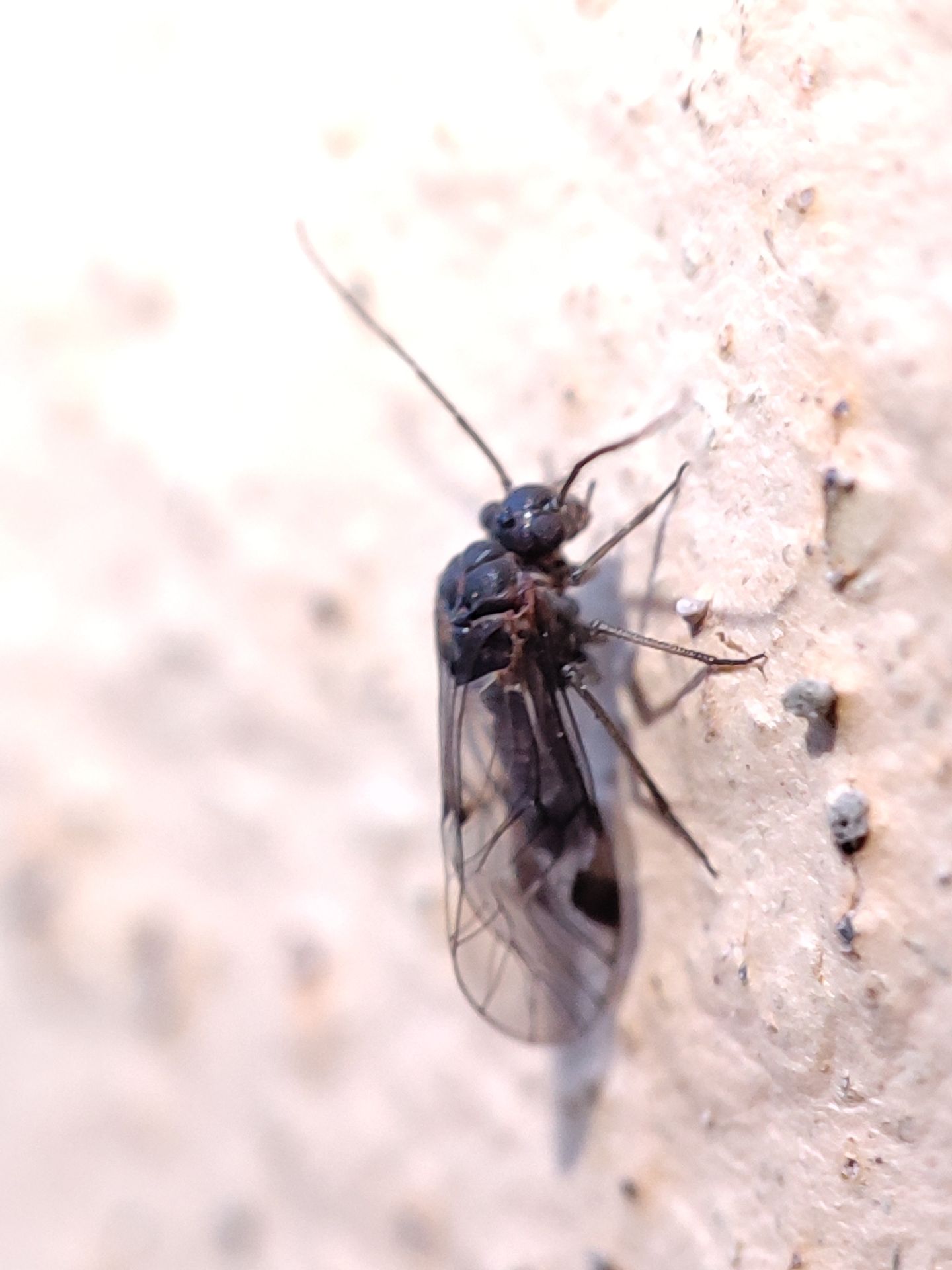
Amphigerontia bifasciata is a small barklouse in the Psocidae, characterized by yellowish-black coloration with two dark transverse bands. First described by Latreille in 1799 as Psocus bifasciatus, this species is widely distributed across Europe and has been introduced to North America. It inhabits diverse woody and herbaceous vegetation, feeding on epiphytic microflora.
Pronunciation
How to pronounce Amphigerontia bifasciata: /ˌæmfɪdʒəˈrɒntiə ˌbaɪfæsiˈeɪtə/
These audio files are automatically generated. While they are not always 100% accurate, they are a good starting point.
Identification
Distinguished from congeneric by the characteristic two dark transverse bands on a yellowish background (the specific epithet 'bifasciata' refers to this pattern). Differs from Amphigerontia contaminata by band pattern and body proportions. Separation from other European Psocidae requires examination of wing venation details and genitalia structure. The combination of yellowish coloration with dark banding is distinctive among common European barklice.
Images
Appearance
Small, soft-bodied insect with yellowish ground color and two prominent dark transverse bands across the and , creating a distinctive bifasciate pattern. Body length approximately 3-4 mm. Long, with 13 segments. Wings, when present, are membranous with reduced venation typical of Psocidae. relatively large for the size. three-segmented with small claws.
Habitat
Found in diverse vegetation types including broadleaf and coniferous trees, shrubs, and herbaceous plants. Associated with foliage and bark surfaces where epiphytic microflora develops. Occurs in both natural and semi-natural , including gardens and parks. Favors humid microhabitats that support growth of , lichens, and fungi on plant surfaces.
Distribution
Native to Europe with records from Great Britain, Ireland, Austria, Belgium, Croatia, Czech Republic, Denmark, Finland, France, Germany, Hungary, Italy, Latvia, Luxembourg, Netherlands, Norway, Poland, Romania, Sweden, Switzerland, and former Yugoslavia. Introduced to North America with established in Canada and the United States. Also recorded from Mongolia.
Seasonality
Active during warmer months; and nymphs present spring through autumn in temperate regions. Specific varies by latitude and local climate conditions.
Diet
Feeds on epiphytic microflora including , lichens, fungal spores, and organic detritus on plant surfaces. Has been observed on foliage and bark of beech, birch, oak, pine, willow, and numerous other woody and herbaceous plants.
Host Associations
- Fagus sylvatica - forage substratefoliage and bark
- Betula spp. - forage substratefoliage and bark
- Prunus padus - forage substratefoliage
- Cytisus scoparius - forage substratefoliage
- Ulex europaeus - forage substratefoliage
- Crataegus monogyna - forage substratefoliage and bark
- Larix decidua - forage substrateintroduced conifer, foliage
- Ammophila arenaria - forage substratefoliage
- Quercus spp. - forage substratefoliage and bark
- Pinus spp. - forage substrateintroduced conifer, foliage
- Sorbus aucuparia - forage substratefoliage
- Salix spp. - forage substratefoliage and bark
- Taxus baccata - forage substratefoliage
Life Cycle
Hemimetabolous development with , nymph, and stages. Multiple per year in favorable conditions. Eggs laid on substrate surface. Nymphs resemble smaller, wingless adults and pass through several instars before maturation. Adults may be winged () or wingless (), with wing documented in the .
Behavior
Gregarious; often found in small on suitable feeding substrates. Active foragers moving across plant surfaces to graze microflora. Capable of jumping short distances when disturbed. Weak fliers; individuals rarely observed in .
Ecological Role
Primary consumer contributing to nutrient cycling by processing epiphytic microflora and organic detritus on plant surfaces. Serves as prey for small including spiders, predatory insects, and birds. Part of the diverse associated with vegetation .
Human Relevance
Of minimal direct economic importance. Occasionally noted in ecological surveys and biodiversity assessments. Not known to cause damage to crops or ornamental plants; presence indicates healthy epiphytic on vegetation.
Similar Taxa
- Amphigerontia contaminataSimilar size and preferences; differs in color pattern lacking distinct bifasciate banding and in details of wing venation
- Psocus pinetorumOverlaps in conifer ; distinguished by coloration and body shape, with P. pinetorum typically showing more uniform coloration
- Blaste conspurcataFound in similar bark ; differs in body proportions and wing venation, lacks distinct transverse banding pattern
More Details
Taxonomic history
Originally described by Pierre André Latreille in 1799 as Psocus bifasciatus, later transferred to Amphigerontia. The genus Amphigerontia is classified in Amphigerontiinae, tribe Amphigerontiini.
Wing polymorphism
Both (fully winged) and (wingless) individuals occur in this , a common phenomenon in Psocidae that may relate to stability and needs.