
Zapada columbiana
(Claassen, 1923)
Columbian forestfly
Zapada columbiana is a of in the Nemouridae, commonly known as the Columbian forestfly. It is a small with a spanning 2-3 years in Rocky Mountain streams. The species is notable for retaining cervical gills into adulthood, a diagnostic feature of the . Nymphs are that feed on moss and detritus, playing a significant role in stream nutrient cycling.
Pronunciation
How to pronounce Zapada columbiana: /zəˈpɑːdə kəˌlʌmˈbiːə.nə/
These audio files are automatically generated. While they are not always 100% accurate, they are a good starting point.
Identification
can be distinguished from other by the presence of two sets of branched cervical gills on each side of the neck region. Within Nemouridae, identification to level requires examination of genitalia. Distinguished from other Zapada species by specific genitalic not described in available sources. Nymphs cling to submerged rocks and heavy objects in flowing water.
Images
Appearance
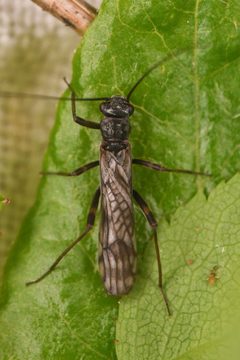
are small stoneflies measuring 5-8 mm in body length. Adults retain two sets of branched cervical (neck) gills on each side of the body, a diagnostic trait of the Zapada. General body coloration is brown. Wings are present in adults.
Habitat
Lotic freshwater environments including streams and rivers in mountainous regions. Nymphs occupy riffle with moss cover on boulders and cobbles, and also occur among submerged rocks and heavy objects in flowing water. At least 50% of the has been observed in moss covering boulders and cobbles in riffles during the growth season. Subalpine and montane stream environments in the Rocky Mountains.
Distribution
North America: recorded from Alberta, Alaska, British Columbia, California, Idaho, and the Rocky Mountain region of western North America.
Seasonality
emerge from mid-April to early June, with peak likely in this period. Nymphal growth occurs during the ice-free period of June to November. Adults may be active as early as late February in some regions, though this may vary by location and elevation.
Diet
Nymphs are that feed on moss (autochthonous production) and detritus including conifer needles and conditioned leaves. Moss was the predominant component in guts of larvae taken from moss ; detritus predominated in larvae from other habitats. During winter, detritus from conifer needles was the major gut content. Laboratory experiments demonstrated faster growth on moss than on conditioned Salix glauca leaves; larvae grew on conifer needles only when highly conditioned and fragmented.
Life Cycle
Semivoltine to merovoltine: primarily a 2-3 year , though some individuals may complete development in 2 years. hatch prior to winter of the same year. Nymphal growth is confined to the ice-free period of June to November. emerge mid-April to early June and do not disperse far from the stream. One per year has been reported for some , though this has been disputed and attributed to methodological limitations.
Behavior
Nymphs cling to submerged rocks and heavy objects in flowing water. are active, running rapidly and flying when startled. Adults are most often observed on bridges or logs spanning streams. Emerging adults and ovipositing females show no tendency to move upstream. Adults do not disperse far from the stream.
Ecological Role
functional feeding group: processes coarse particulate organic matter including moss and leaf litter, contributing to nutrient cycling in stream . The is abundant in many Rocky Mountain subalpine creeks and is dependent on both autochthonous moss production and allochthonous detritus.
Human Relevance
Used as an indicator of water quality in streams and rivers; stoneflies are generally sensitive to pollution, dredging, and alteration, though Nemouridae are somewhat more tolerant of moderate pollution than other . Of interest to anglers as part of the hatches. The has persisted in streams affected by mining history and chemical spills, suggesting moderate to some disturbances.
Similar Taxa
- Zapada cinctipesSimilar size, , and appearance; distinguished by specific genitalic and timing
- Other Nemouridae generaLack the diagnostic two sets of branched cervical gills retained in Zapada; adults have different gill configurations
More Details
Taxonomic History
Originally described as Nemoura columbiana by Claassen in 1923; later transferred to Zapada.
Research Methodology Note
duration was subject to revision based on sampling techniques. Earlier reports of (1-year) cycles were attributed to use of nets with mesh sizes too large to capture young nymphs, sorting without magnification, inability to recognize young Z. columbiana, and erroneous assumptions regarding incubation times.
Population Habitat Use
At any time during the growth season, at least 50% of the stream has been estimated to occur in moss covering boulders and cobbles in riffles.
Sources and further reading
- BugGuide
- Wikipedia
- GBIF taxonomy match
- iNaturalist taxon
- NCBI Taxonomy
- Catalogue of Life
- Bug Eric: Forestflies (Spring Stoneflies)
- The life history of Zapada columbiana (Plecoptera: Nemouridae) in a Rocky Mountain stream
- The importance of sampling and sorting techniques in the elucidation of the life cycle of Zapada columbiana (Nemouridae: Plecoptera)