
Nemourinae
Billberg, 1820
spring stoneflies
Genus Guides
9- Nemoura(spring stoneflies)
- Ostrocerca(forestflies)
- Paranemoura
- Podmosta(spring stoneflies)
- Prostoia
- Shipsa(spring stoneflies)
- Soyedina
- Visoka
- Zapada(forestflies)
Nemourinae is a of small stoneflies in the Nemouridae, commonly known as spring stoneflies. The subfamily contains at least 40 described across multiple including Nemoura, Lednia, Nemurella, and Podmosta. Species occur across the Nearctic, Palaearctic, and Oriental realms. Members are primarily associated with cool, clean freshwater and are valued as bioindicators of water quality.
Pronunciation
How to pronounce Nemourinae: /nɛˈmɔ.ɹɪˌnaɪ/
These audio files are automatically generated. While they are not always 100% accurate, they are a good starting point.
Identification
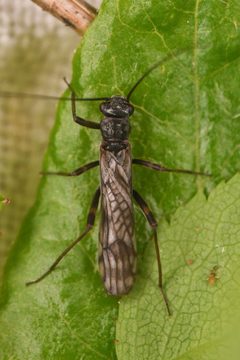
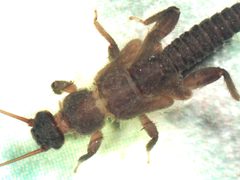
Nemourinae are distinguished from other Nemouridae by reduced wing venation and specific genitalic structures, particularly in males. Members are generally small stoneflies, often under 15 mm in body length. typically have dark, patterned wings held flat over the body. Identification to requires examination of male genitalia and paraprocts; nymphs have gills restricted to the and first abdominal segments.
Images
Habitat
Cool, clean freshwater streams and rivers, particularly in mountainous regions. Nymphs inhabit the benthic zone of well-oxygenated waters with rocky or gravel substrates.
Distribution
Recorded from the Nearctic, Palaearctic, and Oriental realms. Specific collection records include specimens from Hidden Valley, Virginia, USA.
Seasonality
emerge primarily in late winter and early spring, corresponding to the 'spring stoneflies'.
Life Cycle
Nymphs are aquatic and develop in freshwater streams over an extended period. are terrestrial and short-lived, emerging in late winter to early spring.
Behavior
Nymphs are sensitive to changes in water quality and degradation, making them responsive indicators of environmental conditions.
Ecological Role
Bioindicators for monitoring freshwater health. Nymphs contribute to benthic as both consumers and prey items.
Human Relevance
Used in biomonitoring programs to assess water quality and detect pollution in freshwater systems. No direct economic importance.
Similar Taxa
- AmphinemurinaeOther in Nemouridae; distinguished by different wing venation patterns and male genitalic structures
- Malenka in Nemouridae; phylogenetic studies indicate Nemoura is sister to Malenka, suggesting close relationship and potential morphological similarity requiring careful examination
More Details
Phylogenetic Uncertainty
Mitochondrial analysis of Ostrocerca truncata, Nemurella pictetii, and Lednia tumana supports Nemurella as sister to Ostrocerca, with Nemoura sister to Malenka. This challenges the monophyly of Nemourinae as currently defined, suggesting potential taxonomic revision may be needed.
Mitochondrial Genome Features
Nemourinae exhibit conserved mitochondrial organization with high A+T (66.9-71.8%), typical insect gene order, and evidence of purifying selection on protein-coding genes.