
Malenka
Ricker, 1952
Species Guides
1- Malenka depressa(Bluntlobe Forestfly)
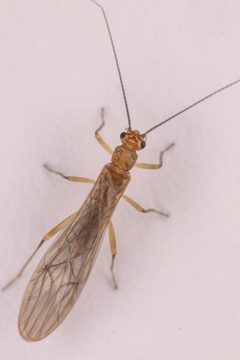
Malenka is a of small stoneflies in the Nemouridae, first described by Ricker in 1952. These insects belong to the suborder and are part of the diverse fauna of North America. Members of this genus are associated with freshwater and are characterized by features typical of the Nemouridae family.
Pronunciation
How to pronounce Malenka: /məˈlɛŋkə/
These audio files are automatically generated. While they are not always 100% accurate, they are a good starting point.
Identification
Distinguished from other Amphinemurinae , particularly Amphinemura, by subtle morphological differences in male genitalia and wing characteristics. Accurate identification to level requires microscopic examination and reference to specialized taxonomic keys for Nearctic Nemouridae. The genus is most readily recognized in combination with geographic distribution and context.
Images
Appearance
Small-bodied stoneflies with consistent with Nemouridae. Members of this exhibit traits characteristic of the Amphinemurinae, including relatively simple wing venation and reduced body size compared to larger families. Specific diagnostic features distinguishing Malenka from related genera such as Amphinemura require examination of genitalic structures and detailed wing characteristics.
Habitat
Freshwater lotic environments, primarily small streams and creeks with cool, well-oxygenated water. Associated with rocky or gravel substrates where nymphs develop. Specific microhabitat preferences vary among but generally include headwater streams and smaller tributaries.
Distribution
North America, with documented records from western Canada (Alberta, British Columbia) and western United States (Arizona, California, Colorado). Distribution appears concentrated in mountainous and northern regions with suitable cold-water stream .
Seasonality
timing varies by and latitude. Activity generally concentrated in spring and early summer months when water temperatures and flow conditions are favorable. Specific periods require regional study.
Life Cycle
Hemimetabolous development with aquatic nymphal stages and terrestrial . Nymphs are or grazers in stream environments, feeding on periphyton and organic matter. Duration of nymphal development varies by and environmental conditions. Adults are short-lived and do not feed.
Behavior
are poor fliers and typically found in vegetation near sites. Mating occurs shortly after adult emergence. Females deposit directly into water or on submerged substrates. Nymphs are clingers or on stream bottoms, avoiding fast currents.
Ecological Role
Nymphs contribute to nutrient cycling and organic matter processing in headwater stream . Serve as prey for fish and other aquatic . provides food resource for terrestrial . Indicator for cold, clean water conditions in biological monitoring programs.
Human Relevance
Of limited direct economic importance. Occasionally used as bioindicators in water quality assessments due to sensitivity to pollution and thermal alteration. Not known to be pests or beneficial in agricultural contexts.
Similar Taxa
- AmphinemuraCongeneric in Amphinemurinae and shares similar body plan and preferences. Distinguished by genitalic and subtle differences in wing venation patterns.
- NemouraRelated in Nemouridae, often similar in size and general appearance. Separated by features of male terminalia and distribution patterns.
More Details
Taxonomic History
Established by Canadian entomologist William Edwin Ricker in 1952 as part of his extensive work on Nearctic Plecoptera. The represents a distinct lineage within the diverse Nemouridae , which contains numerous small genera in North America.
Research Status
Relatively understudied compared to larger . -level requires revision with modern molecular methods. iNaturalist records suggest ongoing citizen science documentation, but formal taxonomic work is limited.