
Neoconocephalus robustus
(Scudder, 1862)
robust conehead, crepitating conehead
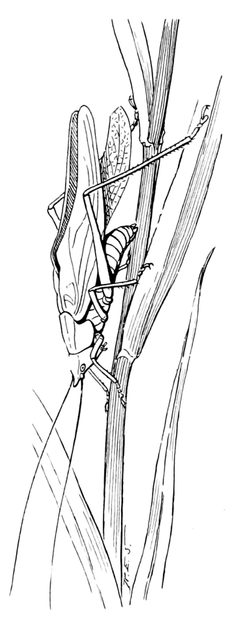
Neoconocephalus robustus, commonly known as the robust conehead or crepitating conehead, is a North American in the Tettigoniidae. It is notable for producing one of the loudest insect songs on record, reaching 116 decibels at a peak frequency of 8 kHz—audible from 500 meters away even inside a moving vehicle with closed windows. The song has a whining quality at distance but becomes painful to hear at close range. This belongs to the Conocephalinae, a group characterized by their elongated, cone-shaped .
Pronunciation
How to pronounce Neoconocephalus robustus: //ˌniːoʊˌkɒnoʊˈsɛfəs roʊˈbʌstəs//
These audio files are automatically generated. While they are not always 100% accurate, they are a good starting point.
Identification
Distinguished from other conehead katydids by the combination of its exceptionally loud song (116 dB) and the 8 kHz peak frequency. The cone shape lacks the hooked tip present in Pyrgocorypha uncinata (hook-faced conehead). From other Neoconocephalus , identification requires examination of song characteristics and subtle morphological differences in the cone structure and genitalia. The crepitating (rasping) quality of the song distinguishes it from species with more musical calls.
Images
Appearance
As a member of the Neoconocephalus, this has an elongated, cone-shaped (fastigium) that projects forward from the . The body is large for a , with some Neoconocephalus species exceeding seven centimeters in length. Like other conocephaline katydids, it possesses extremely long, thread-like characteristic of the Tettigoniidae. Coloration is typically green, brown, or gray. The species lacks the distinctive hooked tip on the cone found in Pyrgocorypha uncinata.
Habitat
Associated with grasslands, meadows, prairies, and wetlands— typical for conocephaline katydids. These environments support the grasses and forbs that form the primary food resources for the .
Distribution
Documented from Alabama, Arkansas, California, Colorado, and Delaware based on GBIF records. The occurs broadly in North America, though precise range boundaries require further documentation.
Seasonality
reach maturity in late summer and early autumn, when mating activity occurs. Activity patterns follow the typical seasonal cycle of temperate North American katydids, with nymphs developing through spring and summer.
Diet
Feeds on grass seeds, which it cracks with powerful . Also consumes leaves and flowers of forbs (non-grass herbaceous plants). As with other conocephaline katydids, likely includes opportunistic on other insects, especially injured individuals, to supplement protein intake.
Life Cycle
Hemimetabolous development with , nymph, and stages. Nymphs progress through multiple instars before reaching adulthood. Final-instar nymphs to adults in late summer, as observed in related .
Behavior
Males produce an extremely loud calling song to attract females, with sound production reaching 116 decibels. The song can be detected from 500 meters away. Females may accept nutritious from males during mating, consuming the (gelatinous protein-rich portion) after copulation—a well-documented in related conocephaline katydids.
Ecological Role
Functions as a primary consumer, converting plant (grasses and forbs) into animal biomass. Seed can significantly reduce seed production in plants. Serves as prey for birds, mammals, and other insects. Contributes to nutrient cycling in grassland .
Human Relevance
The extreme volume of its song makes this notable in studies of bioacoustics and the physical limits of sound production in insects. The painful intensity of the song at close range may cause discomfort to humans encountering calling males. Otherwise has minimal direct economic impact.
Similar Taxa
- Neoconocephalus ensigerSimilar conehead and ; distinguished by song characteristics and subtle structural differences in the cone
- Pyrgocorypha uncinataShares conehead form but possesses distinctive hooked tip on the cone that N. robustus lacks; also differs in song frequency and pattern
- Other Neoconocephalus speciesRequire detailed examination of male genitalia and precise song analysis for reliable separation; many sympatric in eastern North America
More Details
Acoustic extremity
At 116 decibels, N. robustus produces one of the loudest documented insect songs. For comparison, this exceeds the noise level of a chainsaw at close range and approaches the threshold of pain for human hearing (120-140 dB). The 8 kHz frequency is within the range of human hearing but high enough to carry effectively through vegetation.
Nomenclatural note
Authority sometimes cited as Scudder, 1863 (as Conocephalus robustus) rather than 1862; the accepted combination dates to the transfer to Neoconocephalus.