
Ceuthophilus secretus
Scudder, 1894
Texas cave cricket, secret cave cricket
Ceuthophilus secretus is a trogloxene camel cricket to cave systems in central Texas. This wingless, serves as a keystone energy source for nutrient-poor cave , transporting organic matter from surface foraging areas back into caves. Its are of conservation concern due to by (Solenopsis invicta) at cave entrances, which threatens endangered cave that depend on this as prey.
Pronunciation
How to pronounce Ceuthophilus secretus: /ˌkjuːθəˈfaɪləs sɪˈkriːtəs/
These audio files are automatically generated. While they are not always 100% accurate, they are a good starting point.
Identification
Distinguished from other Ceuthophilus by its association with central Texas cave systems and specific trogloxene (regular movement between cave and surface ). The combination of wingless condition, extremely long , humpbacked profile, and cave-dwelling habit separates it from field crickets (Gryllidae) and other Orthoptera. May be confused with other camel cricket species, but geographic restriction to central Texas caves provides a strong diagnostic clue.
Images
Appearance
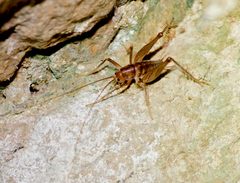
Wingless with humpbacked giving a rounded, arched profile. Coloration ranges from yellowish gray to dark brown. are longer than the body. Hind legs are long and powerful, adapted for jumping. Body form is typical of camel crickets in the Ceuthophilus.
Habitat
Primarily cave systems in central Texas, where it uses caves as refugia and foraging bases. Forages outside caves in surface , with most individuals traveling within 40 meters of cave entrances. Requires humid, dark environments typical of cave entrances and twilight zones.
Distribution
to central Texas cave systems, specifically documented from Bexar County and surrounding karst regions. North American distribution restricted to this limited geographic area.
Seasonality
activity pattern; foraging occurs outside caves at night with return to cave shelter during daylight hours. Specific seasonal activity patterns not documented in available sources.
Diet
, consuming fungi, various plant matter, and dead insects. Forages on surface vegetation and detritus near cave entrances, then transports nutrients back into cave systems.
Behavior
Exhibits trogloxene : obligate use of caves for shelter combined with regular foraging excursions to surface . Capable of powerful jumping using elongated hind legs. When threatened, can employ (voluntary leg detachment) to escape . Movement patterns are primarily , with individuals returning to cave refugia before dawn.
Ecological Role
in central Texas cave . Serves as critical energy input for nutrient-poor cave environments by transporting organic matter from surface foraging areas into caves. Direct prey for endangered cave beetles (Rhadine exilis, Rhadine infernalis) and endangered spider (Cicurina madla). and carcasses support bacterial and fungal that form base of cave .
Human Relevance
Subject of active conservation management due to its keystone role in supporting federally endangered cave . red imported fire ant (Solenopsis invicta) control programs near cave entrances have been developed specifically to protect this . Research on toxic station placement (40-50 meter from cave entrances) has been conducted to minimize fire while avoiding non-target effects on cricket .
Similar Taxa
- Ceuthophilus fusiformisAnother camel cricket in same ; distinguished by geographic distribution and specific cave association of C. secretus in central Texas karst
- Ceuthophilus utahensisUtah camel cricket with similar ; separated by distribution in western North America versus central Texas of C. secretus
- Diestrammena spp.Asian camel crickets that have become in human dwellings; distinguished by non-native status, association with buildings rather than natural caves, and different geographic range
More Details
Conservation Status
Not formally listed under U.S. Act, but functionally protected due to its keystone role in supporting three federally endangered species (Rhadine exilis, Rhadine infernalis, Cicurina madla) in the JBSA-Camp Bullis cave system.
Foraging Range
Research indicates approximately 75% of individuals forage within 40 meters of cave entrances, with some individuals traveling farther. This 40-meter threshold informs fire station placement to minimize non-target mortality.
Sources and further reading
- BugGuide
- Wikipedia
- GBIF taxonomy match
- iNaturalist taxon
- NCBI Taxonomy
- Grasshoppers of Colorado
- Grasshoppers of Colorado
- Grasshoppers of Colorado
- How Entomologists are Battling Invasive Ants to Protect a Texas Cave Ecosystem
- Five-legged cricket in the bathtub: Ceuthophilus spp. (American camel crickets) and Diestrammena spp. (Asian camel crickets) — Bug of the Week
- Move over American camel crickets, Asian camel crickets are in town: Ceuthophilus sp. (American camel crickets) and Diestrammena sp. (Asian camel crickets) — Bug of the Week
- Foraging Range and Habitat Use of Ceuthophilus secretus (Orthoptera: Rhaphidophoridae), a Key Trogloxene in Central Texas Cave Communities