
Rhadine
LeConte, 1846
Species Guides
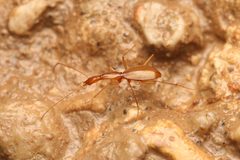
15Rhadine is a of ground beetles (Carabidae: Platyninae) described by LeConte in 1846. Many are troglobitic, restricted to cave in North America, particularly in Texas. Several species, including R. exilis and R. infernalis, are federally listed as endangered due to their restricted ranges and vulnerability to habitat disturbance. The genus is named after a figure from Greek mythology.
Pronunciation
How to pronounce Rhadine: /ˈrædɪni/
These audio files are automatically generated. While they are not always 100% accurate, they are a good starting point.
Identification
Images
Habitat
Deep caves with substrata of deep, uncompacted silt; troglobitic are obligate cave dwellers. Some species occupy specific microhabitats within cave systems.
Distribution
North America, with concentration of cave-dwelling in central Texas cave systems. Specific species have extremely restricted ranges limited to single cave systems or karst regions.
Behavior
Rhadine subterranea exhibits intrasex repulsion related to feeding, producing regular spacing patterns, counterbalanced by intersex attraction related to , producing contagion; the net result is functionally random on suitable silt substrata.
Ecological Role
or scavenger within cave ; some are critically dependent on cave cricket (Ceuthophilus secretus) as a food resource, either directly or indirectly through detrital .
Human Relevance
Several (R. exilis, R. infernalis) are federally endangered in the United States, subject to protection measures and management of threats such as (Solenopsis invicta) that disrupt cave cricket .
Similar Taxa
- TrechusBoth are Platyninae with cave-dwelling ; Trechus is more diverse and widespread, with broader range including surface habitats; Rhadine is restricted to North America with more specialized cave .
- Other cave carabid genera (e.g., Anillinus, Darlingtonea)Convergent troglobitic (eyelessness, elongated appendages) requires careful examination of genitalia and detailed structural characters for differentiation.