
Trechus
Clairville, 1806
Species Guides
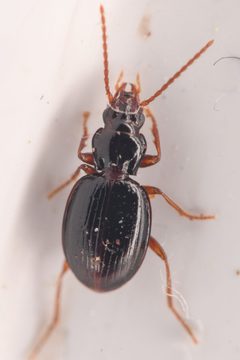
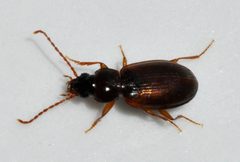
13Trechus is a large of ground beetles (Carabidae) comprising over 1,000 described . The genus is distributed across the Palearctic, Near East, and highlands of East Africa. The name derives from the Greek word *trécho*, meaning "I run." Species occupy diverse including floodplain meadows, alpine zones, and volcanic highlands.
Pronunciation
How to pronounce Trechus: /ˈtrɛkʊs/
These audio files are automatically generated. While they are not always 100% accurate, they are a good starting point.
Identification
Identification to level in Trechus is challenging and often requires examination of male genitalia (). Some species groups exhibit distinctive morphological traits, such as the inverse aedeagus position (right side superior in repose) documented in Ethiopian subgroups, representing a 180° from the normal position and serving as a diagnostic .
Images
Habitat
Highly variable across . Documented include: floodplain meadows in the South Meshcherskaya Lowland, Russia; Afroalpine and Afromontane zones of Mt. Choke, Ethiopia at 3600–4000 m elevation in raw humus under Erica trees and shrubs; and general soil fauna in Balkan regions.
Distribution
Palearctic (including Europe), Near East, and highlands of East Africa. Specific records include: Mt. Choke, Ethiopia; South Meshcherskaya Lowland, Russia; Bulgaria, Croatia, Slovenia, Bosnia and Herzegovina, Montenegro; Denmark, Norway, Sweden; and Vermont, USA (non-native).
Life Cycle
with summer-autumn and larval hibernation has been documented in *Trechus secalis* from the South Meshcherskaya Lowland. Life cycle details for most remain unknown.
Ecological Role
Ground-dwelling beetles; specific ecological roles vary by . *Trechus obtusus* has been documented as an in Hawai'i, where it appears in large numbers in pitfall traps and may impact native carabid .
Human Relevance
Used as environmental indicators due to specialization and sensitivity to environmental change. Some serve as subjects for phylogenetic and evolutionary studies, particularly in volcanic island systems. (e.g., *T. obtusus* in Hawai'i) are monitored for ecological impact assessment.
Similar Taxa
- MecyclothoraxBoth are of Carabidae with high on volcanic islands, but Mecyclothorax is most diverse in the Hawaiian Islands and Society Islands, while Trechus is primarily Palearctic and East African. Mecyclothorax are wingless with diminished abilities; Trechus includes more widespread species.
More Details
Etymology
The name derives from the Greek word *trécho*, meaning "I run."
Taxonomic complexity
The contains over 1,000 described , with ongoing taxonomic revisions. Species groups such as the "subnotatus" group in the Balkans and the *T. lobeliae* and *T. basilewskianus* subgroups in Ethiopia require careful examination of genitalic characters for accurate identification.
Unique genitalic morphology
Ethiopian Trechus in the *T. lobeliae* and *T. basilewskianus* subgroups exhibit a previously undocumented character state in Trechinae: the lies with the right side superior in repose, a 180° from the typical position.
Sources and further reading
- BugGuide
- Wikipedia
- GBIF taxonomy match
- iNaturalist taxon
- NCBI Taxonomy
- Catalogue of Life
- Two New Beetle Species Identified at NEON Field Site in Hawai'i
- New insights into the taxonomy of Trechus Clairville, 1806 (Coleoptera: Carabidae) in the Balkans, with the first description of the male of Trechus bohemorum Pawlowski, 1973
- LIFE CYCLE OF TRECHUS SECALIS (PAYKULL, 1790) (COLEOPTERA, CARABIDAE) IN THE SOUTH MESHCHERSKAYA LOWLAND
- Trechus from Ethiopia with Aedeagus Right Side Superior in Repose, an Unusual Character State in Trechine Beetles (Coleoptera: Carabidae).