
Oedaleonotus orientis
Hebard, 1920
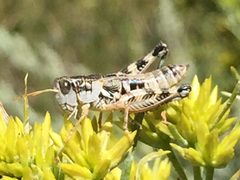
Oedaleonotus orientis is a of spur-throated grasshopper in the Acrididae, first described by Hebard in 1920. It belongs to the Melanoplinae, a group characterized by the presence of a spur on the throat. The species is found in North America, with records from Nevada. Like other members of the Oedaleonotus, it is a rangeland species associated with semiarid .
Pronunciation
How to pronounce Oedaleonotus orientis: /ˌiːdeɪlioʊˈnoʊtəs ˈɔriːɛntɪs/
These audio files are automatically generated. While they are not always 100% accurate, they are a good starting point.
Images
Habitat
Semiarid rangeland , including sagebrush-grass associations typical of the Oedaleonotus.
Distribution
North America; recorded from Nevada.
Similar Taxa
- Oedaleonotus enigmaSame ; the valley is the most thoroughly documented Oedaleonotus and shares the spur-throated and semiarid rangeland preference. O. orientis likely resembles O. enigma in general body plan and ecological requirements.
More Details
Taxonomic Note
The Oedaleonotus contains approximately eight distributed mainly in western North America. Most species in this genus possess tegmina shorter than the pronotum, which distinguishes them from O. enigma, which has variable wing length. The specific epithet 'orientis' (eastern) may reflect the type locality relative to other species in the genus, though this has not been explicitly documented in available sources.
Data Limitations
This has received minimal focused study compared to the congeneric and economically significant O. enigma (valley ). Most information about O. orientis is derived from -level generalizations and sparse collection records. Detailed studies of its , , and have not been published.