
Dactylotini
Scudder, 1897
Genus Guides
2Dactylotini is a tribe of grasshoppers within the Melanoplinae ( Acrididae). Members are primarily distributed in Mexico and Central America. The tribe was found to be in molecular phylogenetic studies due to the placement of Hesperotettix. The Liladownsia, described in 2014 from Oaxaca, Mexico, represents one of the more recently described members of this group.
Pronunciation
How to pronounce Dactylotini: /ˈdæktɪloʊtaɪˌnaɪ/
These audio files are automatically generated. While they are not always 100% accurate, they are a good starting point.
Identification
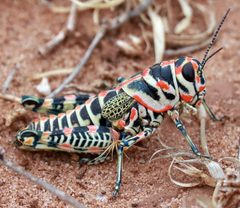
Dactylotini can be distinguished from other Melanoplinae tribes by morphological characters including features of the male genitalia and external body structure. The tribe includes with aposematic coloration, such as the brightly colored Liladownsia fraile with blue, red, yellow, orange, and black markings. Molecular phylogenetic analysis places Dactylotini in close relationship with certain genera traditionally classified elsewhere, contributing to its currently recognized status.
Images
Habitat
Members of Dactylotini occupy diverse in Mexico, including pine-oak forests, the Balsas River Basin, the Mexican Volcanic Belt, and mountain ranges of Oaxaca such as the Sierra Madre del Sur and Sierra Norte de Oaxaca. Some occur near roads and human-modified landscapes.
Distribution
Mexico and Central America. Documented localities include: Sierra Madre del Sur Mountain Range in Oaxaca (Liladownsia fraile); eastern portion of Balsas River Basin and outer slope of Mexican Volcanic Belt (Dasyscirtus monicae); Sierra Norte de Oaxaca mountain range (Perixerus obscurus); and Sierra Madre del Sur mountain range with Pacific Coast of Oaxaca (Perixerus triqui).
Human Relevance
The tribe gained public attention through the 2014 description of Liladownsia fraile, named after Mexican-American singer Lila Downs. This was subsequently listed as endangered on the IUCN Red List, highlighting conservation concerns for narrowly distributed grasshoppers in Mexico.
Similar Taxa
- HesperotettixMolecular phylogenetic analysis places Hesperotettix within Dactylotini, rendering the tribe . Hesperotettix was traditionally classified separately but shares close evolutionary relationships with core Dactylotini .
- PerixerusStrong molecular phylogenetic relationship recovered with Liladownsia and Dactylotum, suggesting close evolutionary affinity within or near Dactylotini.
- DactylotumStrong molecular phylogenetic relationship recovered with Liladownsia and Perixerus, indicating close evolutionary connections within the tribe.
More Details
Phylogenetic Status
Dactylotini is currently recognized as based on molecular phylogenetic analysis. The placement of Hesperotettix within the tribe disrupts its monophyly, suggesting that future taxonomic revision may be necessary to achieve a classification that reflects evolutionary relationships.
Sources and further reading
- BugGuide
- iNaturalist taxon
- NCBI Taxonomy
- Catalogue of Life
- Dactylotini Archives - Entomology Today
- New Colorful Grasshopper Discovered in Mexico Named after Singer Lila Downs
- Liladownsia fraile: The Rest of the Story
- Studies in Mexican Grasshoppers: Liladownsia fraile, a new genus and species of Dactylotini (Acrididae: Melanoplinae) and an updated molecular phylogeny of Melanoplinae
- Studies in Mexican Grasshoppers: Three new species of Dactylotini (Acrididae: Melanoplinae) from Mexico and a review of existing conspecifics with comments on their geographical distributions