
Enallagma ebrium
(Hagen, 1861)
Marsh Bluet
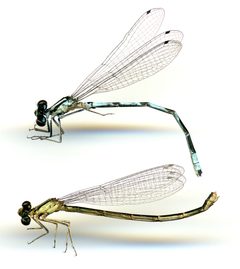
Enallagma ebrium, commonly known as the marsh bluet, is a North American in the Coenagrionidae. It is closely related to E. hageni, with which it forms a mosaic spatial distribution pattern across eastern North America. The is known to the water mite Limnochares americana, which can affect its and maturation. Research indicates that damselflies exhibit in response to mite , with responses varying by age, sex, and mite intensity.
Pronunciation
How to pronounce Enallagma ebrium: /ɛˈnæ.ləɡ.mə ˈɛb.ri.əm/
These audio files are automatically generated. While they are not always 100% accurate, they are a good starting point.
Identification
Enallagma ebrium is morphologically distinct from its close relative Enallagma hageni, despite genetic similarity between the two . The two species are rarely sympatric at local sites, with distributions forming a mosaic pattern where one species dominates across hundreds of square kilometers. Differences in reproductive structures are the primary morphological distinction between these species.
Images
Habitat
Associated with wetland environments. The occupies where it co-occurs with its E. hageni in a mosaic distribution pattern across eastern North America.
Distribution
Host Associations
- Limnochares americana - Water mite in Limnocharidae. Mature show higher and intensity of than prereproductive individuals. High mite numbers significantly depress of males and females and mature males, and delay maturation of females.
Life Cycle
progress through (newly emerged, not yet reproductively mature) to mature reproductive stages. Females deposit on submerged aquatic vegetation, with complete submersion during oviposition.
Behavior
Exhibits in response to mite . females increase grooming when challenged with low numbers of mites; mature individuals of both sexes increase grooming in response to high mite numbers. Males and females fly in tandem during mating; males release their grasp when females submerge to oviposit.
Similar Taxa
- Enallagma hageniClosely related that is morphologically distinct but genetically very similar. The two species form a mosaic spatial distribution across eastern North America and are rarely sympatric at local sites.
- Enallagma civileCongeneric marsh bluet with similar and general preferences; E. civile is a found in playa wetlands of the southern Great Plains.
More Details
Evolutionary significance
The mosaic distribution pattern between E. ebrium and E. hageni, despite genetic similarity and ecological equivalence, suggests that reproductive interference and assortative mating may play important roles in the early phases of non-ecological speciation by limiting opportunities.
Sources and further reading
- BugGuide
- GBIF taxonomy match
- iNaturalist taxon
- NCBI Taxonomy
- Catalogue of Life
- Dragonfly Enthusiasts, Unite! Open House Set Nov. 6 at Bohart Museum | Bug Squad
- Know Your Dragonflies! | Bug Squad
- Dragonflies! Who Isn't Fascinated by Dragonflies? | Bug Squad
- Bohart Museum Open House: Dragonflies Rule! | Bug Squad
- Hooray for the red, white, and blue! Milkweed longhorned beetle, Tetraopes tetraophthalmus; dogbane tiger moth, Cycnia tenera; and familiar bluet, Enallagma civile — Bug of the Week
- Rising Temperatures Could Stunt Growth, Threaten Survival of Common Damselfly
- Regional divergence and mosaic spatial distribution of two closely related damselfly species (Enallagma hageniandEnallagma ebrium)
- Effects of a mite, Limnochares americana (Hydrachnida: Limnocharidae), on the life-history traits and grooming behaviour of its damselfly host, Enallagma ebrium (Odonata: Coenagrionidae)
- Effects of a mite, <i>Limnochares americana</i> (Hydrachnida: Limnocharidae), on the life-history traits and grooming behaviour of its damselfly host, <i>Enallagma ebrium</i> (Odonata: Coenagrionidae)