
Orthemis ferruginea
(Fabricius, 1775)
Roseate Skimmer
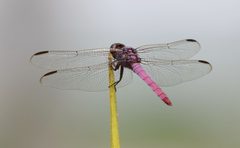
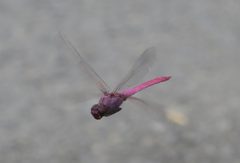
A in the Libellulidae native to the Americas, with distribution extending from the United States to Brazil. Mature males are distinctive for their hot pink coloration. The is common and widespread, and has been introduced to Hawaii. First complete description for a Mexican odonate documented 17 larval instars.
Pronunciation
How to pronounce Orthemis ferruginea: /ɔːrˈθɛmɪs fɛruːˈdʒiːniə/
These audio files are automatically generated. While they are not always 100% accurate, they are a good starting point.
Identification
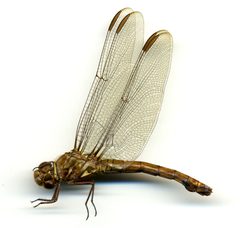
Mature males are essentially hot pink in color, making them highly distinctive. Females differ markedly from males, with a distinct flare near the tip of the and lacking the bright pink coloration. The has 17 larval instars from prolarva through F-0.
Images
Habitat
Muddy, quickly shrinking wetlands; marshy areas with standing water.
Distribution
Native to the Americas from the United States to Brazil. Present in North America, Middle America, and the Caribbean. Introduced to Hawaii. Specific locations include Oaxaca (Mexico), Leticia and Yopal (Colombia), and Villavicencio, Meta (Colombia).
Life Cycle
Complete includes 17 larval instars from prolarva through F-0. Larval life cycle from F-0 to F-16 averaged 186 days under laboratory conditions. Youngest instars (F-15 to F-8) fed on Artemia franciscana nauplii; F-7 to F-0 fed on Culicidae and Chironomidae larvae. Development completed at 26°C for early instars, with final five instars completed at 30°C.
Behavior
Males exhibit territorial . Old, tattered individuals remain capable of swift .
Similar Taxa
- Orthemis discolor distinguished by coloration; one structural characteristic can differentiate many females. Both occur in North and Middle America.
Sources and further reading
- BugGuide
- GBIF taxonomy match
- iNaturalist taxon
- NCBI Taxonomy
- Catalogue of Life
- Bug Eric: Bosque del Apache National Wildlife Refuge
- Bug Eric: January 2016
- May | 2023 | Beetles In The Bush
- The bodyguard: Pseudomyrmex ants protecting bullhorn acacias — Bug of the Week
- Bug Eric: Wasp Wednesday: Ampulex canaliculata
- Bug of the Week
- The life cycle of Orthemis ferruginea (Fabricius, 1775) (Odonata: Libellulidae)
- THE DISTRIBUTION AND RELATIVE ABUNDANCE OF THE SIBLING SPECIESORTHEMIS FERRUGINEA(FABRICIUS, 1775) ANDO. DISCOLOR(BURMEISTER, 1839) IN NORTH AND MIDDLE AMERICA (ANISOPTERA: LIBELLULIDAE)