
Meta
C. L. Koch, 1835
Cave Orbweavers
Species Guides
2- Meta dolloff(Dolloff Cave Spider)
- Meta ovalis(Cave Orbweaver)
Meta is a of long-jawed orb-weaver spiders ( Tetragnathidae) distributed worldwide. These spiders are strongly associated with subterranean and dimly lit environments, including caves, abandoned mines, old wells, basements, and densely shaded ravines. Unlike most tetragnathids, Meta construct vertical orb webs rather than horizontal ones. The genus includes notable species such as Meta ovalis in North America and Meta menardi in Europe and Asia.
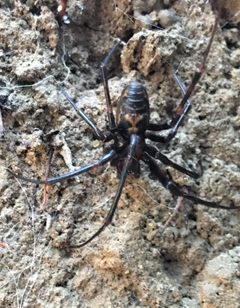
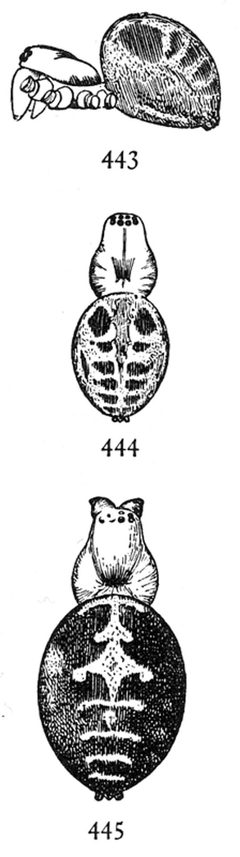
Pronunciation
How to pronounce Meta: /ˈmɛ.tə/
These audio files are automatically generated. While they are not always 100% accurate, they are a good starting point.
Identification
Meta can be distinguished from other Tetragnathidae by their lack of the exaggerated elongated jaws, long legs, and slender body typical of most long-jawed orb weavers. They build vertical orb webs rather than the horizontal webs characteristic of other tetragnathids. Meta ovalis females measure 8–10 mm in body length, males average 9.5 mm. The spiders possess obvious and full pigmentation, classifying them as troglophiles rather than troglobites. Spiny legs help distinguish them from cobweb weavers (Theridiidae).
Images
Habitat
Caves, caverns, and recesses; also abandoned mines, old wells, basements, and densely shaded ravines. Occupies entrance and twilight zones rather than deep cave recesses. Webs are typically built from ceilings, especially in protected situations termed 'kettles' and 'bells' where desiccating air currents are minimized.
Distribution
Worldwide distribution. Meta ovalis ranges from southeast Canada to Georgia and west to the Mississippi River, especially along the Appalachian Mountains and Ozark Plateau. Meta menardi occurs in Europe and Asia (to Korea). One additional North American is restricted to California.
Diet
Prey consists of insects and other small arthropods captured in orb webs. Meta ovalis has been observed preying on troglobiotic millipedes (Causeyella).
Life Cycle
specimens may be distributed slightly deeper in caves than and construct larger webs to increase capture potential for more scarce prey. Females produce sacs.
Behavior
Constructs vertical orb webs, usually from ceilings in protected locations. Sits near the edge of the web rather than the center. Carries fungi, with potential for mycoflora transfer to cave crickets.
Ecological Role
in cave and subterranean . Potential for fungal among cave-dwelling arthropods. Brittle stars have been proposed as indicator organisms for environmental metabarcoding due to their abundance and characteristics, though this refers to a separate taxonomic group.
Human Relevance
Not dangerously venomous to humans. Occasionally encountered in basements and cellars. Subject of cave biodiversity research and conservation efforts.
Similar Taxa
- Meta menardiEuropean and Asian ; M. ovalis was formerly confused with this but is now recognized as distinct and restricted to North America
- Linyphiidae (sheetweb weavers)May be mistaken due to similar and web placement, but Meta has spiny legs and constructs orb webs rather than sheet webs
- Theridiidae (cobweb weavers)May be confused in dark , but Meta lacks the comb-like structures on hind legs and constructs orb webs rather than tangled cobwebs
Sources and further reading
- BugGuide
- Wikipedia
- iNaturalist taxon
- NCBI Taxonomy
- Catalogue of Life
- New OA journal Metabarcoding & Metagenomics | Blog
- Metabarcoding and Metagenomics | Blog
- Streamlined import of omics metadata from the European Nucleotide Archive (ENA) into an OMICS Data Paper manuscript | Blog
- DNA metabarcoding detects ecological stress within freshwater species | Blog
- Bug Eric: Stealing Minds and Destroying Morale: LibGen, Meta, and AI
- Bug Eric: Spider Sunday: Cave Orbweaver
- Short-Term Effects of an mHealth Intervention on Healthy Behaviors and Cardiometabolic Health in Sedentary Employees: Quasi-Experimental Study.