
Artemia franciscana
Kellogg, 1906
San Francisco brine shrimp
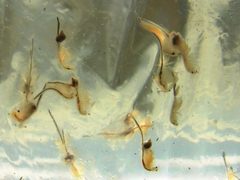
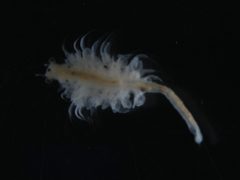
Artemia franciscana is a small crustacean native to hypersaline environments of the Americas, now widely introduced globally for aquaculture. The exhibits exceptional reproductive plasticity, switching between ovoviviparity (live birth of nauplii) and oviparity (production of cysts) based on environmental conditions. It matures rapidly, reaching reproductive age in under 20 days, and serves as a critical live food source in commercial fish and shellfish farming. The species shows pronounced phenotypic plasticity in response to salinity and temperature stress.
Pronunciation
How to pronounce Artemia franciscana: /ɑrˈtiːmiə frænˈsɪskənə/
These audio files are automatically generated. While they are not always 100% accurate, they are a good starting point.
Identification
Distinguished from congeneric by karyotypic features: longer and increased heterochromatin content. Reproductive mode plasticity and specific associations (hypersaline lakes and ponds) aid field identification. Molecular and cytogenetic analysis required for definitive species-level identification where ranges overlap with other Artemia species.
Images
Habitat
Strictly limited to hypersaline aquatic environments including salt lakes, salt ponds, solar salt works, and inland brine pools. Tolerates salinities from approximately 35–250 g/L, exceeding seawater concentration. selection excludes most and competitors, reducing . established through deliberate introduction for aquaculture now occupy artificial salt ponds.
Distribution
Native to the Americas from the western United States through the Caribbean to South America. Type locality associated with San Francisco Bay region, California. Widely introduced to tropical and temperate regions worldwide including northeastern Brazil, Macau, and various locations across Asia and Europe through aquaculture operations and natural of cysts.
Seasonality
Active year-round in stable environments; cyst dormancy allows persistence through unfavorable periods. Reproductive activity and strongly temperature-dependent, with optimal activity at moderate temperatures.
Diet
filter-feeder consuming phytoplankton, bacteria, detritus, and suspended organic particles. Particle size selectivity has been documented, with filtration varying based on particle dimensions. Diet in natural primarily consists of microalgae and heterotrophic microbes adapted to hypersaline conditions.
Life Cycle
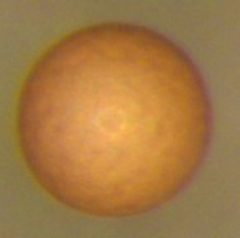
Development from nauplius to reproductive in 15 , typically completed in less than 20 days under favorable conditions. Females may produce up to 20 with up to 250 embryos per brood. Two reproductive : (1) ovoviviparity—embryos develop directly in ovisac, hatching as free-swimming nauplii under favorable conditions; (2) oviparity—embryos encysted with protective shell, released as cysts that withstand desiccation and hatch upon rehydration when conditions improve. Multiple may coexist simultaneously.
Behavior
Exhibits positive and negative geotaxis. Males employ four distinct courtship patterns: approach and touch, swimming behind female, riding attempt, and riding success. Males use modified to clasp females during amplexus. Females release to signal reproductive receptivity. Mate size assortment observed at moderate temperatures (24°C), with larger individuals preferred; this assortative mating diminishes at temperature extremes. Clasping sometimes directed at non-receptive females or heterospecifics.
Ecological Role
Primary consumer in hypersaline , transferring microbial production to higher . Serves as foundational prey item for migratory and resident waterbirds in natural salt lake systems. In aquaculture, functions as live food (bioencapsulation) for delivering nutrients, probiotics, and therapeutics to farmed fish and shellfish larvae. Introductions for commercial cyst harvesting have altered native Artemia composition and reproductive dynamics in recipient .
Human Relevance
Economically significant as the primary source of brine shrimp cysts for global aquaculture, supplying live feed for marine fish and crustacean hatcheries. Commercial harvest in northeastern Brazil reaches 20 tonnes of cysts annually. Used extensively in research as a model organism for developmental , stress physiology, and phenotypic plasticity studies. Heat shock protein research in this has informed selective breeding for thermotolerance. Cysts sold as novelty aquarium pets under the trade name "Sea-Monkeys."
Similar Taxa
- Artemia salinaOverlapping use in Mediterranean and some introduced ranges; distinguished by karyotype, length, and heterochromatin content
- Artemia parthenogeneticaSympatric in some Eurasian localities where A. franciscana introduced; distinguished by reproductive mode (obligate vs. )
- Artemia monicaClosely related congeneric with which A. franciscana has been synonymized in some taxonomic treatments; distinguished by specific associations and genetic differentiation
More Details
Thermotolerance and selective breeding
Research has identified specific heat shock protein variants associated with increased thermotolerance. A SNP in HSC70 (C171A; N57K) in the -binding domain shows association with enhanced thermal resistance and has been proposed as a marker for selective breeding programs.
Reproductive plasticity triggers
Switch between oviparity and ovoviviparity mediated by environmental cues: oviparity favored by extreme salinity, temperature stress, hypoxia, food limitation, and short ; ovoviviparity associated with abundant food and moderate conditions.
Sexual coevolution
Females exhibit 3–12% reduced survival when mated with males from different (past or future) compared to contemporary males, indicating rapid of reproductive traits within .
Sources and further reading
- BugGuide
- Wikipedia
- GBIF taxonomy match
- iNaturalist taxon
- NCBI Taxonomy
- Catalogue of Life
- Eight years of ruin: the legacy of the Mariana dam disaster
- Figure 1: Life cycle of Artemia Franciscana.
- Artemia Bioencapsulation I. Effect of Particle Sizes on the Filtering Behavior of Artemia Franciscana
- Phenotypic Morphological Plasticity Induced by Environmental Salt Stress in the Brine Shrimp, Artemia franciscana
- Functional characterization of heat shock proteins during stress response in pacific white shrimp Penaeus vannamei and brine shrimp Artemia franciscana