
Artemiidae
Grochowski, 1896
Brine Shrimp
Genus Guides
1- Artemia(brine shrimp)
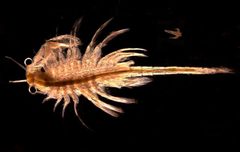
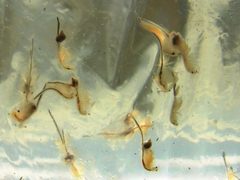
Artemiidae is a of branchiopod crustaceans containing the single Artemia, commonly known as brine shrimp. These organisms inhabit hypersaline inland waters worldwide where their extreme salinity excludes most . The family has remained morphologically unchanged since the . Artemiidae serve as important food sources for waterbirds and as intermediate for avian cestodes. Their desiccation- cysts have enabled commercial harvest and widespread use in aquaculture as live feed.
Pronunciation
How to pronounce Artemiidae: //ɑːrˈtiːmi.aɪdiː//
These audio files are automatically generated. While they are not always 100% accurate, they are a good starting point.
Identification
Distinguished from other Anostraca by extreme salinity (2.5-25%, optimum 6-10%) and association with hypersaline inland waters rather than freshwater . The single Artemia is the only genus in the . Cyst formation in response to desiccation, low oxygen, or rising temperatures is a key diagnostic trait. Morphological stasis since the Triassic separates Artemiidae from other branchiopod families with more derived features.
Images
Habitat
Inland salt waters worldwide; saline (2.5%) to hypersaline (25%) aquatic environments with optimum salinity of 6-10%. Occupies protected from fish due to extreme salinity. Specific documented locations include: Mono Lake and salt pools near Chula Vista (California, USA), Lake Tengiz (Kazakhstan), Camargue wetlands (France), Odiel Marshes (Andalusia, Spain), Great Salt Lake (Utah, USA), and saline lakes in Algeria.
Distribution
Worldwide in inland salt waters. Documented from: Mono Lake and Chula Vista area, California, USA; Great Salt Lake, Utah, USA; Lake Tengiz, Kazakhstan; Camargue wetlands, France; Odiel Marshes, Andalusia, Spain; saline lakes in Algeria; Western Mediterranean coasts of Spain and France.
Diet
Plankton; also ingest helminth which facilitates their role as intermediate for avian cestodes.
Host Associations
- Aploparaksis parafilum - intermediate Avian cestode
- Brachiopodataenia gvozdev - intermediate Avian cestode
- Confluaria podicipina - intermediate Avian cestode
- Fimbriaroides tadornae - intermediate Avian cestode; cysticercoid development completed in 12-15 days at 22-24°C and 6.5% salinity
- Flamingolepis caroli - intermediate Avian cestode
- Flamingolepis flamingo - intermediate Avian cestode
- Flamingolepis liguloides - intermediate Avian cestode
- Flamingolepis tengizi - intermediate Avian cestode
- Hymenolepis californicus - intermediate Avian cestode
- Wardium fusca - intermediate Avian cestode
- Wardium stellorae - intermediate Avian cestode
- Anomolepis averini - intermediate Avian cestode
- Anomotaenia tringae - intermediate Avian cestode
- Anomotaenia microphallus - intermediate Avian cestode
- Gynandotaenia stammeri - intermediate Avian cestode
- Gynandrotaenia spp. - intermediate Avian cestode (undetermined )
- Wardium gvozdevi - intermediate Avian cestode; cysticercoid development completed in 12-15 days at 22-24°C and 6.5% salinity
- Eurycestus avoceti - intermediate Avian cestode
- Acuariidae - intermediate Nematodes (larval stages)
- Fuhrmannolepis averini - intermediate Avian cestode
- Flamingos - food source forImportant food source
- Waders - food source forImportant food source
Life Cycle
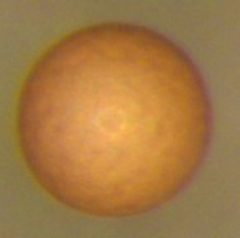
Under normal conditions, females are ovo- and produce nauplius larvae that hatch immediately. Under unfavorable conditions—low oxygen, rising temperatures, or desiccation—females produce floating, thick-shelled, metabolically inactive brown cysts. These cysts remain viable for up to two years in dry conditions and hatch when hydrated under optimal conditions. For cestode , cysticercoid development is completed in 12-15 days at 22-24°C and 6.5% salinity.
Behavior
Ingests helminth along with plankton, facilitating their role as intermediate for avian cestodes. Forms massive in suitable . Reproductive mode shifts between live birth and cyst production based on environmental conditions.
Ecological Role
Important food source for flamingos and waders. Serves as intermediate for at least 16 of avian cestodes across three (Hymenolepididae, Dilepididae, Progynotaeniidae), facilitating transmission to definitive bird hosts. Occupies protected from fish due to extreme salinity .
Human Relevance
Nauplii are widely used in aquaculture as live feed. Brine shrimp cysts are fed to certain pirate (Orius spp.) used for biocontrol in greenhouses. Commercial harvest of cysts supports aquaculture and aquarium industries. Historical record dates to 10th century AD from Urmia Lake, Iran.
Similar Taxa
- Other Anostraca familiesArtemiidae is distinguished by extreme hypersaline preference and cyst-forming reproductive strategy; other fairy shrimp inhabit freshwater and lack comparable desiccation- cysts.
More Details
Morphological stasis
The has changed little externally since the , representing an example of evolutionary stasis.
Historical record
First historical record dates to the first half of the 10th century AD from Urmia Lake, Iran, where an Iranian geographer referred to an example as an 'aquatic dog'.
Taxonomic note
Artemiidae contains only the single Artemia.