
Libellula jesseana
Williamson, 1922
Purple Skimmer
Libellula jesseana, the purple skimmer, is a threatened to Florida, United States. measure approximately 5 centimeters in length. The is restricted to infertile, clear, sandy-bottomed lakes with specific shoreline vegetation, and is critically imperiled due to degradation from human development.
Pronunciation
How to pronounce Libellula jesseana: //lɪˈbɛl.jʊ.lə ˌd͡ʒɛˈseɪ.ɑː.nə//
These audio files are automatically generated. While they are not always 100% accurate, they are a good starting point.
Identification
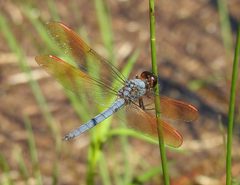
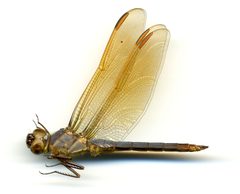
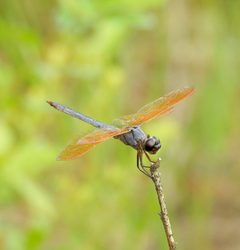
Males are readily identified by pruinescent blue and combined with orange wings. Females require careful distinction from Libellula auripennis (golden-winged skimmer) when in the golden morph; examination of specific morphological characters or context may be necessary. The ' restricted Florida distribution aids identification.
Images
Habitat
Occurs at infertile, clear, sandy-bottomed lakes with shoreline stands of maidencane (Panicum hemitomon), sometimes with sedges and St. John's worts. require adjacent open woodland or shrub-land for foraging.
Distribution
to Florida, United States. Restricted to ten counties in the panhandle and northern peninsula. Protected exists at Gold Branch State Park in Clay County; most other populations receive no protection.
Seasonality
fly from mid-April through mid-September. Nymphs over-winter.
Diet
Nymphs feed on nearly all small organisms in their aquatic environment. catch insects located visually.
Life Cycle
lasts approximately one year. Nymphs over-winter and develop in aquatic . are and active from mid-April through mid-September.
Behavior
are . Foraging occurs in adjacent open woodland or shrub-land. Adults catch prey visually in .
Ecological Role
in both aquatic (nymphal) and terrestrial () stages. Nymphs consume small aquatic ; adults capture flying insects.
Human Relevance
Subject to conservation concern due to threatened status. degradation from human growth in Florida poses primary threat. Populations at Gold Branch State Park receive protection.
Similar Taxa
- Libellula auripennisFemales of L. jesseana in golden morph are identical in coloration to L. auripennis; careful examination or context required for separation
More Details
Conservation Status
NatureServe conservation status is Critically Imperiled. Long-term trend expectation is a decline of 30-70%. Primary threats include eutrophication from septic tank and fertilizer pollution, groundwater depletion from irrigation, and competition from the common L. auripennis in degraded wetlands.
Sources and further reading
- BugGuide
- Wikipedia
- GBIF taxonomy match
- iNaturalist taxon
- NCBI Taxonomy
- Catalogue of Life
- Just Buggin' Ya | Bug Squad
- Dragonfly Enthusiasts, Unite! Open House Set Nov. 6 at Bohart Museum | Bug Squad
- Know Your Dragonflies! | Bug Squad
- Bohart Museum Open House: Dragonflies Rule! | Bug Squad
- The Wonder of Dragonflies | Bug Squad
- Take a Bug Break--and Bring Along This Book | Bug Squad