
Ophiogomphus howei
Bromley, 1924
Pygmy Snaketail
Ophiogomphus howei, commonly known as the pygmy snaketail, is the smallest in its in North America. This rare gomphid is to the United States and exhibits a highly disjunct distribution pattern across two main regions: the Great Lakes area and the Appalachian Mountains. Recent discoveries in southern Michigan suggest the species may be more adaptable to disturbed than previously thought.
Pronunciation
How to pronounce Ophiogomphus howei: /ˌoʊfiəˈɡɒmfəs ˈhaʊi/
These audio files are automatically generated. While they are not always 100% accurate, they are a good starting point.
Identification
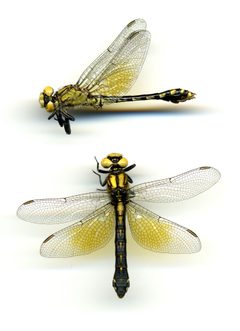
The pygmy snaketail is distinguished from other Ophiogomphus by its notably smaller body size, with length approximately 35 mm and hindwing length approximately 22 mm. This makes it the smallest member of the in North America. Specific pattern details for separating it from similar snaketail species are not documented in available sources.
Images
Appearance
The pygmy snaketail is the smallest Ophiogomphus in North America. have an length of approximately 35 mm and hindwing length of approximately 22 mm. Like other gomphids, the nymphs have a burrowing body form adapted for life in river substrates.
Habitat
Larvae inhabit medium to large fast-flowing rivers and streams, typically 10-200 m wide, with sand and gravel substrates. Nymphs burrow into the substrate, a trait common to Gomphidae. Surrounding areas are typically undisturbed forested landscapes with minimal agriculture. However, a recently discovered in southern Michigan occurs along the Grand River, which experiences sedimentation, excess nutrients, and inputs from agricultural and urban sources, suggesting broader than previously recognized.
Distribution
to the United States with a highly disjunct distribution across two main regions. The western occurs in the northern half of Wisconsin, with records extending into Minnesota and Michigan's Upper Peninsula. The eastern population spans from New Brunswick, Canada to South Carolina, west to Kentucky. New state records have been documented for Kentucky, Maine, and Minnesota. A newly discovered population in southern Michigan, approximately 400 km from the nearest known population, represents a significant range extension. Within these regions, populations are localized and discontinuous, restricted to specific stretches of river systems.
Seasonality
have been observed with a season in late spring. Nymphs emerge over a 4 to 6 day period.
Life Cycle
The pygmy snaketail breeds in streams and rivers. Nymphs are aquatic and inhabit flowing water, burrowing into sand and gravel substrates. occurs on mud banks or low vegetation near the water's edge in areas of slower current. Nymphs emerge over a 4 to 6 day period. have been documented as evidence of successful emergence.
Behavior
Nymphs exhibit burrowing in river substrates. have been observed feeding on mosquitoes during spring activity periods.
Human Relevance
Listed as threatened in Michigan. The is of conservation concern due to its limited range and specific requirements. Citizen scientists and Odonata enthusiasts have contributed significantly to knowledge of this species, including the discovery of new . The Michigan Odonata Survey has documented new populations through collaborative efforts involving photographers and naturalists.
Similar Taxa
- Other Ophiogomphus speciesLarger body size; O. howei is distinguished as the smallest member of the in North America with length ~35 mm versus larger dimensions in
- Ophiogomphus severus (Pale Snaketail)Larger size and different geographic distribution; occurs in western North America including Colorado
- Ophiogomphus arizonicus (Arizona Snaketail)Larger size, solid green , and southwestern distribution
Misconceptions
Previously assumed to be restricted to pristine, undisturbed forested river systems with minimal agriculture. The discovery of a robust along the Grand River in southern Michigan—a river system affected by urban and agricultural pollution, sedimentation, and nutrient inputs—challenges this assumption and suggests the may be more widely distributed or more tolerant of disturbance than previously believed.
More Details
Conservation Status
Considered rare and of conservation concern throughout its range. Listed as threatened in Michigan. The ' limited and disjunct distribution pattern makes individual vulnerable to local extirpation.
Citizen Science Contributions
Major discoveries of new have been made by non-professional entomologists. The Michigan population was discovered by a nature photographer and documented through surveys by volunteers with the Michigan Odonata Survey, demonstrating the value of citizen science in documenting rare Odonata.
Taxonomic History
First described by Bromley in 1924. The has remained poorly known due to its rarity and elusive nature, with new state records continuing to expand documented range as recently as 2020.
Sources and further reading
- BugGuide
- Wikipedia
- GBIF taxonomy match
- iNaturalist taxon
- NCBI Taxonomy
- Catalogue of Life
- Ophiogomphus howei Archives - Entomology Today
- searching for Ophiogomphus howei - Entomology Today
- Diminutive Dragonfly Makes New Appearance in Michigan
- Grand River - Entomology Today
- Bug Eric: New Mexico Dragonfly Blitz - Day 2
- Bug Eric: Blodgett Peak Bioblitz Report
- New Distribution Records for <i>Ophiogomphus Howei</i> (Odonata: Gomphidae)