
Ophiogomphus
Selys, 1854
snaketails
Species Guides
18- Ophiogomphus anomalus(Extra-striped Snaketail)
- Ophiogomphus arizonicus(Arizona Snaketail)
- Ophiogomphus aspersus(Brook Snaketail)
- Ophiogomphus australis(southern snaketail)
- Ophiogomphus bison(Bison Snaketail)
- Ophiogomphus carolus(Riffle Snaketail)
- Ophiogomphus colubrinus(Boreal Snaketail)
- Ophiogomphus edmundo(Edmund's Snaketail)
- Ophiogomphus howei(Pygmy Snaketail)
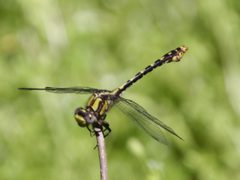
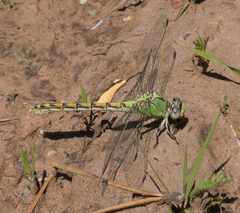
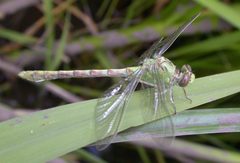
Ophiogomphus is a of in the Gomphidae, commonly known as snaketails. The genus contains approximately 25 described distributed across North America, Europe, and Asia. Most species exhibit green markings on club-shaped , with males typically displaying more prominent coloration. The genus includes both widespread species and localized endemics with restricted ranges.
Pronunciation
How to pronounce Ophiogomphus: /ˌoʊfi.oʊˈɡɒmfəs/
These audio files are automatically generated. While they are not always 100% accurate, they are a good starting point.
Identification
Distinguished from other Gomphidae by combination of clubbed with green markings and specific wing venation patterns. Separated from Erpetogomphus by thoracic coloration and abdominal pattern details. Ophiogomphus arizonicus identifiable by nearly solid green . Ophiogomphus howei distinguished by small size and specific range. identification often requires examination of abdominal pattern, thoracic stripes, and male terminal appendages.
Images
Appearance
Medium-sized with distinctly clubbed . Most display green markings on the abdomen, often more vivid in males. Thoracic patterning varies by species; some exhibit solid green while others show striped or mottled patterns. Wings are clear with typical gomphid venation. Body length varies among species, with Ophiogomphus howei being the smallest at approximately 25-30 mm.
Habitat
Primarily associated with flowing water systems including rivers, streams, and creeks. Many occupy clear, fast-flowing waters with rocky or gravelly substrates. Forested riparian zones are typical, though some occur in less pristine conditions. Ophiogomphus howei was historically considered restricted to relatively undisturbed forested streams, but a Michigan population persists in a more degraded river system with siltation and agricultural influence.
Distribution
Holarctic distribution. North American occur across the continent from Canada through the United States to Mexico. European species include Ophiogomphus cecilia. Asian species extend the range eastward. Specific distributions vary by species: Ophiogomphus howei occurs in Appalachia, Wisconsin, and recently discovered Michigan; Ophiogomphus arizonicus in southwestern United States; Ophiogomphus severus in western North America.
Seasonality
seasons vary by and latitude. Ophiogomphus howei has a late spring flight season, with active in May and June. Most temperate species fly during summer months. Exact timing depends on local climate and elevation.
Diet
are aerial capturing small flying insects. Larvae are aquatic predators feeding on other aquatic in stream and river substrates.
Life Cycle
Hemimetabolous development with aquatic larval stage and terrestrial stage. laid in or near water. Larvae inhabit stream and river substrates, burrowing in sand, gravel, or organic debris. Larval development spans multiple years depending on and environmental conditions. occurs in spring to summer, with left on riparian vegetation.
Behavior
perch on rocks, vegetation, or other objects in or near water. Some regularly perch on objects in mid-stream. Males patrol territories along stream reaches. Adults are strong fliers capable of sustained aerial pursuit of prey.
Ecological Role
and larval stages function as in aquatic and riparian . Larvae are significant predators in benthic stream . Adults contribute to aerial guilds. Presence of certain may indicate water quality conditions, though specificity varies.
Human Relevance
Subject of citizen science monitoring and Odonata surveys. Ophiogomphus howei is listed as threatened in Michigan. used as indicators of stream health in some contexts. Attracts interest from enthusiasts and photographers.
Similar Taxa
- ErpetogomphusAlso clubtails with green thoracic coloration; distinguished by specific abdominal pattern and male appendage structure
- GomphusSimilar clubbed but typically with different color patterns, often yellow and black rather than green
- HageniusLarge clubtail with different abdominal shape and pattern; lacks green markings characteristic of Ophiogomphus
More Details
Conservation Status
Several have restricted ranges and are of conservation concern. Ophiogomphus howei was considered rare with limited known until a 2017 discovery in Michigan expanded its known range. The Michigan population occurs in a river system with documented water quality issues, challenging assumptions about the species' requirements.
Taxonomic History
established by Selys in 1854. Contains both widespread Holarctic and localized endemics. Species-level has been revised multiple times based on morphological and distributional studies.
Sources and further reading
- BugGuide
- Wikipedia
- GBIF taxonomy match
- iNaturalist taxon
- NCBI Taxonomy
- Catalogue of Life
- searching for Ophiogomphus howei - Entomology Today
- Ophiogomphus howei Archives - Entomology Today
- Diminutive Dragonfly Makes New Appearance in Michigan
- Bug Eric: New Mexico Dragonfly Blitz - Day 2
- Bug Eric: Blodgett Peak Bioblitz Report
- Grand River - Entomology Today