
Hemerobius
Linnaeus, 1758
brown lacewings
Species Guides
4- Hemerobius bistrigatus
- Hemerobius conjunctus
- Hemerobius humulinus(brown lacewing)
- Hemerobius stigma(brown pine lacewing)
Hemerobius is a of brown lacewings in the Hemerobiidae, distributed across Europe and North America. and larvae are predatory, feeding on small arthropods including aphids, scale insects, and insect . The genus includes that overwinter as adults and are active in early spring. Larvae spin loose, coarse cocoons for , with some species exhibiting extended quiescent periods before .
Pronunciation
How to pronounce Hemerobius: //ˌhɛmɛˈroʊbiəs//
These audio files are automatically generated. While they are not always 100% accurate, they are a good starting point.
Identification
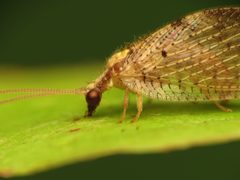
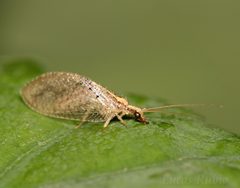
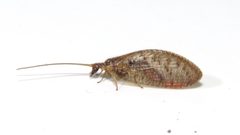
Hemerobius are distinguished from green lacewings (Chrysopidae) by their generally brown, dull coloration rather than bright green. They differ from other brown lacewing by specific wing venation patterns and genitalic structures requiring microscopic examination. of Hemerobius stigma have been noted as identifiable by expert determination.
Images
Habitat
Arboreal environments including orchards and forests; larvae have been observed in bands placed on fruit trees. are frequently attracted to artificial lights at night.
Distribution
Europe and North America; specific records include Denmark, Norway, Sweden, and Vermont, USA.
Seasonality
are active in early spring (March) following winter dormancy; some show adult in autumn with in the adult stage.
Diet
Predatory on acarines (mites), scale insects, psyllids, aphids, , and the of lepidopterans and whiteflies.
Life Cycle
Larvae spin loose, coarse cocoons with visible oil-like globules in the mesh; larvae assume a curved position with bent forward to the and legs folded inward. Some exhibit extended in cocoons from autumn through winter, with occurring in spring.
Behavior
are attracted to artificial lights at night. Larvae construct characteristic loose cocoons for and . Adults of some spend winter in concealed locations and resume activity in early spring.
Ecological Role
Predatory control of soft-bodied pests including aphids, scale insects, and mites in arboreal and agricultural .
Human Relevance
agent for agricultural and orchard pests; larvae have been incidentally collected in pest management bands on fruit trees.
Similar Taxa
- Chrysopidae (green lacewings)Bright green coloration in most , versus the brown coloration of Hemerobius; different wing venation patterns.
- MicromusAnother of brown lacewings distinguished by wing venation and genitalic ; expert identification often required to separate.
- SympherobiusFormerly included now placed in this separate of brown lacewings.
More Details
Cytogenetics
Hemerobius marginatus exhibits B- that are mitotically unstable and show non-disjunction at , influencing segregation through apparent mechanisms in males.
Taxonomic history
The formerly included now placed in Sympherobius and Vieira; Boriomyia has been treated as a synonym of Hemerobius.
Research limitations
Most detailed biological studies focus on single (H. nervosa, H. pacificus, H. marginatus, H. stigma); -level generalizations should be treated cautiously.
Sources and further reading
- BugGuide
- Wikipedia
- GBIF taxonomy match
- iNaturalist taxon
- NCBI Taxonomy
- Catalogue of Life
- Bug Eric: Blacklighting Already?
- Biology of the Adult Hemerobius pacificus1
- The meiotic behaviour of B-chromosomes and their effect on thesegregation of sex chromosomes in males of Hemerobius marginatus L. (Hemerobidae, Neuroptera)
- On the Life History of Boriomyia (Hemerobius) nervosa, Fab. (Planipennia, Hemerobiidae).