Sparganothis tristriata
Kearfott, 1907
Three-streaked Sparganothis Moth
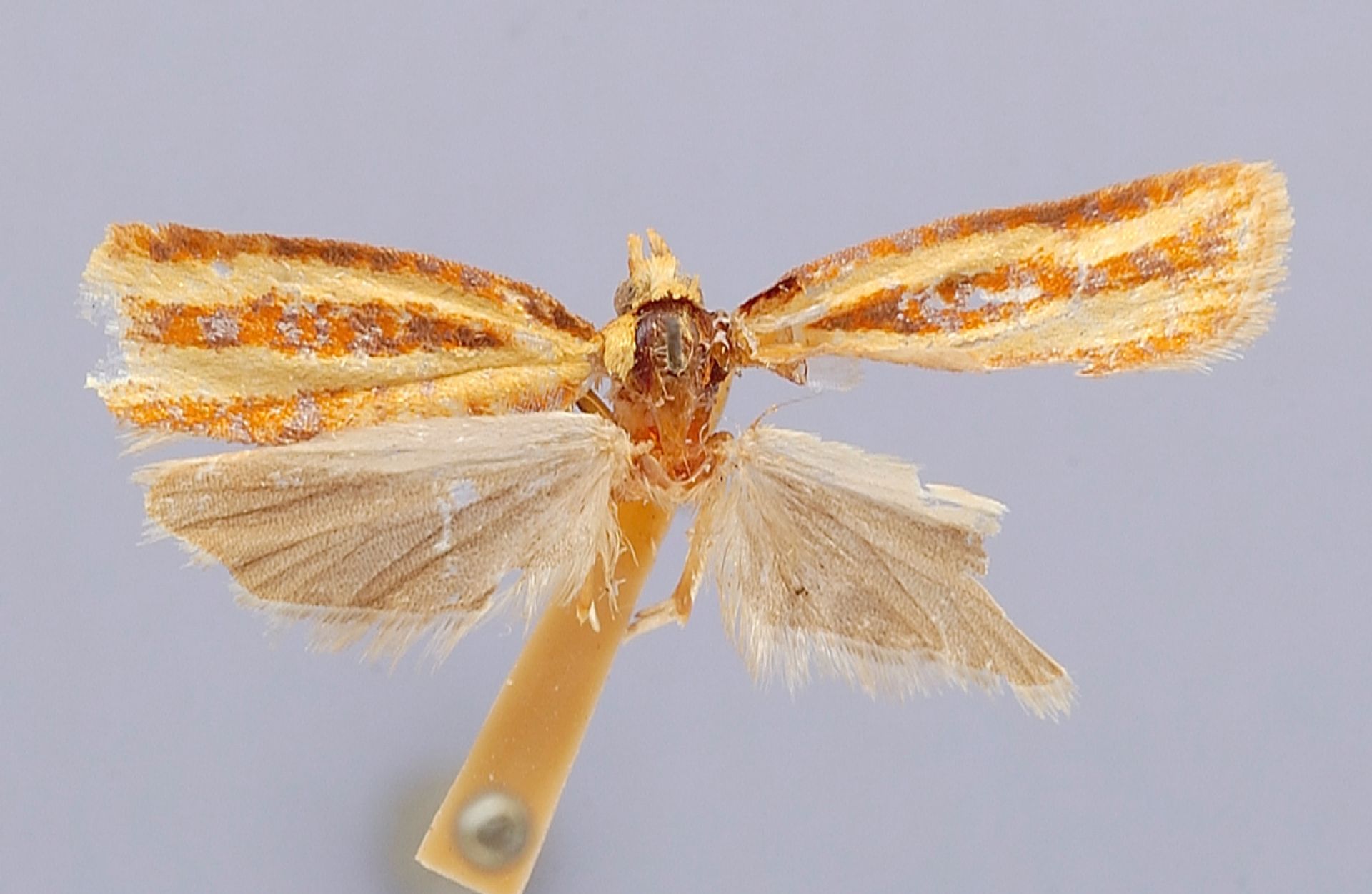
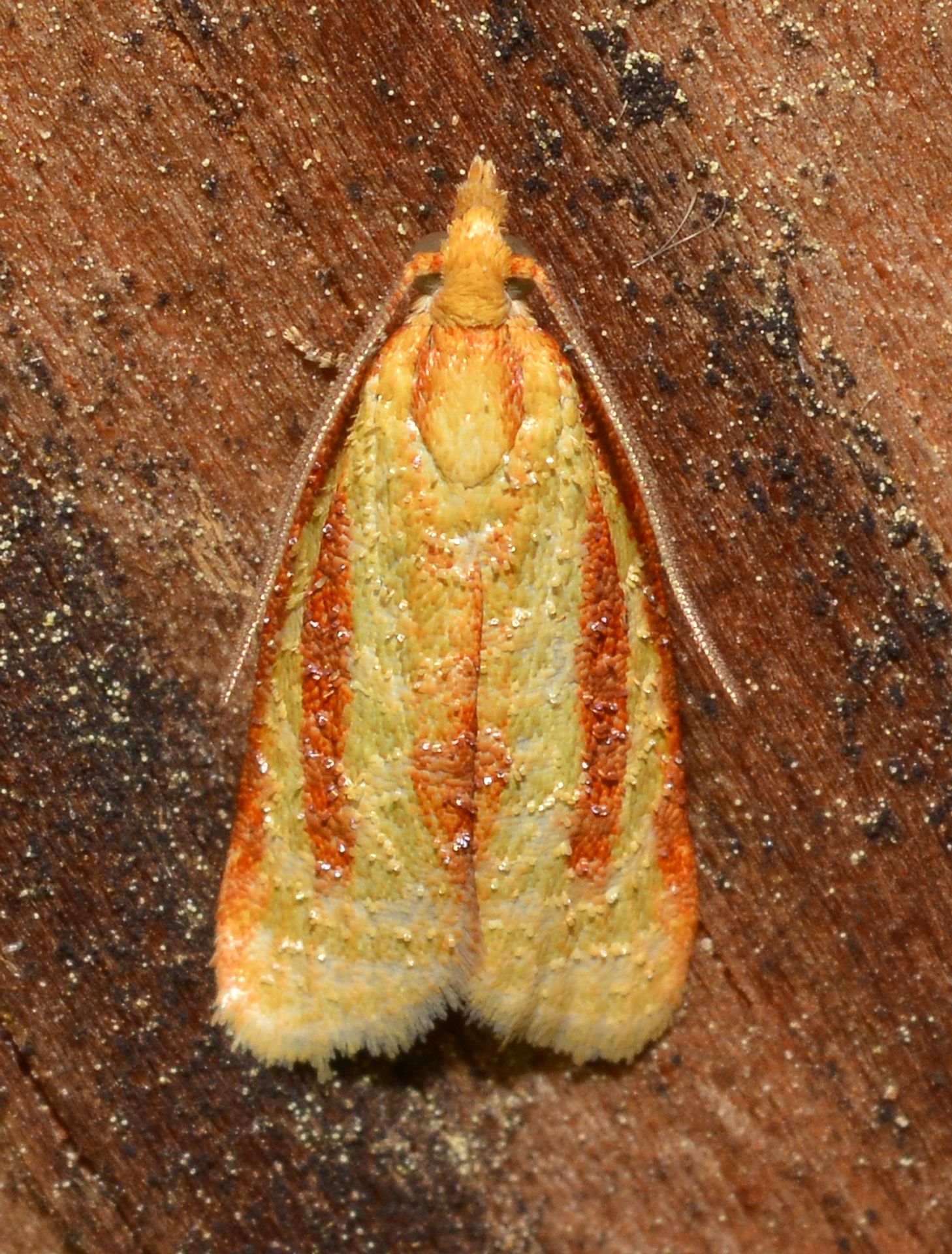
Sparganothis tristriata is a small tortricid with a wingspan of 16–20 mm, distributed across eastern and central North America from Florida to Saskatchewan. The refers to three longitudinal streaks on the forewings. Larval plants remain poorly documented for this specifically.

Pronunciation
How to pronounce Sparganothis tristriata: //ˌspɑːrɡəˈnoʊθɪs ˌtrɪsˈtraɪ.ətə//
These audio files are automatically generated. While they are not always 100% accurate, they are a good starting point.
Identification
The three longitudinal streaks on the forewings distinguish this from other Sparganothis. Confirmation requires examination of genitalia or comparison with closely related species such as Sparganothis sulfureana, which lacks this streaking pattern. Small size (16–20 mm wingspan) separates it from larger tortricid species.
Images
Appearance
Small with wingspan 16–20 mm. Forewings marked with three longitudinal streaks, the pattern for which the is named. Coloration and detailed wing patterning typical of the Sparganothis, with mottled or banded appearance.
Distribution
North America: Alberta, Connecticut, Florida, Indiana, Kentucky, Maine, Manitoba, Maryland, Massachusetts, Minnesota, Mississippi, New Hampshire, New Jersey, New York, North Carolina, Ohio, Oklahoma, Ontario, Quebec, Saskatchewan, South Carolina, Tennessee, Vermont, Wisconsin, and likely intervening regions.
Similar Taxa
- Sparganothis sulfureanaSimilar size and but lacks the three longitudinal forewing streaks characteristic of S. tristriata
More Details
Taxonomic note
Described by Kearfott in 1907. The specific epithet 'tristriata' directly references the three-streaked wing pattern.