
Eugnosta
Hübner, 1825
Species Guides
9- Eugnosta bimaculana(narrow-patch carolella moth)
- Eugnosta brownana
- Eugnosta busckana(Busck's Gallmoth)
- Eugnosta deceptana(Deceptive Cochylid)
- Eugnosta erigeronana(fleabane cochylid moth)
- Eugnosta mexicana
- Eugnosta n-sp-one
- Eugnosta sartana(Broad-patch carolella moth)
- Eugnosta willettana
Eugnosta is a of tortricid moths in the tribe Cochylini. The genus was first reported from Chile in 2015 with the description of Eugnosta azapaensis, a gall-inducing associated with Baccharis salicifolia in the northern Atacama Desert. Species in this genus are characterized by their association with plants, with at least some species inducing galls on Asteraceae.
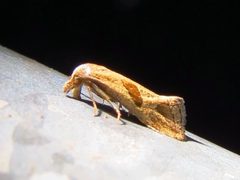
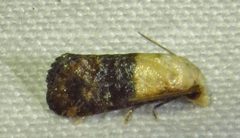
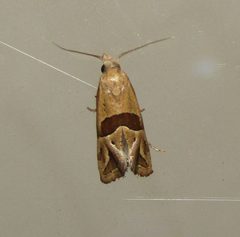
Pronunciation
How to pronounce Eugnosta: /juːɡˈnɒstə/
These audio files are automatically generated. While they are not always 100% accurate, they are a good starting point.
Identification
Members of Eugnosta can be distinguished from other Cochylini by genitalic , particularly the configuration of the male valva and female sterigma. The genus lacks the strongly hooked uncus found in some related genera. Specific identification to level requires examination of genitalia and often knowledge of plant association.
Images
Habitat
Arid and semi-arid environments including desert valleys. The Chilean E. azapaensis occurs in the Azapa Valley of the northern Atacama Desert, where it is associated with shrubby vegetation.
Distribution
Widespread in the New World; first reported from Chile in 2015. The occurs in North America, Central America, and South America, with the Chilean record representing a significant range extension.
Host Associations
- Baccharis salicifolia - gall inducerLarvae induce galls on shoots. Association documented for E. azapaensis in Chile.
Life Cycle
Larvae develop within galls induced on plant shoots. Described stages include last-instar larva, pupa, and . Gall induction represents the primary larval feeding strategy.
Behavior
Larvae are cecidogenous, inducing distinct galls on plant shoots. This gall-inducing provides shelter and nutrition for larval development.
Ecological Role
As gall inducers, larvae modify plant growth and create microhabitats that may be utilized by other organisms. The interaction represents a specialized herbivore-plant relationship.
Similar Taxa
- CochylisBoth belong to Cochylini and share general tortricid ; Eugnosta differs in genitalic structure and typically has broader forewings.
- PhalonidiaSimilar size and wing pattern in some ; distinguished by male genitalia, particularly valva structure and .
More Details
First Chilean record
The Eugnosta was unknown from Chile until the description of E. azapaensis in 2015, representing a significant range extension for the genus. The was discovered through investigation of galls on Baccharis salicifolia.
Phylogenetic study
Mitochondrial analysis of E. azapaensis included comparison with two congeneric , supporting its placement within Eugnosta and clarifying relationships within the .