
Aethes deutschiana
(Zetterstedt, 1839)
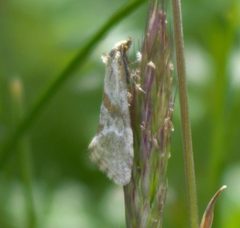
Aethes deutschiana is a small tortricid first described by Zetterstedt in 1839. It belongs to the Aethes, a group of moths commonly known as false bell moths or flat-bodied moths. The has a notably broad geographic range spanning the Palearctic region and extending to North America, suggesting either natural capabilities or possible human-mediated introduction to the Nearctic.
Pronunciation
How to pronounce Aethes deutschiana: //ˈeɪ.θiːz ˌdɔɪtʃ.iˈɑː.nə//
These audio files are automatically generated. While they are not always 100% accurate, they are a good starting point.
Identification
As a member of the Aethes, this likely exhibits the characteristic slender, somewhat flattened body form and relatively narrow wings typical of the group. Accurate identification to species level requires examination of genitalia or detailed wing pattern analysis, as many Aethes species are morphologically similar. The original description by Zetterstedt (1839) provides the primary diagnostic reference.
Images
Distribution
Recorded from south-eastern France, Italy, Switzerland, Austria, Norway, Sweden, northern Finland, Karelia, Bulgaria, Russia (including Usgent, Altai, Alai, Sajan, and Munko-Sardyk regions), Armenia, Iran, Japan, and North America. The disjunct distribution between Eurasia and North America warrants further investigation regarding native status versus potential introduction in North America.
Similar Taxa
- Other Aethes speciesMany share similar size, wing shape, and general coloration; genitalia dissection or often required for definitive separation.
More Details
Taxonomic history
Originally described as Tortrix deutschiana Zetterstedt, 1839, later transferred to the Aethes. The basionym Tortrix deutschiana reflects historical classification practices in Tortricidae.
North American records
The presence in North America is noted in sources but the mechanism of establishment (native relict, natural , or anthropogenic introduction) remains unclear and merits further study.