Clepsis moeschleriana
(Wocke, 1862)
Clepsis moeschleriana is a small tortricid described by Maximilian Ferdinand Wocke in 1862. It occurs in alpine and subalpine environments across a disjunct distribution spanning Kyrgyzstan, Russia, and western North America from Alaska to Newfoundland. The has a wingspan of 15–23 mm and is active during summer months, with periods varying by region. Larvae feed on Delphinium barbeyi, a larkspur species.
Pronunciation
How to pronounce Clepsis moeschleriana: //ˈklɛpsɪs ˌmɛʃləˈriːɑːnə//
These audio files are automatically generated. While they are not always 100% accurate, they are a good starting point.
Identification
Distinguished from other Clepsis by its alpine/subalpine preference and geographic distribution. In North America, it may be confused with other small tortricids in the same , but its occurrence in high-elevation habitats helps narrow identification. Genitalia examination may be required for definitive identification from similar species.
Images
Appearance
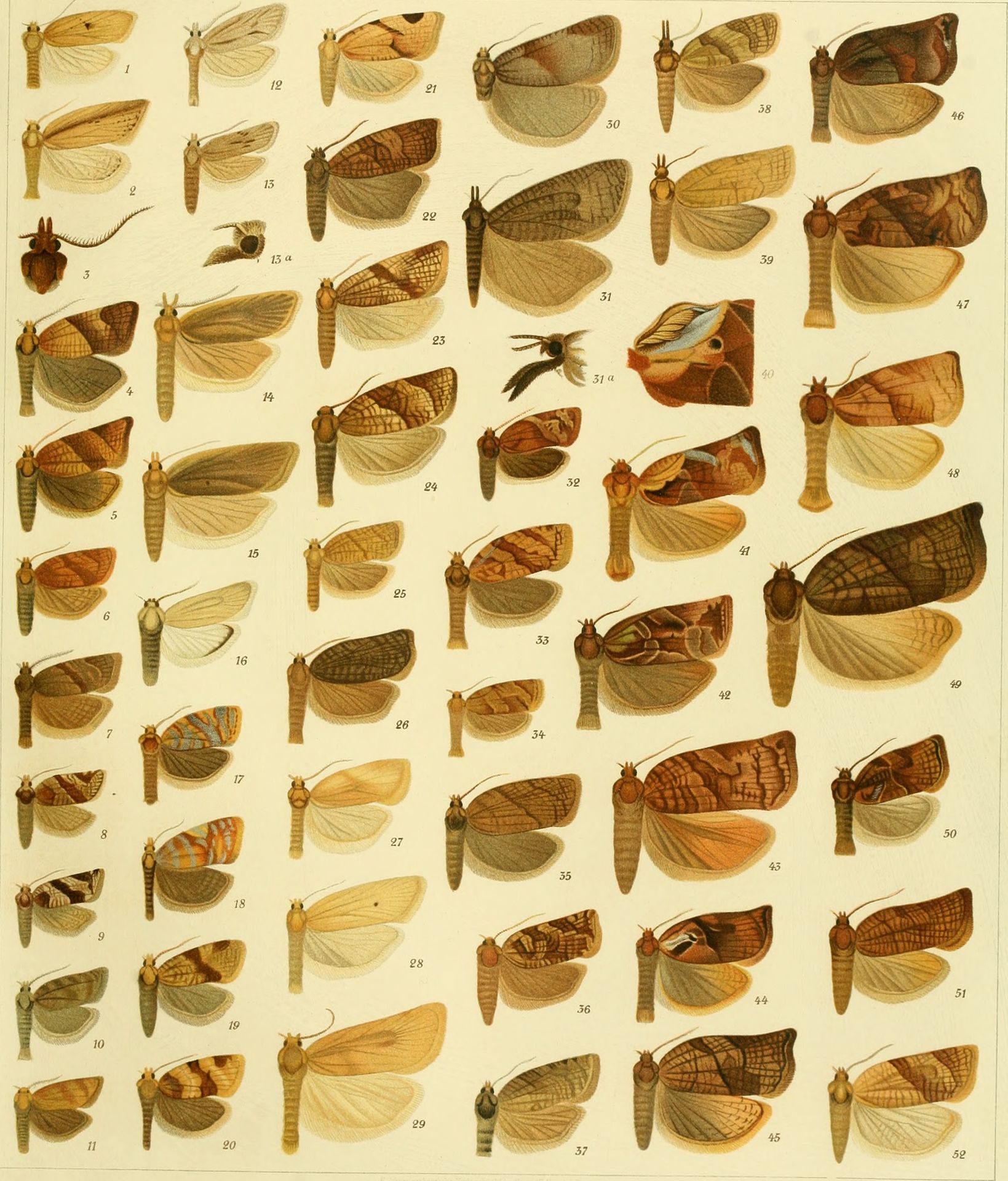
Small with wingspan of 15–23 mm. Forewings typically show mottled or banded patterns typical of the Clepsis, with coloration adapted to alpine environments. Wing shape characteristic of Tortricidae, with somewhat squared or slightly rounded apex.
Habitat
Alpine and subalpine areas, including mountain meadows and rocky slopes at high elevations. In North America, occurs in montane regions from Alaska south through the Rocky Mountains to Colorado and Utah.
Distribution
Kyrgyzstan; Russia; North America (Alaska to Newfoundland, south in mountains to New Hampshire, Colorado, and Utah). The transcontinental distribution across Eurasia and North America suggests a Beringian connection.
Seasonality
recorded on wing May–June in Russia and June–August in North America. Activity period corresponds to the brief summer season in alpine environments.
Diet
Larvae feed on Delphinium barbeyi (larkspur). feeding habits unknown.
Host Associations
- Delphinium barbeyi - larval food plantLarkspur in Ranunculaceae
Life Cycle
Complete with , larva, pupa, and stages. Larval stage feeds on plant leaves. Specific details of site and stage not documented.
Behavior
, attracted to light. active during summer months in high-elevation .
Ecological Role
Herbivore in alpine ; larval feeding on Delphinium barbeyi may influence plant in these limited .
Human Relevance
No documented economic or agricultural significance. Not known as a pest .
Similar Taxa
- Clepsis peritanaSimilar size and appearance in the same , but occurs in lower-elevation and has different larval plants including various herbaceous plants
- Other Clepsis speciesMany Clepsis are morphologically similar and require genitalia examination or /location data for reliable identification
More Details
Beringian Distribution
The disjunct distribution across northern Eurasia and western North America is consistent with a Beringian origin, where were separated by subsequent climatic changes and geographic isolation.
Sources and further reading
- BugGuide
- Wikipedia
- GBIF taxonomy match
- iNaturalist taxon
- NCBI Taxonomy
- Catalogue of Life
- Blacklighting at the Bohart: They Saw the Light | Bug Squad
- What Will You See at Bohart Museum Open House | Bug Squad
- Oh, What a (Moth) Night! | Bug Squad
- Mark Your Calendar for 'Moth Night' at Bohart Museum: July 30 | Bug Squad
- A Night at the Bohart Museum: Moth Night on Saturday, July 22 | Bug Squad
- Bug Eric: National Moth Week Recap for Colorado Springs