
Argyrotaenia franciscana
(Walsingham, 1879)
orange tortrix, apple skinworm
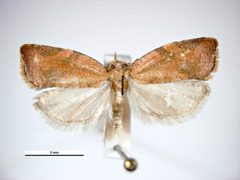
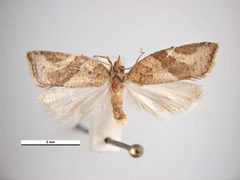
Argyrotaenia franciscana, commonly known as the orange tortrix or apple skinworm, is a in the Tortricidae. It is native to the Pacific Coast of North America, ranging from California north through Oregon to Washington. The has forewings measuring 5.6–9.9 mm in length. It produces at least two per year, with the potential for additional generations depending on local conditions.
Pronunciation
How to pronounce Argyrotaenia franciscana: //ˌɑːr.dʒɪ.roʊˈtiː.ni.ə frænˈsɪs.kænə//
These audio files are automatically generated. While they are not always 100% accurate, they are a good starting point.
Identification
The specific wing pattern characteristics that distinguish Argyrotaenia franciscana from are not documented in available sources. Forewing length (5.6–9.9 mm) and geographic distribution (Pacific Coast from California to Washington) may assist in narrowing identification possibilities.
Images
Appearance
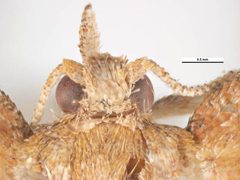
Small tortricid with forewings 5.6–9.9 mm in length. Wing pattern and coloration details are not explicitly documented in available sources.
Distribution
Pacific Coast of North America: California, Oregon, and Washington.
Seasonality
Multivoltine with at least two per year; sometimes more generations depending on local conditions.
Host Associations
- apple - pest 'apple skinworm' suggests association with apple, though specific plant documentation is not available
Life Cycle
At least two per year, sometimes more. Specific details regarding , larval, pupal, and stages are not documented in available sources.
Human Relevance
Known as 'apple skinworm,' suggesting occasional pest status in apple orchards, though specific economic impact data is not available.
Similar Taxa
- Argyrotaenia velutinanaCongeneric leafroller with overlapping geographic range in western North America; both are in Argyrotaenia and share similar as multivoltine tortricids
More Details
Nomenclature
Originally described as Tortrix franciscana by Walsingham in 1879; later transferred to Argyrotaenia.