
Endothenia
Stephens, 1852
Endothenias
Species Guides
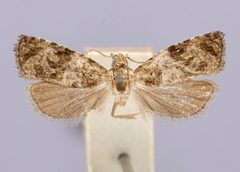
9Endothenia is a of tortricid moths in the Olethreutinae, containing approximately 50 described distributed across the Holarctic region. The genus includes small to medium-sized with varied wing patterns. At least one species, E. daeckeana, has been documented as a specialized seed inhabiting the ovaries of the northern pitcher plant Sarracenia purpurea. Other species have been recorded from northern Europe, including Finland, Sweden, and Norway, with some exhibiting discontinuous distributions.


Pronunciation
How to pronounce Endothenia: /ˌɛn.doʊˈθiː.ni.ə/
These audio files are automatically generated. While they are not always 100% accurate, they are a good starting point.
Images
Distribution
Recorded from Denmark, Norway, Sweden, and Vermont (USA). Specific show discontinuous distributions: E. marginana occurs in Finland, Sweden, and East Karelia; E. oblongana is distributed across Nordic countries including Finland.
Host Associations
- Sarracenia purpurea - primary plantDocumented for E. daeckeana; larvae inhabit ovaries and feed on carpel tissue
- Scambus spp. - Ichneumonidae ; 25% larval rate documented for E. daeckeana
- Glypta sp. - Ichneumonidae ; 25% larval rate documented for E. daeckeana
- Trichogramma ? semifumatum - Trichogrammatidae ; ~1.7% documented for E. daeckeana
- Acremonium strictum - associated fungusColonizes uninfested carpels of pitcher plants bearing E. daeckeana larvae, binding seeds into hard masses
Similar Taxa
- EucosmaBoth are Olethreutinae with similar size range and wing patterns; Endothenia typically lacks the strongly developed ocellus found in many Eucosma
- OlethreutesOlethreutinae with overlapping distribution; Endothenia generally have more uniform forewing coloration without the contrasting bands typical of many Olethreutes
Sources and further reading
- BugGuide
- Wikipedia
- GBIF taxonomy match
- iNaturalist taxon
- NCBI Taxonomy
- Catalogue of Life
- THE BIOLOGY OF ENDOTHENIA DAECKEANA (LEPIDOPTERA: OLETHREUTIDAE), AN INHABITANT OF THE OVARIES OF THE NORTHERN PITCHER PLANT, SARRACENIA P. PURPUREA (SARRACENIACEAE)
- <i>Endothenia oblongana</i> and <i>E. marginana</i> (Lepidoptera, Tortricidae) in Finland, with description of a new subspecies